The role of rubber hoses in pipeline dredging
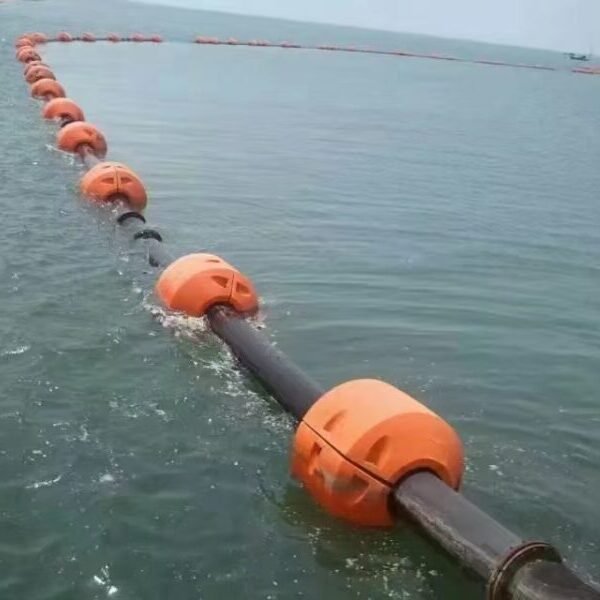
In dredging projects, rubber hoses (usually wear-resistant rubber soft hoses) play a crucial role as an important component of the dredging pipeline, mainly serving the following functions:
1. Buffering vibrations and impacts: The strong vibrations and pressure fluctuations generated by dredge pumps and cutter heads can be effectively absorbed by the elasticity of the rubber hose, reducing stress concentration between rigid pipes, protecting equipment such as pumps and valves, and extending the service life of pipeline connections.
2. Adapting to complex terrain and displacement: In ship-based or mobile dredging operations, the flexibility of the rubber hose allows the pipeline to bend or sway with the movement of the dredger, pontoons, or shore-based equipment, avoiding pipe breakage or leakage due to rigid connections. It is particularly suitable for dynamic conditions such as tidal changes, ship rolling, or pipeline towing.
3. Connecting different pipe sections: As a transition section, the rubber hose can connect different materials (such as steel pipes, floating pipes) or pipe sections at different angles, compensating for installation errors, and simplifying pipeline layout. For example, connecting the pump outlet to the main floating pipe, spanning the cutter head or elbow sections.
4. Wear resistance and corrosion resistance: High-quality dredging rubber hoses have built-in wear-resistant layers (such as high-chromium alloy, polyurethane lining) that can resist erosion from mud, gravel, and are more durable than some metal pipes when conveying high-concentration or sharp-particle-containing media. Rubber itself is resistant to seawater corrosion, making it suitable for marine environment operations.
5. Reducing noise and weight: Rubber can reduce noise generated by fluid flow and mechanical vibration. Compared to all-steel pipelines, rubber hoses are lighter, facilitating the arrangement of floating pipes or quick assembly/disassembly of temporary pipelines.
6. Sealing and leak prevention: Flexible connections can compensate for minor deformations caused by temperature changes or pressure fluctuations in the pipeline, maintaining sealing and reducing the risk of slurry leakage.
Common application scenarios:
– Dredger pipeline: connecting the pump to the floating pipe, at the cutter suction inlet.
– Pipeline elbow sections: replacing part of the steel elbows, reducing wear.
– Temporary land pipelines: rapid deployment or crossing obstacles.
Notes:
– Rubber hoses should be selected based on working conditions, including pressure rating, wear-resistant layer material, and bending radius.
– Regular inspection of rubber hose aging, wear, or localized bulging should be conducted to avoid burst accidents.
The rational use of rubber hoses significantly enhances the flexibility and reliability of the dredging pipeline, making it a key component for efficient dredging operations.