The function of dredging rubber pipe
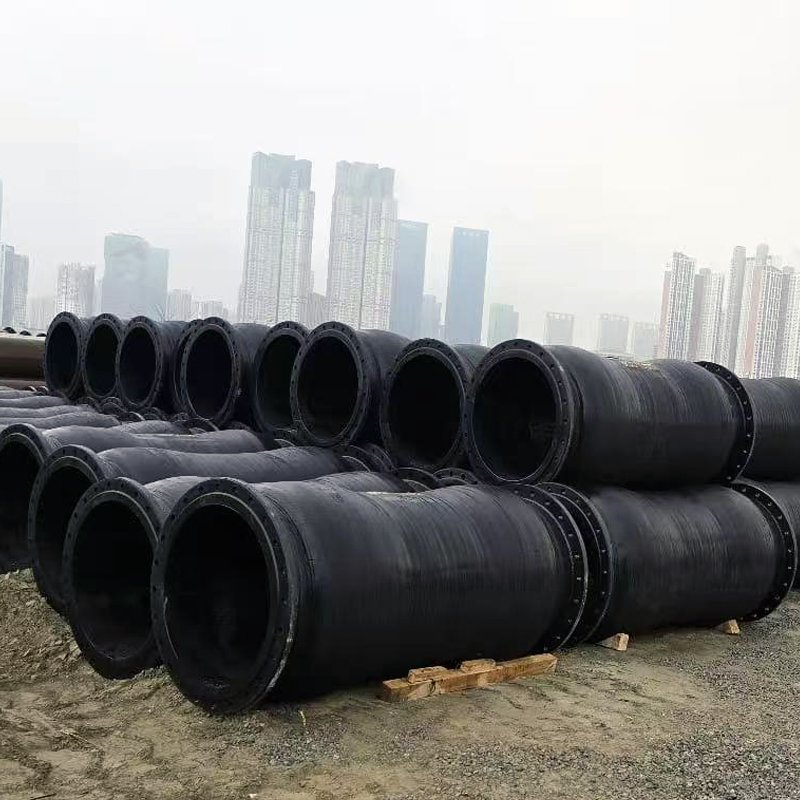
First, let’s clarify what it is: Dredging rubber pipe, also known as rubber dredging hose or slurry hose, is a flexible pipe section connected in the pipeline system of dredging projects (such as dredgers, sand pumps, etc.). It is typically composed of an inner wear-resistant rubber layer, multiple layers of high-strength fabric or steel cord reinforcement, and an outer rubber protective layer.
Its core function stems from its ‘flexibility’ characteristic, which can be summarized into the following key points:
1. Core Function:
Connection and Compensation This is the most basic and important function.
• Compensate for Displacement and Deviation: In dredging operations, relative displacement occurs between the dredger and the slurry pipeline, and between the pipeline and the fixed onshore pipeline due to factors such as water flow, waves, and ship movement. Rigid steel pipes cannot adapt to such displacement. Rubber flexible hoses, through their flexibility, can bend, stretch, and twist, effectively compensating for these displacements and installation alignment deviations, ensuring that the pipeline system is not damaged by stress concentration.
• Achieve Flexible Connection: It smoothly connects different rigid components (such as hull flanges, steel pipes, floats, etc.) to form a complete and ‘movable’ conveying system.
2. Key Function:
Absorb Vibration and Impact When dredging pumps convey high-concentration slurry containing solid particles (silt, gravel), they generate intense vibration and pressure fluctuations (water hammer effect).
• Vibration Damping and Noise Reduction: The elasticity of rubber flexible hoses can effectively absorb and buffer these vibrations and impacts, protecting the entire pumping system and ship structure, reducing fatigue damage to metal components, and simultaneously lowering operating noise.
• Protect Equipment: It reduces the transmission of vibration to the dredger and pump body, extending the service life of key equipment such as pumps, valves, and engines.
3. Important Function:
Adapt to Complex Operating Conditions
• Adapt to Ship Movement: For grab-dredgers, hopper-dredgers, etc., the ship body sways during operation. Rubber flexible hoses can flexibly swing with the ship’s roll and pitch, ensuring continuous and uninterrupted operation.
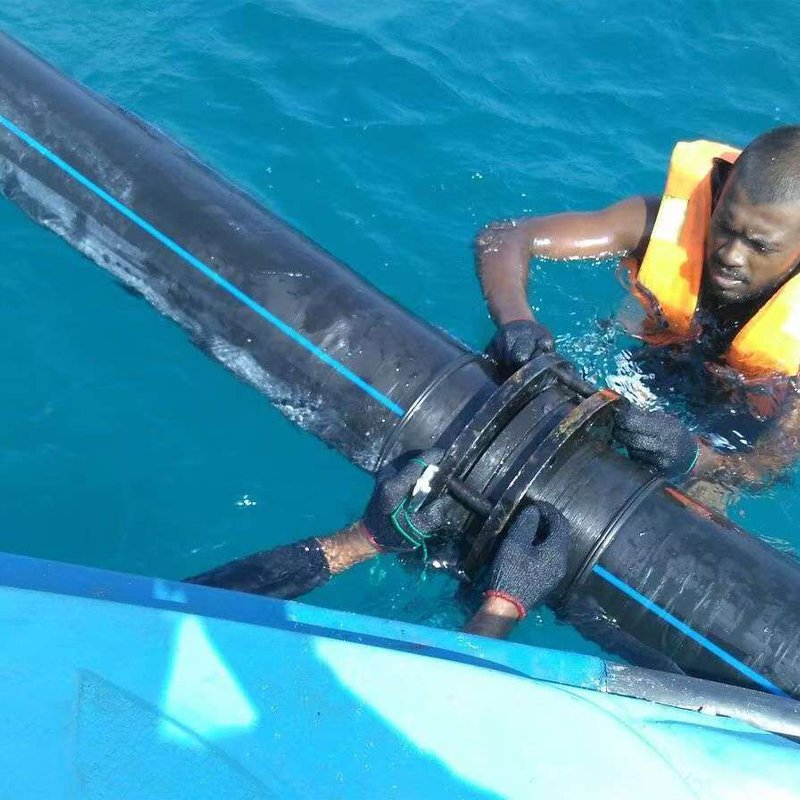
• Used for Floating Pipelines: When conveying slurry over long distances, pipelines float on the water surface with the help of floats. Rubber flexible hoses are often used as connecting pipes between floats or as transition sections between underwater and surface pipelines to adapt to floating caused by waves.
• Facilitate Pipeline Deployment and Retrieval: Compared to rigid steel pipes, rubber hoses are lighter and more flexible, making pipeline system deployment and retrieval more efficient, reducing labor and time costs.
4. Fundamental Function:
Wear Resistance and Corrosion Resistance
• Excellent Wear Resistance: Its lining is typically made of ultra-wear-resistant natural or synthetic rubber, which can resist long-term scouring and wear from solid materials such as silt and stones, resulting in a long service life. Its wear resistance is even superior to that of ordinary steel.
• Good Corrosion Resistance: Rubber has natural corrosion resistance to seawater, freshwater, and chemical substances in slurry, avoiding the rust problem common in steel pipes and reducing maintenance costs.
In short, dredging rubber hose pipes are key components that ensure the entire dredging system can operate safely, continuously, efficiently, and flexibly. Their flexible connection and buffering functions are indispensable.