The function and application scenarios of incline rubber hoses
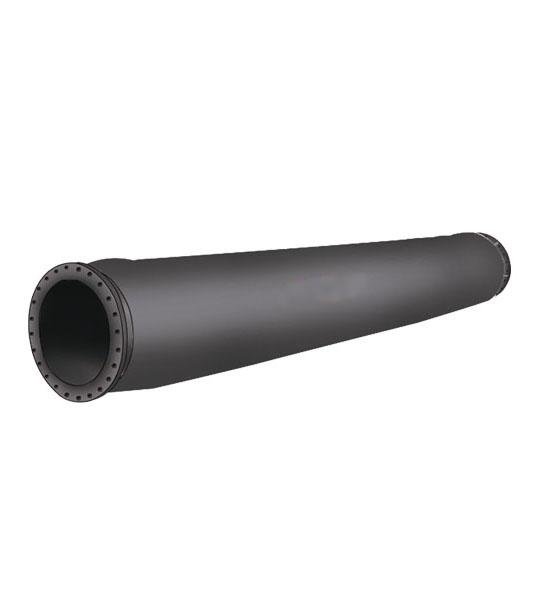
Slope rubber hoses are a crucial component in the industrial field, particularly in bulk material conveying systems. Their function is far more than just the literal meaning of \”climbing slopes\” suggested by their name. The core function is to provide flexible and sealed connections and conveyance between equipment at different spatial positions with relative motion.
Below are their detailed functions and characteristics:
Core Functions
1. Flexible Connection and Compensation:
◦ Coping with Displacement and Vibration: The two devices connected (such as a fixed hopper and a mobile conveyor, or a vibrating screen and a pipeline) generate vibration, thermal expansion and contraction, or foundation settlement during operation. Rigid pipes cannot adapt to these displacements, easily leading to cracking or leakage at the connection points. Sloped rubber hoses have excellent flexibility, allowing them to absorb and compensate for these displacements and vibrations, protecting the entire system.
◦ Facilitating Installation Alignment: During installation, the positions of the equipment flanges may not be 100% precisely aligned. The flexibility of the rubber hose allows for certain installation deviations, significantly reducing installation difficulty.
2. Sealed Conveying to Prevent Dust Leakage:
◦ This is its key role in environmental protection and production safety. When conveying powdery or granular materials (such as cement, grain, mineral powder, plastic pellets, etc.), the materials tend to escape through connection gaps, causing dust pollution, material loss, and safety hazards.
◦ As a fully enclosed channel, the sloped rubber hose can completely seal the conveying path, effectively preventing dust leakage and material spillage, meeting the environmental protection and clean production requirements of modern factories.
3. Adapting to Complex Spatial Paths:
◦ Demonstration of ‘Sloping’ Function: When conveying materials from a low point to a high point, or needing to bypass obstacles, the sloped rubber hose can easily bend into the required angle (with multiple bending radii options available), forming a smooth conveying channel.
◦ Multi-directional Adjustment: It can not only achieve vertical ascent but also horizontal turns and deflections, providing great flexibility for factory layout.
Main Application Scenarios
• Bulk Material Loading and Unloading Systems: Connection between ship unloaders at piers, railway unloading chutes, and ground conveyors.
• Pneumatic Conveying Systems: Used to connect sending tanks, silo pumps, and conveying pipelines to compensate for vibration.
• Dust Collection Systems: Connecting the inlet of dust collectors with dust-generating points (such as crushers, feeding ports) to collect dust.
• Blending and Feeding Systems: Connecting hopper outlets with metering scales and mixing equipment to prevent dust emission.
• Grain and Food Processing: Hygienic conveying between equipment such as elevators and cleaning sieves.
Performance Characteristics (Key Support for Its Functions)
• Diverse Materials: Typically has a wear-resistant inner layer of synthetic rubber or special rubber (such as wear-resistant NBR), and an outer layer of anti-aging, weather-resistant rubber or fiber-reinforced layer. Special applications require food-grade, oil-resistant, or high-temperature resistant materials.
• Structural Reinforcement: The hose body usually contains embedded spiral steel wires or fabric cords, which maintain the hose shape, prevent it from being sucked flat by negative pressure, withstand certain positive pressure and material impact, while not losing flexibility.
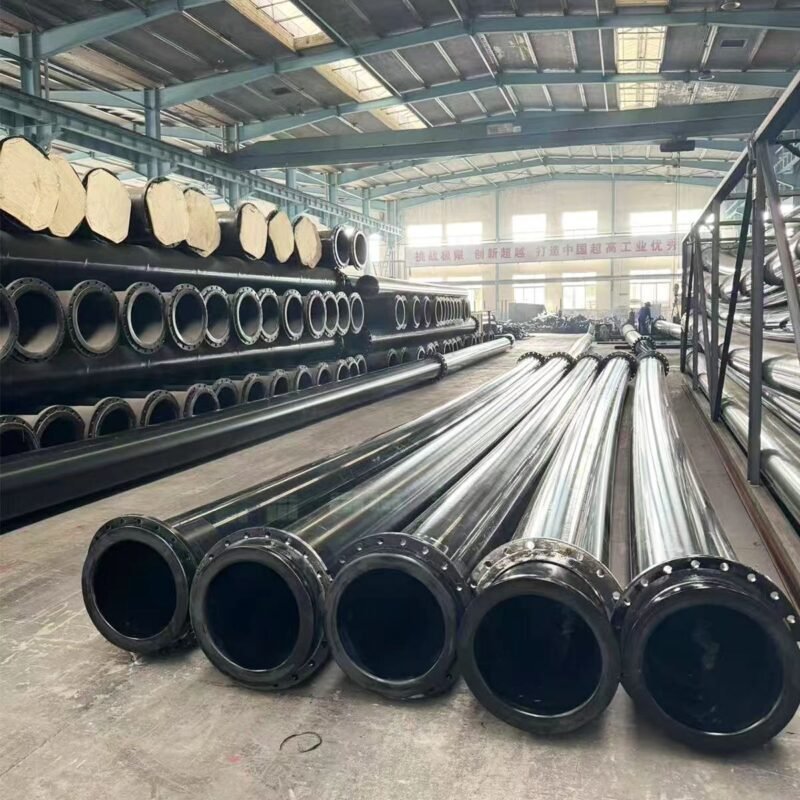
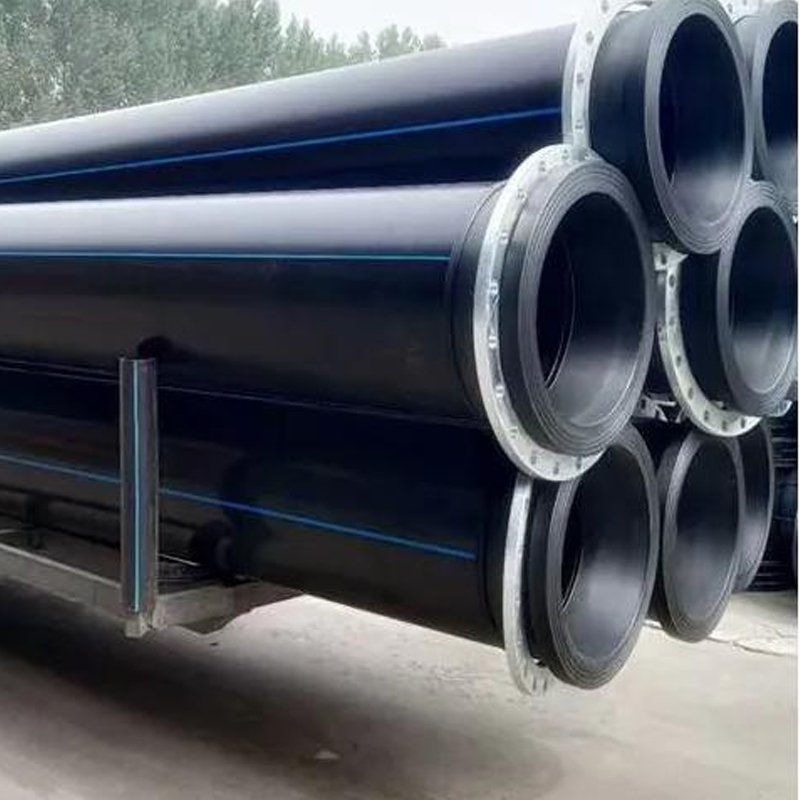
• Flange Connection: Equipped with metal flanges (such as carbon steel or stainless steel flanges) at both ends for firm bolted connection with equipment.
Summary
In short, the sloped rubber hose is like a sturdy, flexible, and sealed ‘joint’ or ‘bridge’. It solves the connection problems in bulk material conveying systems caused by equipment vibration, displacement, and spatial constraints. Its core goal is to achieve leak-free, low-maintenance, flexible, and reliable continuous conveying, making it an indispensable flexible connector in modern industrial bulk material handling systems.