The disadvantages of rubber hose flange dredging
Disadvantages
1. Higher initial cost
◦ The initial procurement cost of a high-quality rubber dredging hose with flange system is usually higher than that of an equivalent steel pipe flange system.
2. Lower pressure limit
◦ Although it meets most dredging conditions, the pressure resistance (especially negative pressure/vacuum capability) of rubber hose with flange has a limit. In extreme conditions such as ultra-deep water or ultra-high pump pressure, full-metal hard connection flanges may still be the only option.
3. Risk of wear and aging
◦ External wear: The rubber outer cover may be cut, worn, or damaged when dragged, rubbed against the ship’s deck, or collided with other objects.
◦ Internal wear: Although the inner lining is wear-resistant, it will eventually wear through after long-term conveyance of highly abrasive materials.
◦ Aging: Rubber gradually ages, hardens, and cracks when exposed to ultraviolet rays (sunlight), ozone, and extreme temperatures over time, requiring regular inspection and replacement.
4. Certain requirements for installation and operation
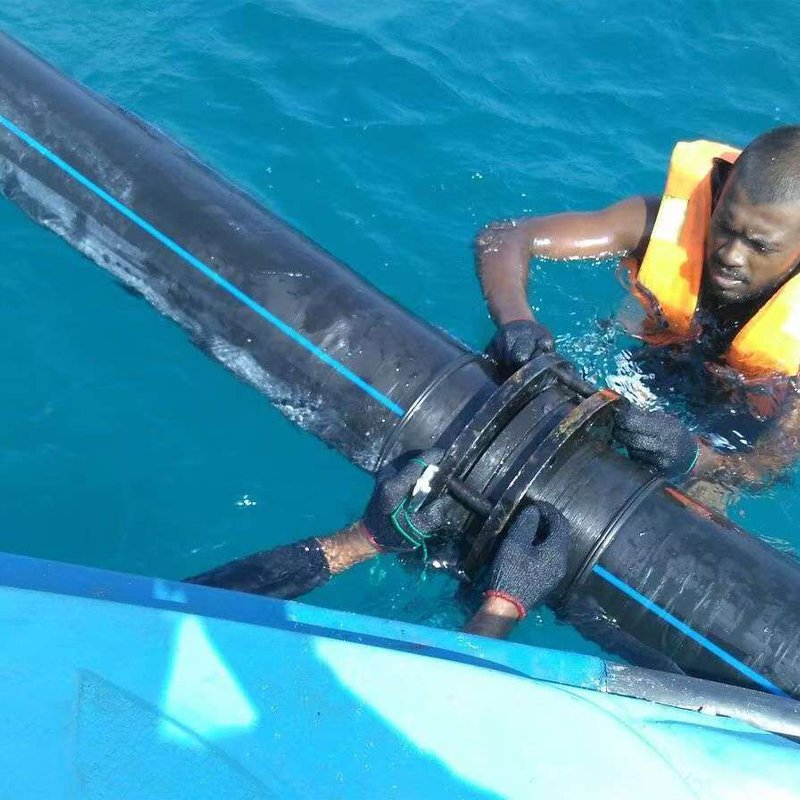
◦ Bolts must be evenly tightened in the correct sequence and torque, otherwise uneven pressure may cause premature local wear or seal failure. The clamping ring must be fully in place, otherwise there is a risk of disengagement.
5. Larger volume
◦ Due to the need for components such as clamping rings and flange discs, the overall dimensions of the connection may be significantly larger than the pipe itself, which may need to be considered in some space-limited layouts.