The difference between dredging rubber hoses and discharge pipes
In dredging projects, rubber suction hoses and discharge pipes are two common types of pipelines that differ significantly in terms of material, usage, and working methods. Here are their main differences:
1. Material and Structure:
– Rubber Suction Hose:
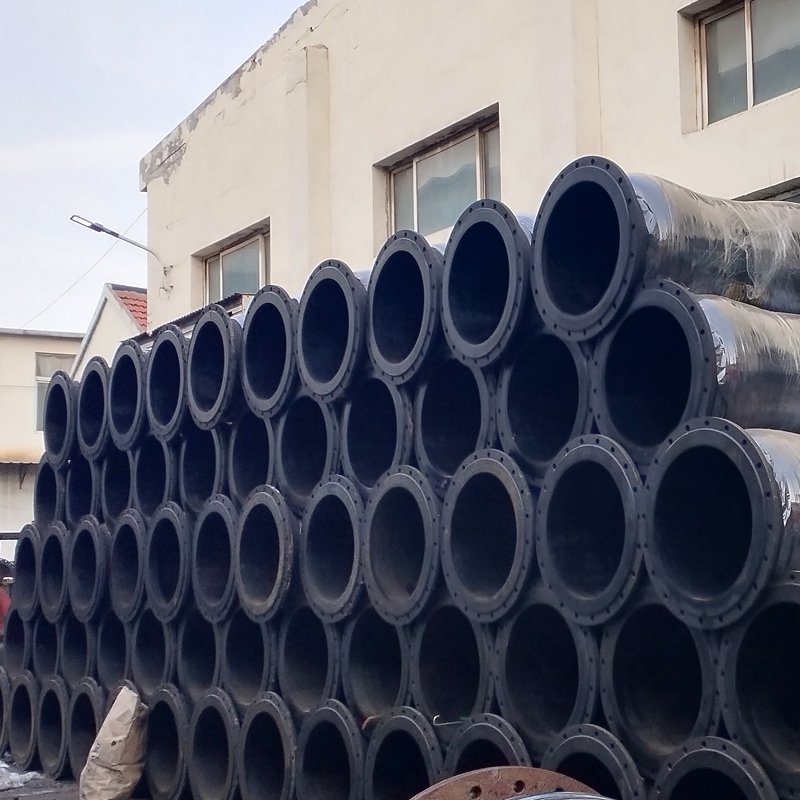
– Material: Typically made from wear-resistant rubber such as natural rubber or styrene-butadiene rubber, often reinforced internally with layers like steel wire or fabric to enhance pressure resistance and tensile strength.
– Characteristics: Highly flexible, can bend, suitable for complex terrains or dynamic operation scenarios such as moving suction points on a dredger.
– Discharge Pipe:
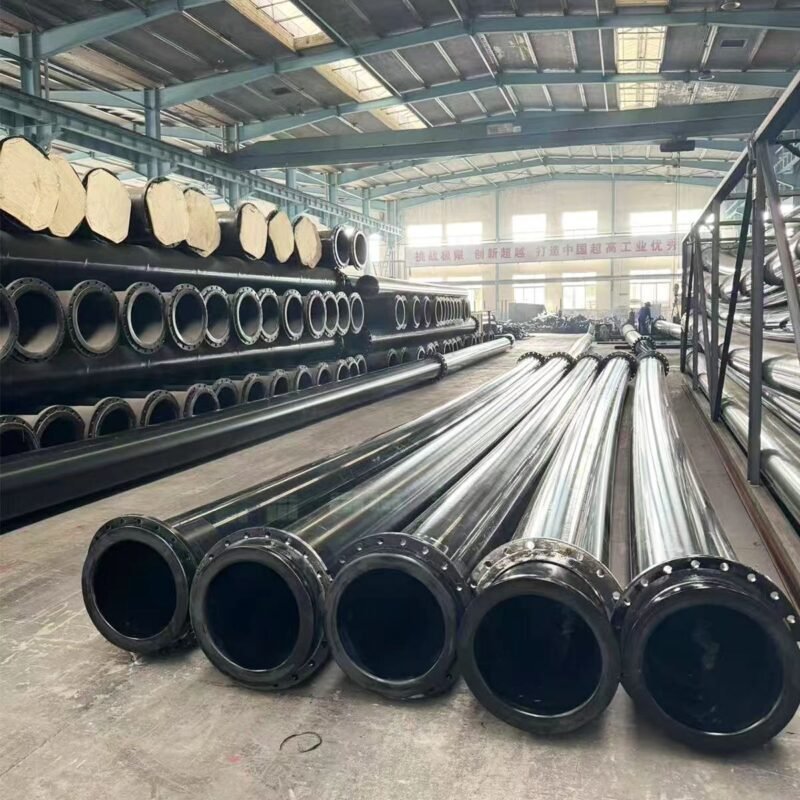
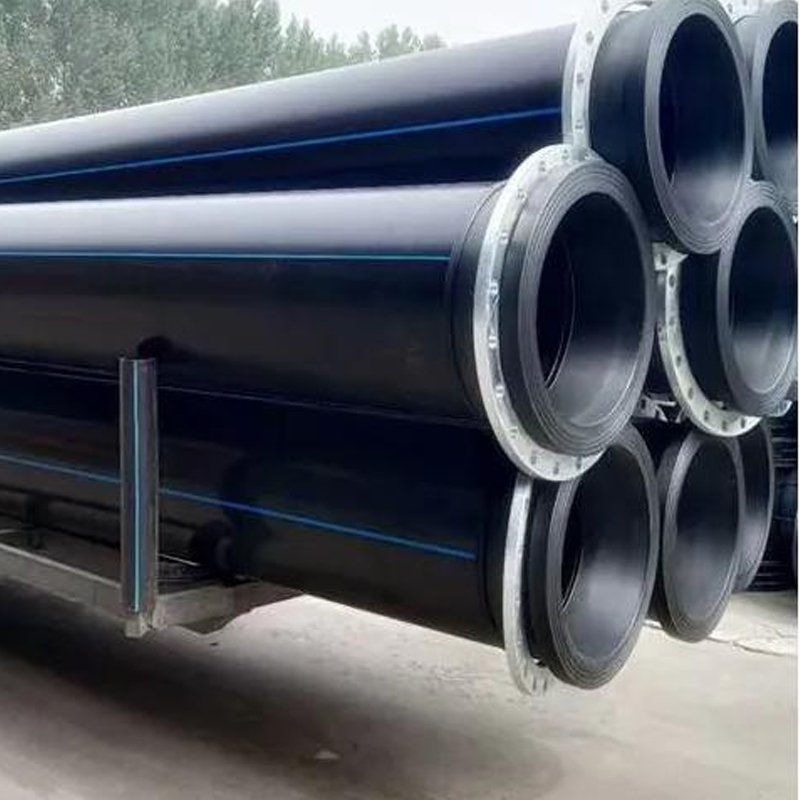
– Material: Usually made from rigid materials like steel pipes, high-density polyethylene (HDPE) pipes, or composite steel pipes, sometimes lined with wear-resistant materials like ceramic or polyurethane.
– Characteristics: Strong structure, high pressure resistance, suitable for long-distance, fixed-path slurry transportation.
2. Usage and Working Method:
– Rubber Suction Hose:
– Usage: Mainly used for sucking up slurry, sand, and other mixtures, commonly found at suction points on dredgers or cutter suction dredgers.
– Working Method: Generates negative pressure through a pump to draw underwater deposits into the pipe, requiring frequent movement or angle adjustment.
– Discharge Pipe:
– Usage: Used to transport dredged materials to designated discharge points such as stockpiles or reclamation areas, typically connected to the pump’s outlet.
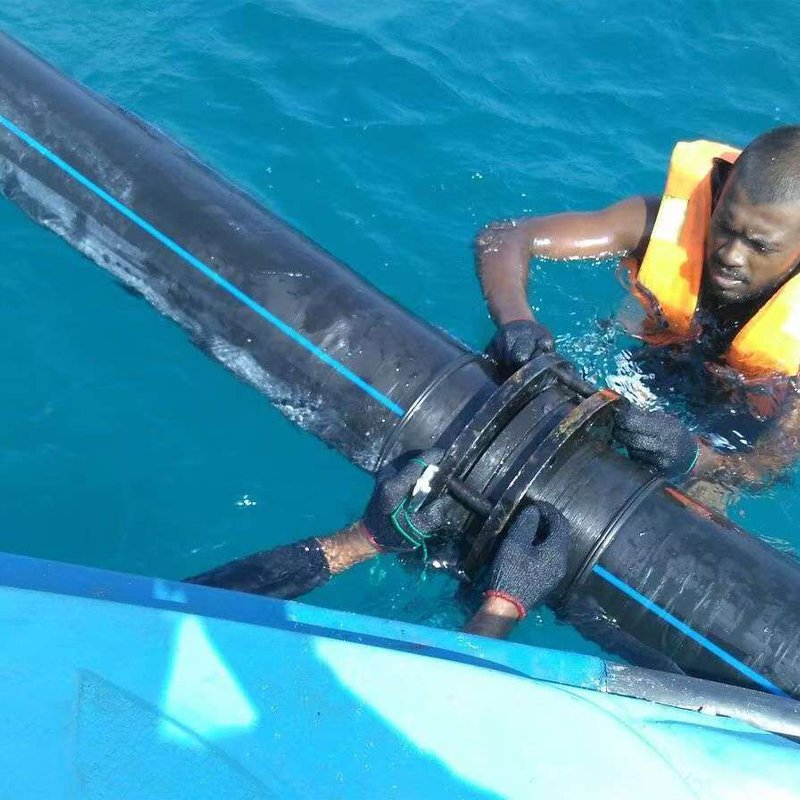
– Working Method: Handles long-distance high-pressure slurry transportation, needs to maintain stable laying (such as floating pipes, shore pipes, or submerged pipes).
3. Pressure Resistance and Wear Resistance:
– Rubber Suction Hose:
– Lower pressure resistance (generally <1MPa), but better wear resistance, suitable for fluids containing particles.
– Prone to localized damage due to bending or wear, requires regular inspection.
– Discharge Pipe:
– High pressure resistance (can reach several MPa), especially steel pipes have strong impact resistance, suitable for long-distance high-pressure transportation.
– More rigorous wear-resistant design (such as thicker walls, liners), generally has a longer lifespan than rubber suction hoses.
4. Installation and Maintenance:
– Rubber Suction Hose:
– Flexible installation, can bend or extend according to operational needs, but should avoid excessive twisting.
– Requires frequent maintenance, checking for rubber aging, joint sealing, etc.
– Discharge Pipe:
– Fixed installation (such as flange connections, float support), requires pre-planning of laying paths.
– Requires less maintenance, but needs monitoring of welds, corrosion (for steel pipes), or loosening of connectors.
5. Typical Application Scenarios:
– Rubber Suction Hose: Suction points on cutter suction dredgers, small-scale dredging equipment, short-distance suction operations.
– Discharge Pipe: Slurry conveyance pipelines for large-scale dredging projects, reclamation projects, fixed discharge systems.
Summary:
Comparison Item | Rubber Suction Hose | Discharge Pipe
—|—|—
Primary Function | Sucking slurry | High-pressure slurry transportation
Material | Flexible rubber + reinforcement layer | Rigid (steel/HDPE)
Pressure Resistance | Low | High
Flexibility | High (bendable and movable) | Low (fixed laying)
Suitable Scenarios | Dynamic suction, short distance | Long distance, stable transportation
Depending on project requirements (such as transportation distance, pressure, fluidity), both may be used together, for example, connecting a rubber suction hose to the suction point of a dredger, then using a discharge pipe to transport the slurry to a distant location.