The application scenarios of steel suction rubber hose
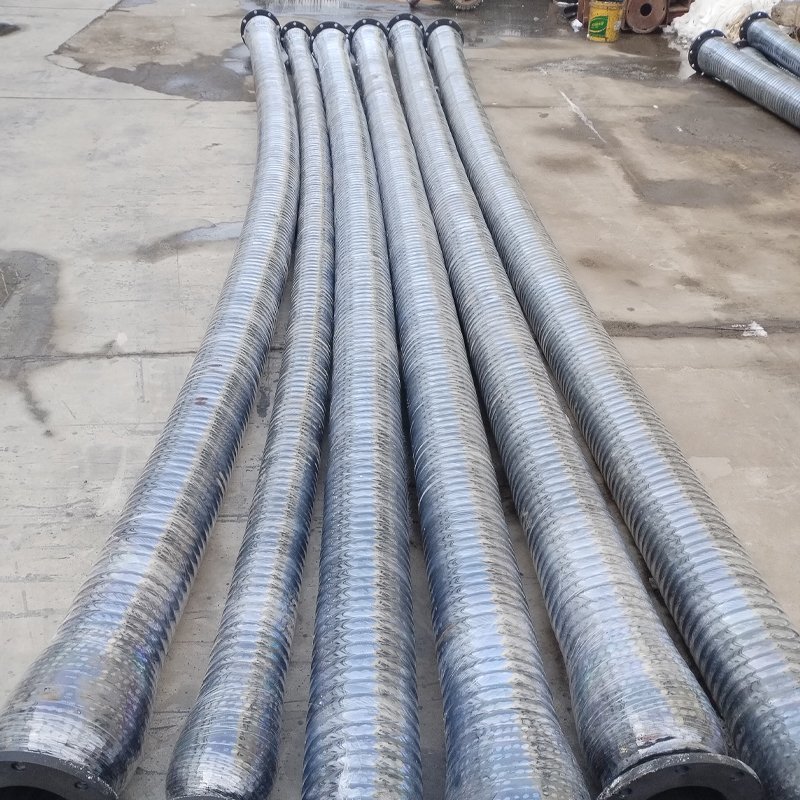
Steel-reinforced suction rubber hose, as its name suggests, is a type of rubber hose embedded with high-strength steel wire reinforcement, specifically designed for suction (or discharge) of mixed fluids containing solid particles, silt, debris (such as slurry, sewage, etc.). Its core features include wear resistance, vacuum resistance, corrosion resistance, and flexibility. Here are its main application scenarios, covering industrial, municipal, agricultural, and other fields:
1. River and Port Dredging (Core Application)
This is the most classic and important application area for steel-reinforced suction hoses.
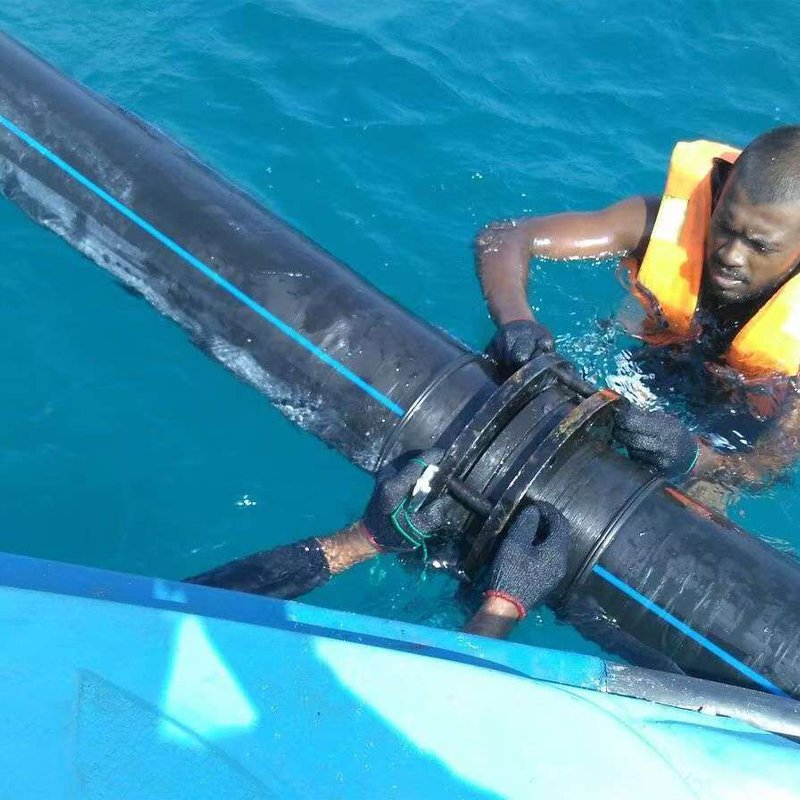
– River dredging: Used to clean sediment such as silt and gravel from rivers, lakes, and reservoirs to restore water capacity, ensure flood safety, and maintain navigability. The main conveying pipe on a dredger is a large steel-reinforced suction rubber hose.
– Port and channel dredging: Used to excavate and maintain the depth of port channels to ensure that large ships can safely dock and navigate. It is used to suction mud and sand from the seabed and blow-fill it into designated areas.
2. Industrial and Mining Fields
– Mineral processing plant: Used to convey slurry, which is a mixture of mineral particles and water.
– Tailings treatment: Conveys tailings sand and wastewater produced after mineral processing to the tailings pond.
– Coal washing plant: Conveys coal slurry and wastewater.
– Ceramic and building materials factory: Conveys ceramic raw material slurry, clay, and porcelain mud.
– Power plant: Used in the hydraulic ash removal system to convey a mixture of fly ash and water.
3. Municipal and Construction Engineering
– Foundation pit drainage: Used to suction water and mud from the foundation pit during construction site excavation.
– Shield construction: Used in shield machines (tunnel boring machines) to expel excavated soil and debris in slurry form.
– Mud balance: Used in pile driving and underground continuous wall construction to circulate slurry to maintain the stability of the hole wall.
– Wastewater treatment plant: Used to suction sludge from the bottom of settling tanks for transfer or dewatering treatment.
– Urban flood control: Used in emergency response to suction street water, as it can withstand garbage and silt in the water, is less likely to clog, and is less prone to wear.
4. Agriculture and Aquaculture
– Fish ponds and shrimp ponds: Regularly clean accumulated organic matter such as feces and leftover feed at the bottom of breeding ponds to improve water quality.
– Agricultural water conservancy: Used to suction silt from irrigation channels to keep the water flow unobstructed.
– Biogas project: Conveys agricultural waste liquid used for biogas production (such as a mixture of animal manure and straw).
5. Other Scenarios
– Sand yards: Used to suction sand and gravel from rivers, lakes, and seas.
– Environmental cleaning: Cleans sludge and waste from septic tanks, settling tanks, and sewers (usually using smaller diameter suction hoses).
– Industrial cleaning: Used with high-pressure cleaners to recover wastewater containing contaminants after cleaning the ground.
Why must these scenarios use steel-reinforced suction hoses?
1. Wear resistance: The internal rubber lining usually adopts a wear-resistant formula, capable of resisting long-term erosion by silt, minerals, and other solid particles, with a lifespan far exceeding that of ordinary pipes.
2. Vacuum resistance: The steel wire skeleton in the hose body (usually helically wound) provides extremely high pressure and vacuum resistance. During suction, negative pressure (vacuum) is generated inside the pipe, which would collapse an ordinary soft hose, but the steel wire skeleton maintains the shape of the pipe, ensuring smooth flow.
3.Flexibility: Despite the embedded steel wire, the rubber material still offers good flexibility, making it convenient for laying, moving, and retracting pipes in environments such as ships, vehicles, and complex construction sites.
4.Corrosion resistance: The rubber layer effectively resists corrosion from sewage, seawater, and certain chemicals. In summary, steel wire sludge rubber hoses are crucial conveying equipment for handling high-wear, highly corrosive slurry media.
Wherever there is a need to suction sludge, mortar, or slurry, they can almost always be seen. They are indispensable ‘arteries’ in modern dredging, mining, and various industrial fields.