The application scenarios of steel ring suction rubber hose
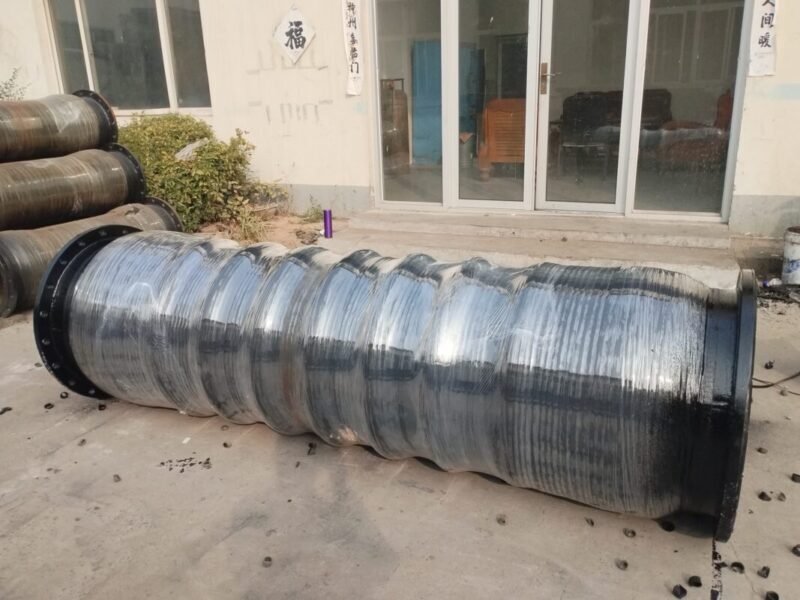
Steel ring suction mud rubber hose, also known as steel-reinforced suction hose or buoyant suction hose, is a high-performance hose specifically designed for suctioning high-density, high-abrasion materials containing solid particles, such as sludge, sand, gravel, and slag. Its core feature is the embedding of spiral high-strength steel rings within the hose wall, which provides unique performance characteristics and determines its wide range of applications.
Core features (why suitable for these scenarios):
1. High strength and negative pressure resistance: The built-in steel rings offer strong skeletal support, preventing the hose from collapsing or deforming under high vacuum suction.
2. Excellent abrasion resistance: Typically made from wear-resistant natural rubber or synthetic rubber (such as NR, SBR), it can withstand long-term erosion and wear from solid particles.
3. Good flexibility and bendability: Despite the steel reinforcement, the hose maintains good flexibility, making it easy to lay and move in complex working environments.
4. Corrosion resistance: The outer rubber layer usually has weather, ozone, mild oil, and seawater corrosion resistance, while the inner rubber layer can be selected based on the medium, such as acid and alkali resistant formulas.
5. Lightweight and buoyant: Many models of suction hoses have a specific gravity less than water, allowing them to float on the water surface, greatly facilitating water-based operations.
Main application scenarios Based on the above features, steel ring suction mud rubber hoses are mainly used in the following industrial and engineering fields:
1. Dredging projects
This is the most classic and primary application area. • River and port dredging: Used to suction silt, sand, and mud from riverbeds, lake bottoms, and ports to increase water depth and ensure navigable channels.
• Lake and reservoir management: Environmental dredging to remove nutrient-rich bottom sediments and improve water quality.
• Land reclamation: Transporting the mud and sand suctioned from the seabed through pipelines to designated areas to form new land, such as the Palm Islands in Dubai and part of Shanghai Lingang New City.
2. Mining and mineral processing
• Tailings transportation: Suctioning tailings slurry produced after ore selection and conveying it to tailing ponds for storage.
• Slurry suction: Used in mining sites to suction slurry containing ore particles.
• Mud and sand cleaning: Cleaning mud and waste from mine pits and settling ponds.
3. Municipal and industrial wastewater treatment
• Wastewater plant sedimentation tank dredging: Suctioning sludge from primary and secondary sedimentation tanks.
• Septic tank and sewage pond cleaning: Used by sanitation departments to suction and transport waste from septic tanks.
• Industrial sludge treatment: Cleaning various factory-generated sludge during wastewater treatment processes, such as paper mills, chemical plants, and steel mills.
4. Construction and foundation engineering
• Pile foundation construction: Used in drilled concrete pile construction to suction drilling mud produced by rotary drilling rigs (positive/reverse circulation process).
• Continuous underground wall construction: Suctioning slurry and mud debris generated during trench excavation.
• Tunnel boring machine construction: Used as the muck discharge pipe for TBM, discharging the mixture of soil, sand, and mudwater cut by the cutting wheel.
• Foundation pit dewatering and sand removal: Used in deep foundation pit excavation to remove water and flowing sand from the pit.
5. Agriculture and fisheries
• Fish ponds and shrimp ponds dredging: Cleaning feces, leftover feed, and other deposits at the bottom of aquaculture ponds to improve the breeding environment.
• Irrigation channel dredging: Cleaning silt and debris clogging irrigation channels.
• Biogas digester discharge: Suctioning biogas slurry from biogas digesters.
6.Emergency rescue and flood control
• Flood drainage: Used in flood control and emergency rescue to quickly remove urban waterlogging, which often contains a large amount of mud and debris. Ordinary pipes are prone to damage, while steel ring suction mud pipes are very suitable.
• Post-earthquake or landslide debris flow cleanup: Suction of slurry and debris mixtures generated after disasters.
Summary In summary, the steel ring suction mud rubber hose is a crucial heavy-duty industrial conveying hose. The core commonality of its application scenarios is the need to reliably and efficiently suction and convey slurry media containing a large amount of solid particles and high abrasiveness under high negative pressure (vacuum suction). It is commonly found in situations involving ‘mud, sand, slurry, and debris’ and is an indispensable tool in industries such as dredging, mining, municipal works, and construction. When selecting one, it is necessary to choose the appropriate hose diameter, number of steel wire layers, and type of rubber based on the specific abrasiveness, particle size, specific gravity, and working pressure of the medium.