The advantages and disadvantages of newly replaced dredging rubber hoses
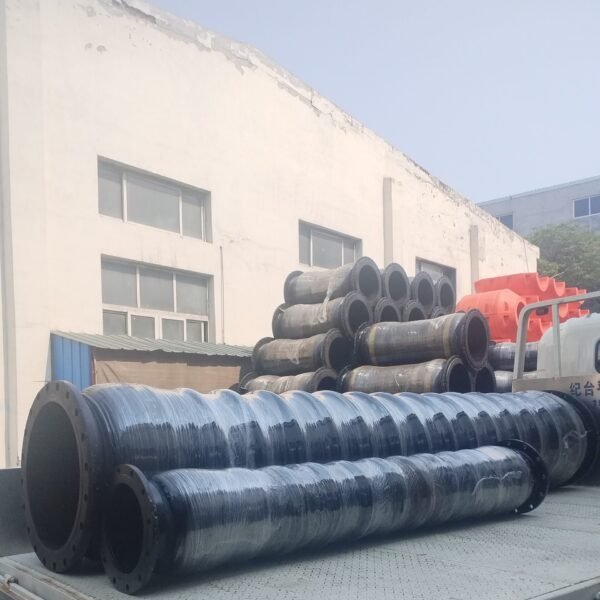
The advantages and disadvantages of newly replaced dredging rubber hoses are as follows:
Advantages:
1. High wear resistance
– High-quality rubber hoses (such as those with high content of natural rubber or wear-resistant additives) can resist long-term erosion by mud, sand, and gravel, extending their service life, especially suitable for high-concentration particulate media.
2. Flexibility and tensile strength
– Rubber hoses have good bending performance, suitable for complex construction environments (such as ship sway, pipe turning), reducing the risk of rupture due to twisting.
3. Corrosion resistance
– Superior tolerance to seawater, acidic, and alkaline media compared to some metal pipes, avoiding rust issues and reducing maintenance costs.
4. Vibration and noise reduction
– The elasticity of rubber can absorb pressure fluctuations and vibrations during pumping, protecting equipment connection points.
5. Lightweight and easy installation
– Lighter than metal pipes, making transportation and connection more convenient, shortening construction time.
Disadvantages:
1. Limited high-pressure resistance
– Compared to metal or composite pipes, rubber hoses may expand or burst under ultra-high pressure (such as deep-water dredging), requiring reinforced design (such as steel wire braiding).
2. Temperature sensitivity
– Extreme high or low temperatures may cause rubber to harden, become brittle, or deform, affecting sealing and durability.
3. Significant cost fluctuation
– High-performance rubber (such as oil-resistant, ozone-resistant formulas) is expensive, increasing initial investment, but long-term replacement frequency needs to be considered.
4. Susceptible to mechanical damage
– Sharp objects (such as rocks, metal fragments) may scratch the hose body, requiring protective sleeves or using wear-resistant linings at critical points.
5. Service life affected by operating conditions
– Long-term exposure to ultraviolet light, chemical media, or frequent bending accelerates aging, requiring regular inspection and replacement.
Selection recommendations:
Match the hose material based on the conveyed medium (particle size, acidity/alkalinity), pressure level, and environmental temperature (e.g., nitrile rubber for oil resistance, chlorinated rubber for weather resistance).
Opt for reinforced designs such as steel wire wrapping/braiding for high-pressure conditions; consider outer rubber anti-tear layers for frequently moved scenarios.
Regularly check hose wear and joint sealing to avoid accumulated minor damages leading to sudden failures.
With proper selection and maintenance, rubber hoses can significantly improve dredging efficiency and reduce costs, but their limitations should be avoided.