Summary of Preventive Recommendations for Live Flange Dredging Rubber Hoses
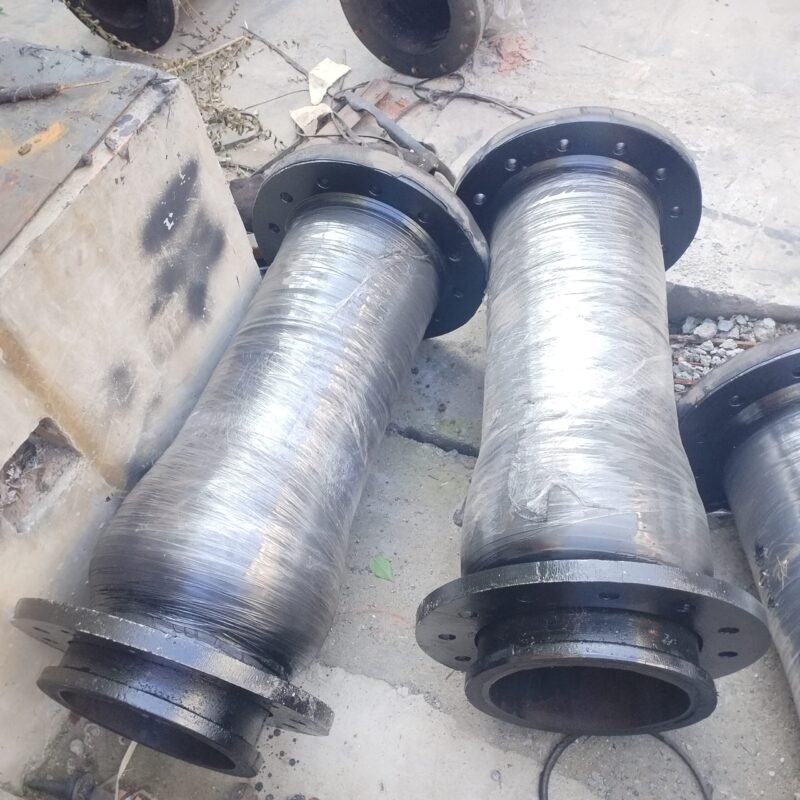
Regarding the leakage problem of live flange dredging rubber hoses, the core lies in three aspects: installation, maintenance, and protection. Leaks typically occur at the flange interface, with main causes including failed gaskets, improper installation, corrosion, and external damage. Based on your needs, I will provide specific preventive recommendations from three aspects: installation standards, daily maintenance, and leak response.
🔧 Installation Standards: Avoid Hazards from the Source
Proper installation is the most critical step in preventing leaks. Please be sure to pay attention to the following points:
Key Process Steps: Specific Operations and Standards – Gasket Installation
– Select the correct gasket:
Choose a dedicated gasket according to the medium being transported in the pipeline (such as ordinary water, oil, acidic and alkaline liquids, etc.) and the pressure rating; avoid mixing and using different types .
– Standardize operations: Use only a single layer of gasket; stacking is strictly prohibited . Ensure that the flange sealing surface and gasket are clean and free of oil stains and impurities before installation . Flange Connection Tightening
Even tightening: Use a torque wrench to tighten bolt in stages (usually 2-3 times) in a diagonal sequence to ensure even tightening.
Control displacement: Ensure the pipe connection is aligned. Never forcibly twist or stretch the rubber hose to compensate for installation deviations, as this will permanently damage joint .
Flange Sealing Surface Inspection
– Check Flatness: Inspect the flange sealing surface before installation. A new technology patent for dredging hoses requires its flatness to be less than 2mm, and the edges are chamfered to reduce wear risk .
– Prevent Contamination: When installing and storing, cover the flange opening with a dedicated protective cap to prevent foreign matter such as sand particles and dust from entering.
🛠️ Daily Maintenance and Monitoring
Regular maintenance can effectively extend the service life of rubber hoses and help identify potential issues in advance.
• Regular Inspection and Tightening:
◦ Periodic Inspection: After the initial pressure-bearing of the rubber flexible joint, and before reactivating after long-term shutdown, all bolts must be re-inspected and tightened.
◦ Inspection Content: Focus on checking if flange bolts are loose, whether gaskets are compressed, deformed, or aged, and if the rubber hose body has bulges, cracks, or abnormal wear.
• Operating Environment and Operation Protection:
◦ Avoid Harsh Environments: Rubber hoses must not be exposed to ozone, strong ultraviolet rays (sunlight), oils, or acidic/alkaline environments for a long time. When used outdoors, it is recommended to install a sunshade.
◦ Standardized Operation: When opening or closing valves, perform the action smoothly to avoid violent pressure fluctuations in the system that may impact the flanges and rubber hose.
• Special Corrosion Protection:
◦ If the working environment is humid or contains corrosive media (such as seawater, dredging sludge), external corrosion protection for flanges and bolts is required, such as applying a removable sealing anti-corrosion coating or wrapping with anti-corrosion tape.
🚨 Response Steps After a Leak Occurs
If a leak is detected, immediate action should be taken to prevent the problem from worsening:
1. Shutdown and Depressurization: First, stop the operation and completely release the pressure in the pipeline to ensure handling is done under no-pressure conditions.
2. Cause Investigation:
◦ Tightening Check: Check if bolts are loose and attempt to retighten them evenly in a diagonal sequence. Note: If leakage persists even after tightening to the specified torque, it may be a gasket issue; over-tightening may damage the flange.
◦ Gasket Check: If tightening is ineffective, disassemble to inspect the gasket. Confirm if the material is suitable, check for grooves, breaks, permanent deformation, or chemical corrosion. New or old gaskets must be replaced with new ones when replaced.
◦ Flange Face Check: Inspect the sealing surfaces of both flanges for obvious scratches, pits, or corrosion holes.
3. Replacement and Repair:
◦ Replace damaged gaskets or components based on the investigation results.
◦ For minor sealing surface damage, specialized polymer sealing materials can be used for filling and repair.
◦ If severe corrosion or deformation occurs on the flange sealing surface, the entire flange joint must be replaced;forced use is not allowed.
In summary, preventing leaks in live-flange dredging rubber hoses lies in strictly following the operating specifications of single-layer gaskets and diagonal uniform tightening during installation, along with regular periodic inspections and maintenance. When a leak occurs, the primary step is to shut down and depressurize, and follow the sequence of first checking and tightening, then investigating the gasket to diagnose and solve the problem.
If you can provide more specific information about the hose’s usage environment (such as medium, pressure) or the specific issues currently encountered, I can offer more targeted analysis. 8 web pages