Summary of Construction Precautions for End Rubber Hose
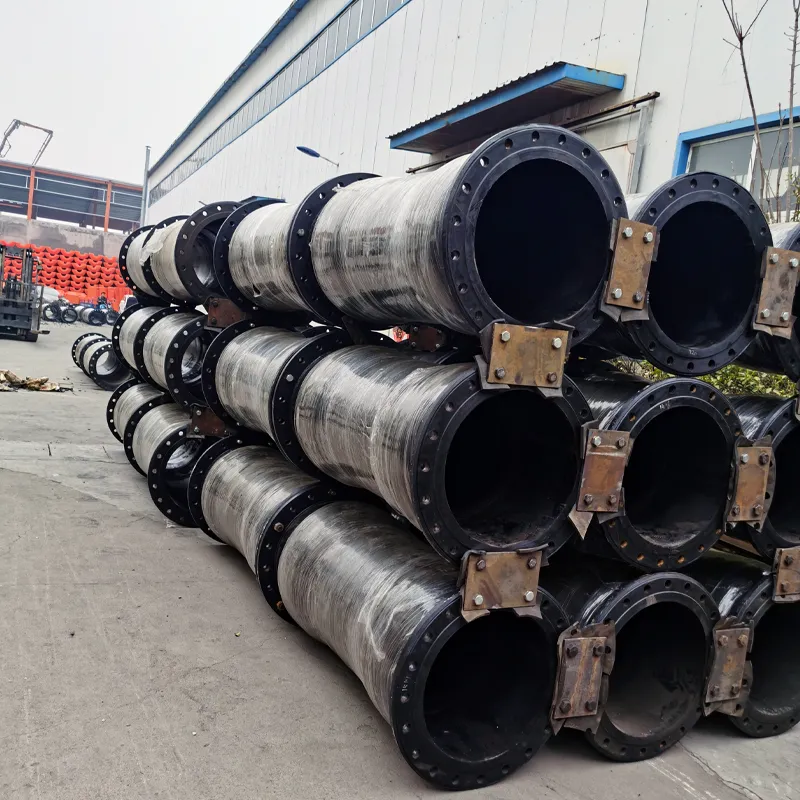
The construction of end rubber tubes (typically referring to sealing and waterstop rubber strips used in positions such as expansion joints and settlement joints of concrete structures, such as back-adhered and centrally embedded waterstop strips) is crucial, as their quality directly affects the waterproofing effect and durability of the structure.
Below are detailed construction precautions for end rubber tubes, covering all aspects before, during, and after construction.
I. Preparations Before Construction
1. Material Inspection and Acceptance:
◦ Specification and Model: Verify whether the material, specification, and model of the rubber tube meet the requirements of the design drawings.
◦ Appearance Quality: Check if there are any defects on the surface of the rubber tube that may affect its performance, such as bubbles, cracks, damage, scars, or mechanical injuries.
◦ Physical Properties: Examine the quality certificates provided by the manufacturer (such as certificates of conformity and test reports) to ensure that their physical and mechanical properties (such as hardness, tensile strength, elongation at break, and compression set) meet the standards.
◦ Storage: Rubber tubes should be stored in a ventilated and dry warehouse, avoiding direct sunlight, high temperatures, heat sources, and contact with oils, acids, alkalis, and other harmful substances. When stacking, they should not be too high to prevent deformation from heavy pressure.
2. Technical Preparation:
◦ Familiarize with Drawings: Construction personnel must fully understand the design intent, clearly defining the installation position, fixing method, and relationship with adjacent components of the rubber tube.
◦ Technical Briefing: Conduct a detailed technical and safety briefing for the construction team to ensure that each operator is clear about the construction process and quality standards.
3. Base Layer Treatment:
◦ Contact Surface Cleaning: The concrete surface where the rubber tube is installed must be solid, flat, dry, free of floating slurry, oil stains, and debris. Grinding treatment should be performed on uneven areas.
◦ Embedded Part Inspection: Check if the embedded fixing parts (such as steel bar clamps, bolts, etc.) are complete, in the correct position, and firmly fixed.
II. Precautions During Construction
1. Positioning and Installation:
• Accurate Positioning: Installation must be strictly carried out according to the design location, ensuring it is located at the center of the structural joint or the designated position. For centrally buried waterstops, their centerline should coincide with the centerline of the deformation joint.
• Secure Fixation: Reliable fixation should be achieved using dedicated steel bar clamps, flat steel, bolts, or wire to prevent displacement, twisting, or flipping during concrete pouring. The fixation spacing should be reasonable (typically 300-500mm), and appropriately increased at bends or intersections. Fixation points should be selected on the flanges of the rubber tube or dedicated installation holes, avoiding drilling directly into the main waterstop body.
• Connection Treatment: When extending the rubber tube, the quality of the joint is critical. Hot vulcanization connection (preferred): Performed by professional personnel using a dedicated vulcanizer, resulting in high joint strength and good sealing. The joint surface should be flat, smooth, and free of defects. Cold bonding: Using dedicated adhesive, ensuring clean bonding surfaces, uniform adhesive application, and firm pressing. Strictly prohibited: Simple lap joints or random bonding with non-dedicated adhesives.
2. Concrete Pouring Stage (Most Critical Phase):
• Prevent Damage: During concrete pouring, pump pipes, vibrators, etc., must not directly impact or collide with the rubber tube. Strong vibration near the rubber tube should be avoided.
• Adequate Vibration: Sufficient and uniform vibration must be performed on both sides of the rubber tube, especially below the flanges, to ensure concrete compaction, air bubble removal, and prevent voids or honeycombing at the bottom of the rubber tube.
• Correct Displacement: A dedicated person should monitor during pouring, checking the position of the rubber tube at all times. Any displacement or deformation should be adjusted and corrected immediately.
• Continuity: Horizontal construction joints should be avoided as much as possible near the rubber tube. If unavoidable, additional measures must be taken to ensure sealing continuity at that location.
3. Special Area Treatment:
• Corners: At the(convex and concave corners) of the structure, the rubber tube should not be folded into a 90-degree right angle directly. Instead, it should be formed into an arc shape (radius typically no less than 200mm) to prevent tearing due to stress concentration at this location.
• Intersections: When two joints cross,(finished cross or T-type fittings) should be used, connected via vulcanization to ensure overall integrity.
• End Treatment: For exposed ends, temporary protective measures should be taken to prevent contamination or damage, facilitating connection with subsequent waterproofing layers or sealant.
III. Post-Construction Protection and Inspection
1. Finished Product Protection:
• During subsequent processes (such as steel bar welding, formwork setup and removal), electric welding or gas cutting operations must not be performed near the rubber tube to prevent sparks from burning the rubber.
• Formwork removal should be done carefully to avoid scratching or tearing the rubber tube with hard objects like pry bars.
2. Quality Inspection:
• Process Inspection: Before concrete pouring, concealed project acceptance should be conducted, focusing on checking the positioning, fixation, joints, and appearance of the rubber tube.
• Final Inspection: After concrete pouring, check if the concrete on both sides of the rubber tube is compact, whether the rubber tube has displaced or twisted, and if the exposed parts are intact.
Summary:
The construction of end rubber hoses is a meticulous task. The five core principles to ensure their final waterproofing effect are ‘precise positioning, secure fixation, high-quality joints, careful pouring, and comprehensive protection’. Neglecting any may lead to the failure of the entire waterproofing system, so full-process quality control must be implemented.