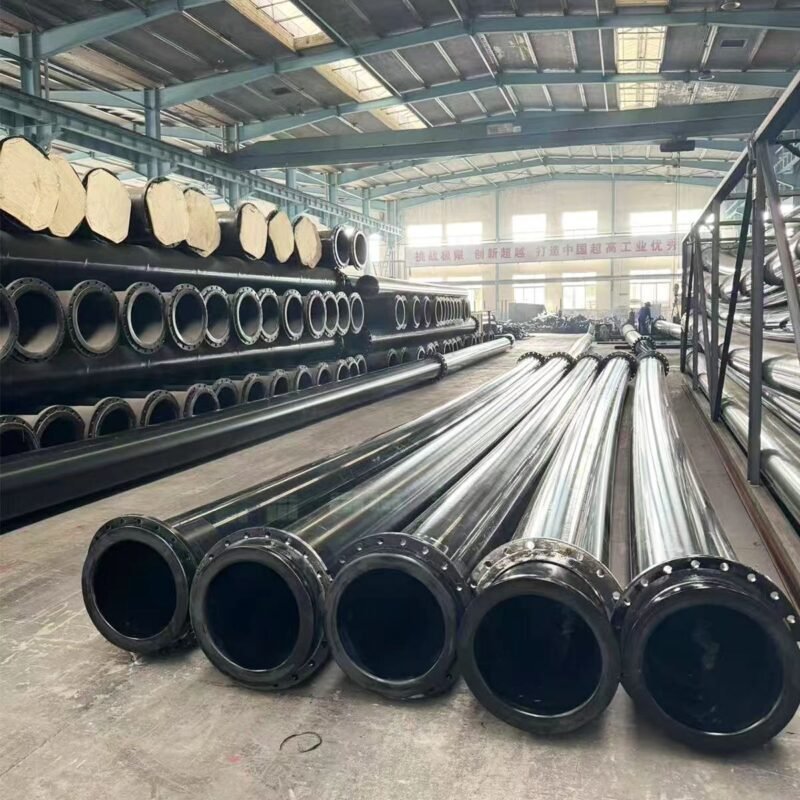
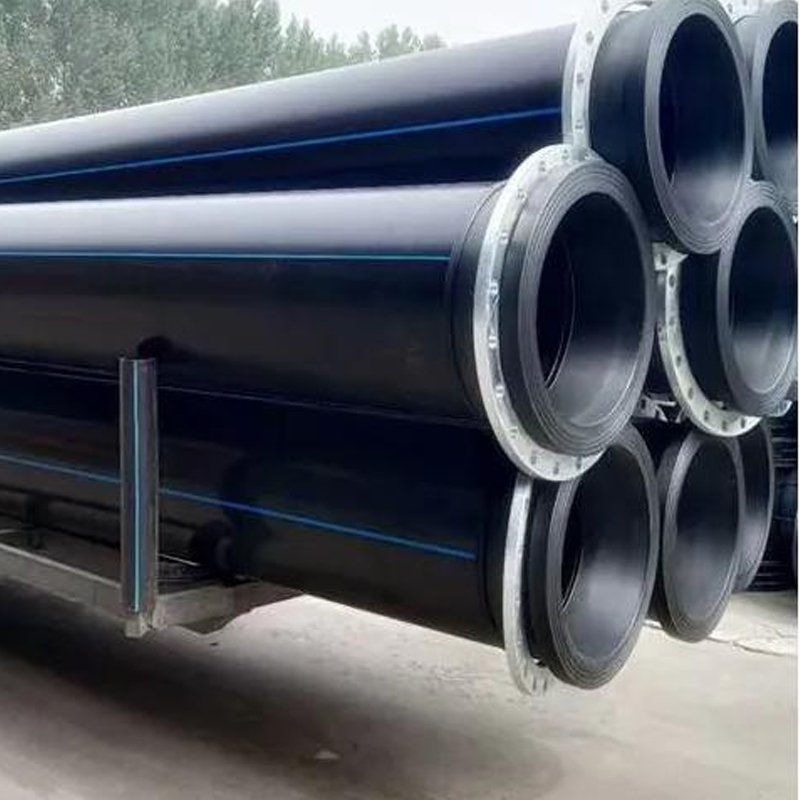
Structure Composition of Rubber Hose

Rubber mattress pipes are a common underwater foundation protection facility, mainly used to prevent scouring and damage to foundation structures such as bridge piers, piers, embankments, and submarine pipelines by water flow. Their structural composition can be understood from two dimensions: material composition and physical structure.
I. Material Composition
The core material of rubber mattress pipes is rubber, but it is not a single material but a composite material system:
1. Skeletal Material (Reinforcement Layer):
– Material: Usually high-strength synthetic fibers such as polyester, nylon, polypropylene, or aramid.
– Form: Mostly woven fabric with warp and weft threads or oriented ropes.
– Function: This is the ‘skeleton’ of the rubber mattress pipe, responsible for withstanding the tension of the internal filling material and the impact force of external water flow, ensuring that the pipe body does not deform excessively or rupture under pressure.
2. Matrix Material (Rubber Compound):
– Material: Mainly natural rubber or synthetic rubber (such as chloroprene rubber).
– Function:
■ Wrapping and Protection: Wrapping the skeletal material to prevent it from being worn, corroded, and eroded by marine organisms.
■ Providing Flexibility: Giving the mattress pipe excellent flexibility and elasticity, allowing it to adapt to complex underwater terrain and uneven settlement.
■ Sealing: Ensuring the pipe body has good air tightness and water tightness.
3. Inner and Outer Rubber Layers:
– Inner Rubber Layer: Directly in contact with the filling material, requiring good wear resistance.
– Outer Rubber Layer: Directly in contact with the water body and external environment, needing excellent resistance to seawater corrosion, aging, ozone, ultraviolet radiation, and anti-fouling by marine organisms.
4. Accessories:
– Pipe Head (Pipe Plug): Components used to close both ends of the pipe body, usually made of metal or high-strength engineering plastic, with lifting holes and grouting holes reserved.
– Lifting Rings/Bands: Rubber bands or metal rings pre-embedded on the outer surface of the pipe body, used for lifting and positioning during construction.
– Connecting Components: Used to connect multiple mattress pipes into an integrated structure.
II. Physical Structure
From the overall shape and structure, the structure of rubber mattress pipes is as follows:
1. Pipe Body:
– This is the basic unit of the mattress pipe, a hollow cylindrical rubber hose. Its diameter and length can be customized according to engineering requirements, with common diameters ranging from tens of centimeters to several meters.
2. Internal Cavity:
– The hollow part inside the pipe body, used for filling ballast materials.
3. Filling Material:
– Material: Usually sand, gravel, cement mortar, or concrete.
– Function: Provide sufficient weight to allow the mattress pipe to stably sink to the bottom of the water and resist scouring by water flow. After filling, the rubber mattress pipe becomes a flexible, high-self-weight protective body.
4. Mattress Pipe Array (System):
– The protective capacity of a single rubber mattress pipe is limited. In practical engineering, dozens or even hundreds of rubber mattress pipes are connected side by side to form a huge, flexible ‘mat’ or ‘protective blanket’ covering the base to be protected. This array is the origin of the term ‘mattress pipe’.
– Connection Method: Usually, adjacent pipe heads’ lifting rings are串联 using ropes, chains, or dedicated connectors to form an integrated whole.
Summary and Features
The structural core of rubber mattress pipes can be summarized as a flexible tubular container composed of a high-strength fiber skeleton and environment-resistant rubber, filled with heavy materials inside, and formed into a large-area integrated protection system through parallel arrangement.
Its main features include:
• Coexistence of high strength and high flexibility: The internal skeleton provides strength, while the external rubber offers flexibility, allowing it to conform to irregular riverbeds or seabeds.
• Good durability: The rubber material can resist seawater corrosion and biological erosion, resulting in a long service life.
• Good integrity: By connecting to form a large-area protection system, local failure is less likely to occur.
• Relatively simple construction: It can be filled and connected on shore, then deployed as a whole, reducing the time and difficulty of water-based operations.
• Eco-friendly: Its porous structure facilitates exchange between water bodies and the substrate. Over time, after silt accumulation, it can form a new ecological environment.
It is hoped that this detailed explanation will help you fully understand the structural composition of rubber mattress pipes.