Structure Composition of Dredging Rubber Hoses
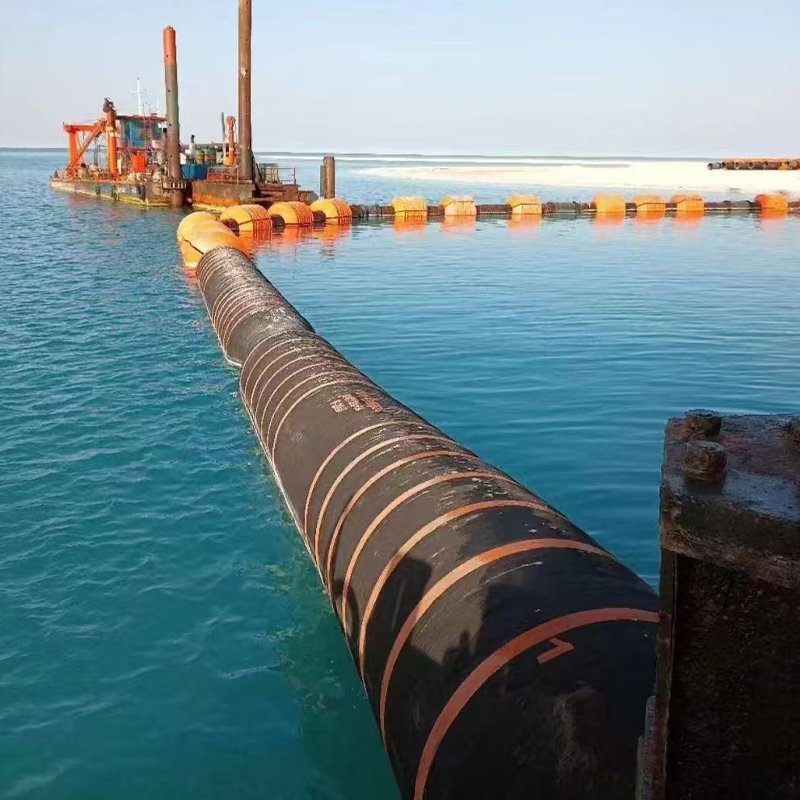
Dredging rubber hoses (also known as slurry hoses or suction hoses) are critical components in dredging projects, used for conveying mixtures of sediment, gravel, silt, and other materials. Their structural design must balance wear resistance, pressure resistance, flexibility, and corrosion resistance.
A typical dredging rubber hose is composed of the following parts, from inner to outer layers:
1. Inner Rubber Layer
• Function: This is the innermost layer of the hose, directly in contact with the abrasive medium being transported (such as sediment and stones), and is key to wear resistance.
• Materials and Characteristics:
◦ Usually made of highly wear-resistant natural rubber or synthetic rubber (such as high-wear NR, SBR, etc.).
◦ The rubber compound is specially formulated to have excellent cut resistance, tear resistance, and impact resistance.
◦ The inner wall is typically very smooth to minimize flow resistance and prevent material buildup.
2. Reinforcement Layer/Skeleton Layer
This is the ‘pressure-bearing skeleton’ of the rubber hose, responsible for withstanding internal pressure, negative pressure (suction) and external loads. It is usually composed of multiple layers:
• Fabric Layer:
◦ Made of woven high-strength synthetic fibers (such as nylon, polyester, aramid) or cord fabric.
◦ These layers are cross-wrapped at specific angles, providing the hose with high-pressure resistance, expansion resistance, and good flexibility.
◦ The number of layers directly determines the hose’s rated working pressure.
• Steel Wire Rings:
◦ Typically embedded at the ends of the hose with high-strength steel wire rings.
◦ Function: Prevent the hose from being sucked flat, deformed, or having its end detached under negative pressure (suction conditions). It provides rigidity and shape retention at the ends.
3. Outer Rubber Layer
• Function: Protect the inner reinforcement layer from damage caused by external environmental factors, such as sun exposure, rain, ozone erosion, seawater corrosion, mechanical impacts, and wear.
• Materials and Characteristics:
◦ Usually made of rubber with weather resistance, aging resistance, and ozone resistance.
◦ The color is typically black (as carbon black is an excellent UV absorber), though other colors may also be available.
◦ The surface may have a pattern or be smooth to enhance grip and surface wear resistance.
According to structural form classification
In addition to the basic components mentioned above, dredging rubber hoses are also divided into several common types based on their overall structure:
A. Pure Rubber Hose
• Structure: Composed only of an inner rubber layer, a fabric-reinforced layer, and an outer rubber layer, without any metal parts.
• Features: Lightweight, good flexibility, and lower cost.
• Application: Mainly used in situations with lower working pressure and non-extreme wear, or as the水上 portion of floating pipelines.
B. Braided Wire Hose
• Structure: Steel wires or steel ropes are spirally embedded in the reinforcement layer along the hose body.
• Features:
◦ Extremely high negative pressure resistance, will not collapse inward.
◦ High pressure-bearing capacity and good anti-expansion performance.
◦ Heavier than pure rubber hoses, with slightly reduced flexibility.
• Application: This is the most commonly used type of dredging hose, especially suitable for connection points where both pressure conveying and suction operations are present, such as the inlet and outlet of pumps.
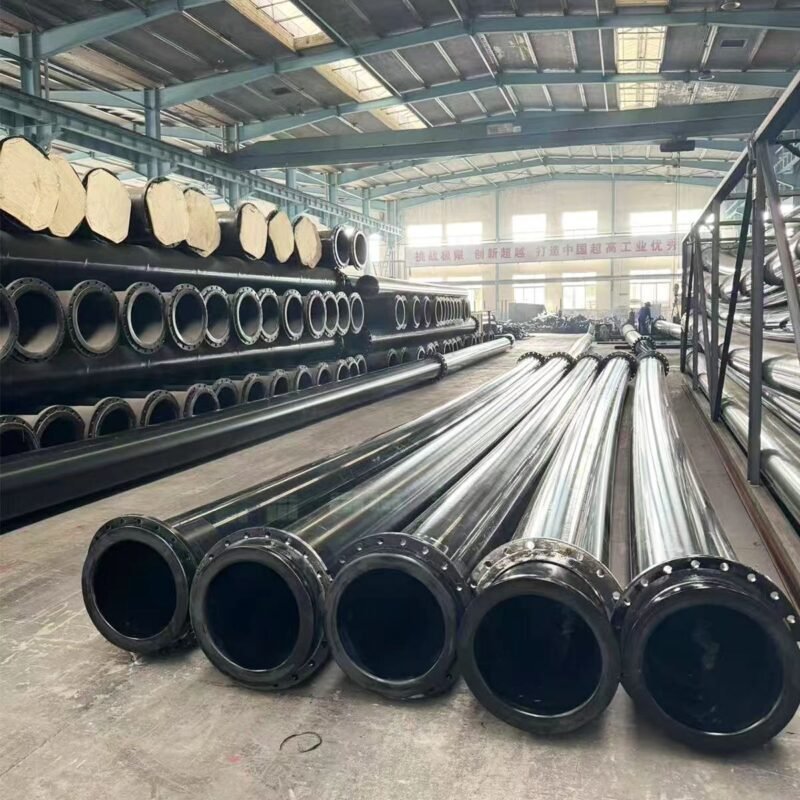
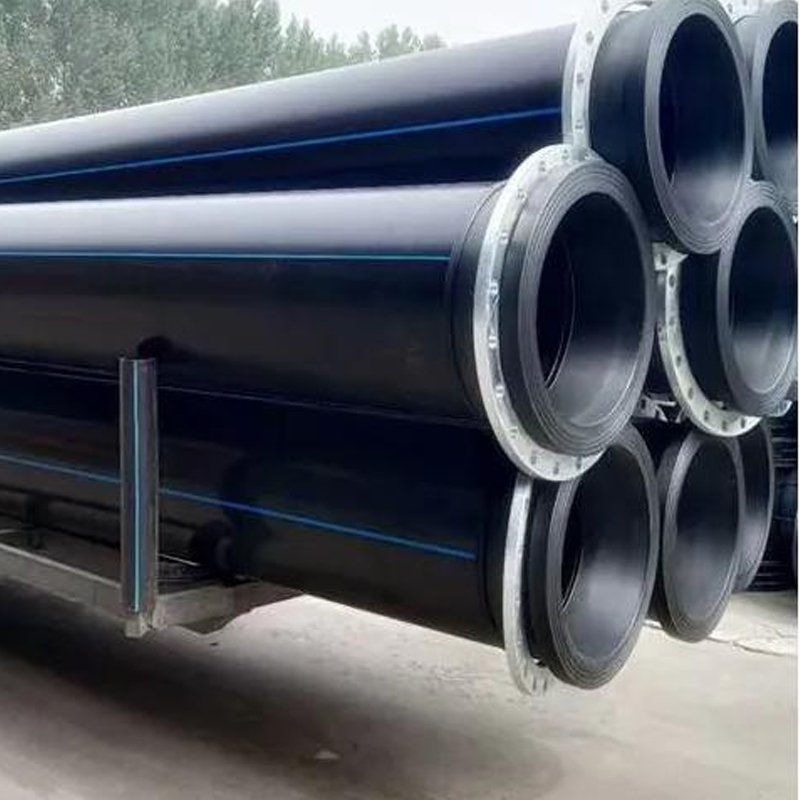
C. Flanged Rubber Hose
• Structure: Metal flanges are directly vulcanized (combined with rubber under high temperature and pressure) at both ends of the hose body.
• Features:
◦ Quick and secure connection with good sealing performance.
◦ The flange itself also serves as a steel wire ring, providing excellent negative pressure resistance.
• Application: Used for positions requiring direct rigid connection with pumps, steel pipes, or other flange-equipped equipment.
D. Floating Rubber Hose
• Structure: Wrapped with a layer of high buoyancy material (such as closed-cell foam plastic) outside the rubber hose, with a wear-resistant protective layer on the outermost layer.
• Features: Can float on the water surface.
• Application: Used for connecting dredgers and shore-based slurry discharge pipelines, i.e., the ‘floating pipe’ section.
Summary
A typical dredging rubber hose can be summarized as: ‘Inner flexible, outer strong, with bones to support its shape’.
• The inner rubber layer is responsible for wear resistance.
• The reinforcement layer (fabric + steel wire) is responsible for pressure bearing and anti-collapsing.
• The outer rubber layer is responsible for protection.
• Special structures (such as braided wires, flanges) are selected and reinforced according to specific operating conditions (pressure, suction, connection method).
This multi-layer composite structure ensures that dredging rubber hoses can work safely and reliably for a long time under extremely harsh conditions.