Structural and Functional Analysis of Tapered Floating Hose
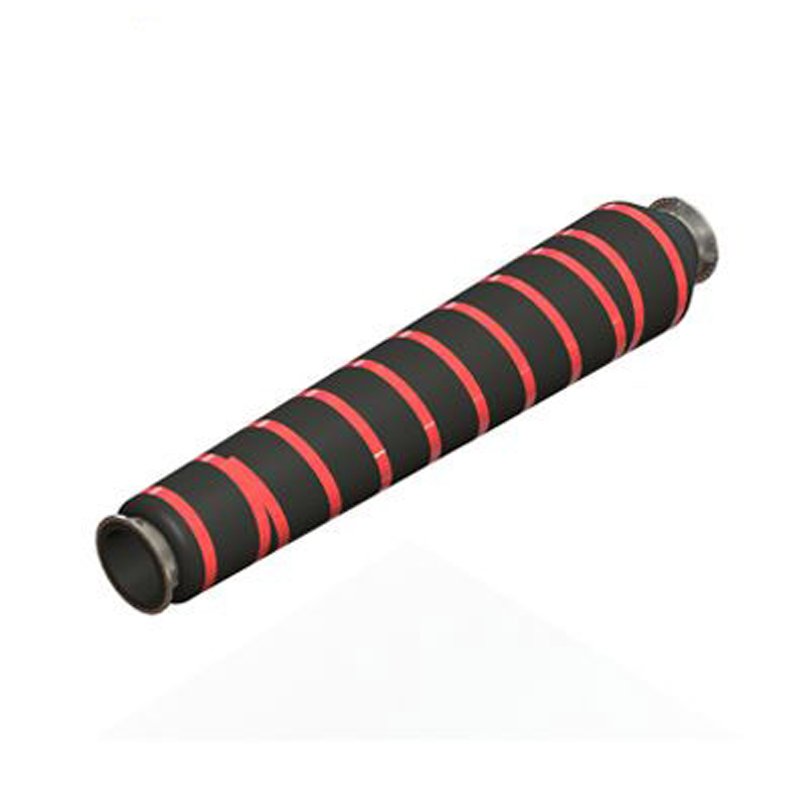
Tapered Floating Hose (Reduced Diameter/Conical Floating Hose) is a specially designed marine oil transfer hose, mainly used to connect pipelines of different diameters. Particularly in single-point mooring systems, it is used to connect the thicker main pipeline hose with finer hoses or tanker pipelines. Its core function is to achieve a smooth transition of pipe diameters and ensure sufficient buoyancy (usually requiring a minimum of 20% residual buoyancy) and structural integrity to adapt to harsh marine environments.
🔩 Detailed Structural Composition
The structure of Tapered Floating Hose is a typical multi-layer composite design to meet requirements such as pressure resistance, sealing, floating, and durability. Its pipe body structure, from inside to outside, usually includes the following layers:
Structural Layer Main Function Common Materials and Composition
Inner Rubber Layer Directly contacts the conveyed medium (such as crude oil), providing oil resistance, corrosion resistance, and ensuring a smooth inner wall to reduce flow resistance. Nitrile rubber (NBR), or a blend of nitrile rubber and hydrogenated nitrile rubber to enhance performance.
Reinforcement Layer Withstands internal pressure, axial tension, and external impact, serving as the ‘skeleton’ of the pipe body to ensure overall strength. Cord Reinforcement Layer: Typically composed of coated polyester fabric-8 or similar high-strength fibers.
Helical Wire Layer: One or more layers of steel wires helically wound, significantly enhancing the tensile and compressive strength of the pipe body.
Middle Rubber Layer Bonds different reinforcement layers, acting as a stress buffer and isolator. A blend of natural rubber and styrene-butadiene rubber.
Floatation Layer Provides primary buoyancy, allowing the hose to float on the sea surface. Closed-cell foam materials, such as multi-layer closed-cell sponge rubber, ensure stable buoyancy.
Outer Cover Layer Protects the internal structure of the pipe from seawater corrosion, ultraviolet radiation, wear, and climate aging. Chloroprene rubber (CR) or polyurethane, or a blend of natural rubber, styrene-butadiene rubber, and ethylene propylene diene monomer (EPDM) rubber.
End Fittings Achieve a sturdy sealed connection between the hose and pipes or flanges. Metal flanges and short sections, bonded to the pipe body as an integral unit through specific processes.
⚙️ Tapered Design and Key Features
1. Tapering Implementation Methods:
◦ Tapering can be directly formed on the hose body .
◦ It can also be designed at the end fittings, for example, by tapering the end with a larger inner diameter .
◦ Sometimes, a combination of the above two processes is used to achieve tapering .
2. Conductivity: According to standard requirements, such hoses are typically equipped with conductive continuity to safely dissipate static electricity that may be generated during the transportation of oil products.
3. Pressure Rating: Specific pressure ratings need to be determined based on design standards and application scenarios. For example, the burst pressure of some standard floating hoses can reach 7.5 MPa .
💎 Summary
Tapered Floating Hose reliably connects oil pipelines of different diameters in harsh marine environments through its multi-layer composite structure and special tapered design. Each layer of its structure bears an important function, from the oil-resistant sealing inside, strong support in the middle, to anti-environmental erosion and stable floating outside, collectively ensuring the safety and efficiency of offshore oil and gas transportation.
Hope the above information is helpful to you. If you have further interest in pressure ratings under specific standards or more detailed material parameters, I can help you find more specialized materials.