Selection and Application Guide for End Rubber Tubes
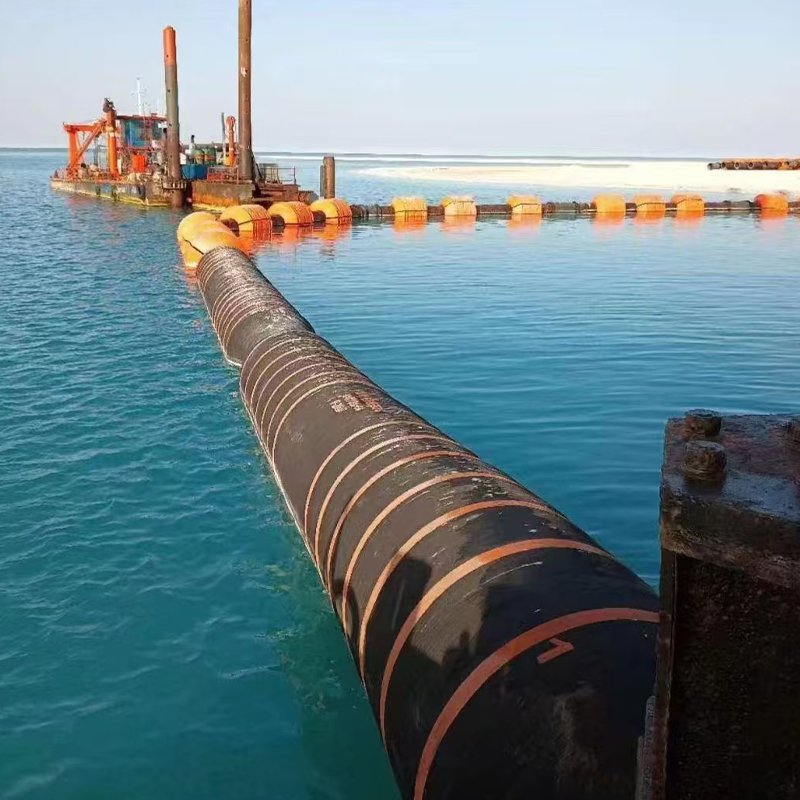
End rubber hoses\” typically refer to hose fittings where the ends of the rubber pipes have undergone special treatment or possess specific structures to optimize connection, sealing, and durability. According to search results, these products have various characteristics in terms of structure, performance, and applicable scenarios. The following table summarizes several common types of end rubber hoses along with their core features, helping you quickly understand them:
End Face Fully Sealed Flexible Rubber Joint
The end face is designed with full sealing, matching the outer diameter of the slip-on flange and featuring drilled holes. Internally, it uses polyester cord fabric with rubber, formed through high-pressure vulcanization .
It has high internal density, strong pressure resistance, vibration damping, and noise reduction. It is widely used for connecting pumps, valves, and pipelines with large vibrations and frequent temperature changes .
It can be used for water (seawater, freshwater, hot and cold water), air, gas, steam, oil, and granular powdery materials, etc.
Reinforced Rubber Joints
Reinforce on the basis of full end face sealing, for example KXT(JGD)-DM-A (reinforced type) and KXT(JGD)-DM-B (reinforced adjustable type)
Further enhances structural strength and sealing performance, making it particularly suitable for harsh environments with high pressure and zero leakage requirements
Compatible with multiple media such as water, oil, air, and steam
Rubber hose with metal wire winding at the end
On the end skeleton layer of the rubber hose, metal wires are reverse-wound in ≥2 layers
Reinforce the end structure with metal wires to prevent rubber cracking and damage caused by frequent disassembly and assembly, significantly extending the service life of the end.
Ceramic-rubber short tube with groove at the end
The pipe does not have flanges at both ends. There is a circumferential groove near the end, and a wear-resistant ceramic layer is embedded in the lining.
When connecting, the flange or clamp can be inserted into the groove; it is extremely wear-resistant and suitable for conveying large-grained hard materials such as gravel.
Gravel and other large-grained, hard materials
💡 How to Select End Rubber Hoses
Choosing the right end rubber hose depends on matching your actual operating conditions. Consider the following points:
• Clarify connection requirements: If you need to connect to pumps, valves, or install on pipelines with significant vibration, flexible rubber joints and their reinforced models are ideal choices .
• Evaluate medium characteristics: When conveying highly abrasive media (such as slurry, granular powders), ceramic-lined rubber short tubes offer better protection . For common media like water, air, and oils, standard rubber joints are sufficient .
• Consider working pressure and sealing: In high-pressure systems or those with extremely high sealing requirements, end-face fully sealed reinforced or reinforced rubber joints should be prioritized . For scenarios with frequent disassembly, hoses with metal wire wrapped at the ends can effectively resist pulling off and tearing .
• Pay attention to installation details: Especially for large-diameter rubber hoses, installation must be done carefully. It is recommended to add limit devices to prevent pulling off, and the pipeline should have fixed supports . Bolts should be tightened symmetrically and gradually to ensure the ball flange is properly positioned, preventing early damage .
Hope the above information helps you make a suitable choice. If you can provide specific application scenarios (e.g., for water supply, chemical industry, or machinery equipment), as well as the type of medium, temperature, and pressure range, I may be able to offer more specific advice.