Rubber flange rubber expansion joint
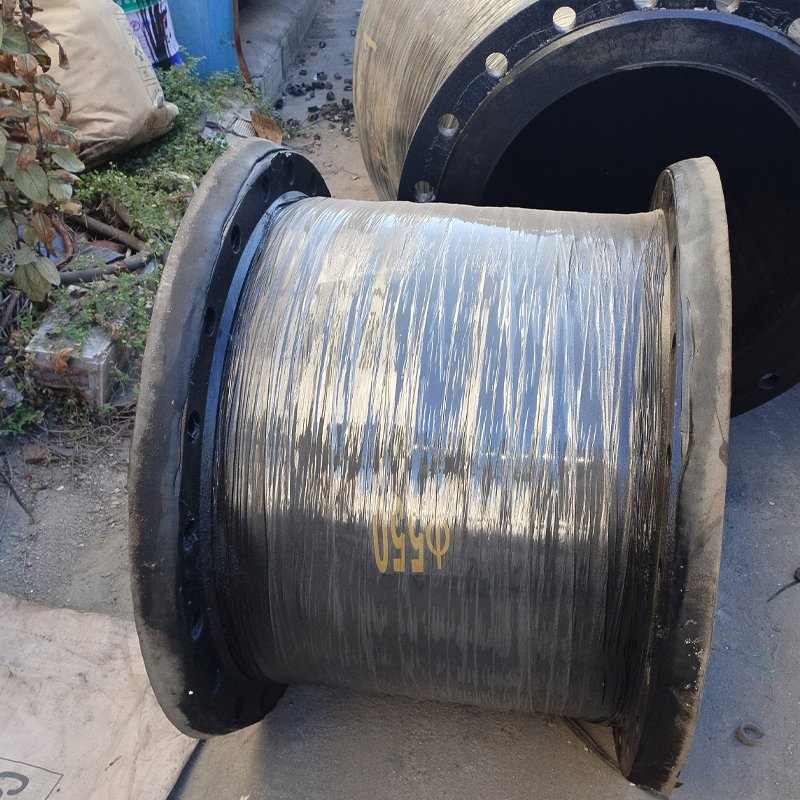
Rubber flange rubber expansion joint, also known as flexible rubber coupling or rubber flexible connection, is a flexible element used for pipe connections. Here is an in-depth introduction:
Structure and Material
– Structure: Generally consists of a smooth wavy compensating element with rubber flanges at both ends and a metal flange. The metal flange often adopts a loose structure, with the surface of the wavy compensating element made of rubber and the inner layer reinforced with several layers of high-strength fibers or steel strips (wires). These reinforcing fibers or steel strips extend to the rubber flanges at both ends, which contain hard steel wire skeletons.
– Material: Rubber materials typically include natural rubber, neoprene, and EPDM, each with different performance characteristics. For example, natural rubber has good elasticity and wear resistance; neoprene has better weather resistance and ozone resistance; EPDM has excellent corrosion resistance, heat resistance, and aging resistance. Reinforcing fiber materials generally include polyester fabric and nylon fabric, which have high strength and good flexibility, enhancing the pressure-bearing capacity and tensile strength of the rubber expansion joint.
Working Principle
Utilizing the high elasticity, high air tightness, medium resistance, and climate resistance of rubber, along with the support from internal reinforcing fibers and steel wire skeletons, the rubber expansion joint can effectively compensate for axial, lateral, and angular displacements caused by temperature changes, mechanical vibrations, and foundation settlements in pipeline systems. It also provides vibration reduction, noise reduction, sealing, and leakage prevention functions.
Performance Characteristics
– Strong displacement compensation capability: Can accommodate significant axial, lateral, and angular displacement compensation, effectively alleviating stress caused by thermal expansion and contraction, equipment vibration, etc., ensuring safe operation of the pipeline system.
– Excellent vibration reduction and noise reduction effects: Rubber material itself has good elasticity and damping properties, capable of absorbing and isolating vibrations and noise in the pipeline system, reducing their impact on the surrounding environment and equipment.
– Superior sealing performance: Using integral vulcanization technology or special sealing structures ensures good sealing at the connection between the rubber expansion joint and the pipeline, preventing medium leakage.
– Strong corrosion resistance: Suitable rubber materials can be selected based on different usage environments and media, providing acid resistance, alkali resistance, oil resistance, seawater resistance, etc., extending service life.
– Easy installation: Small size, light weight, easy to install and disassemble, does not require special tools or complex installation processes, significantly shortening construction time.
Application Areas
– Water supply and drainage systems: Used in urban water supply and drainage pipelines, sewage treatment plants, pump stations, etc., compensating for pipeline displacement and vibration to ensure stable system operation.
– HVAC systems: Widely used in air conditioning chilled water, cooling water, hot water, etc., reducing pipeline vibration and noise, improving system comfort and efficiency.
– Industrial pipeline systems: Such as chemical, petrochemical, pharmaceutical, papermaking, food and beverage industries’ various process pipelines, suitable for conveying various corrosive, viscous, high-temperature, high-pressure media, protecting the pipeline system from stress damage and corrosion.
– Power industry: Circulating water pipelines, steam pipelines, flue gas desulfurization pipelines in power plants, and cable protection in substations.