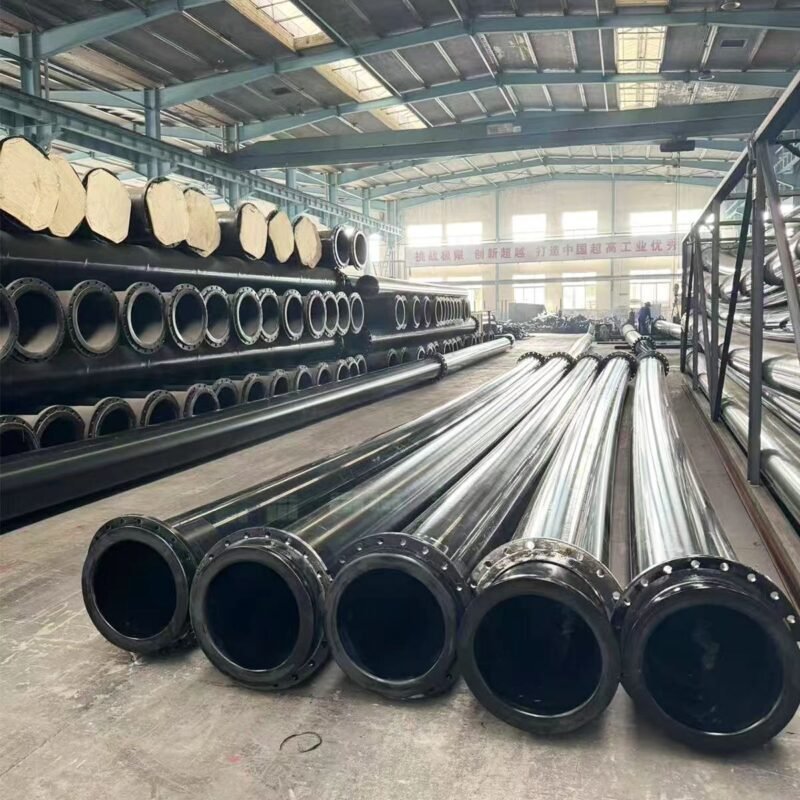
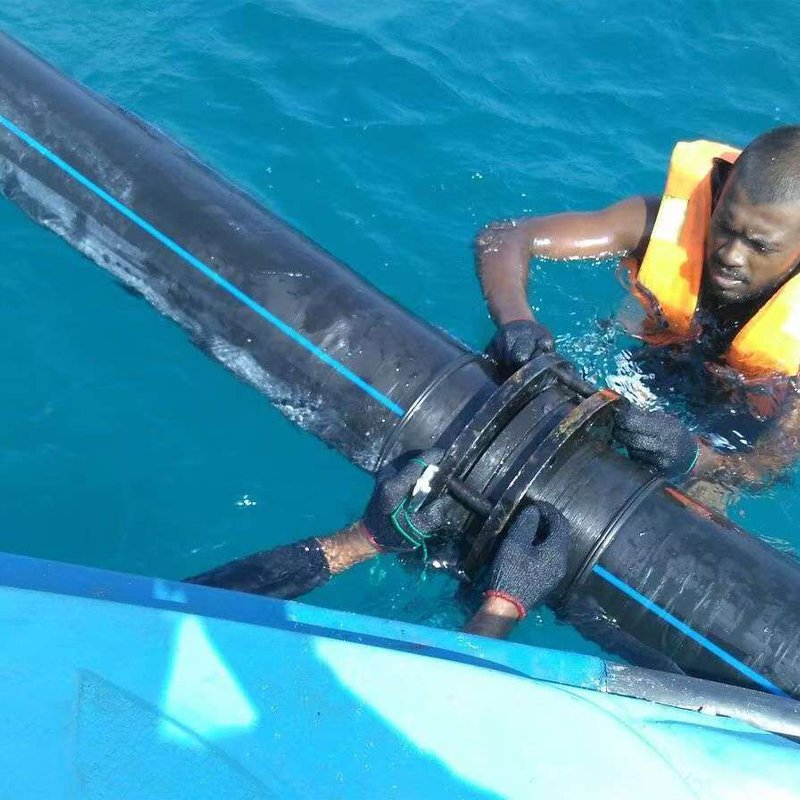
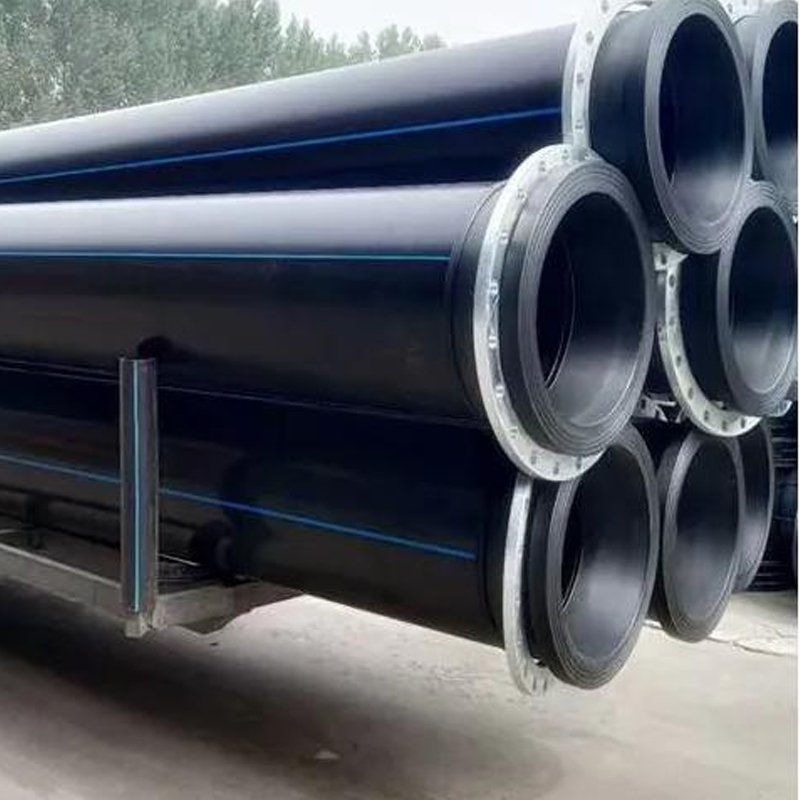
Related instructions for the wear-resistant ring of the internal armor dredging rubber hose
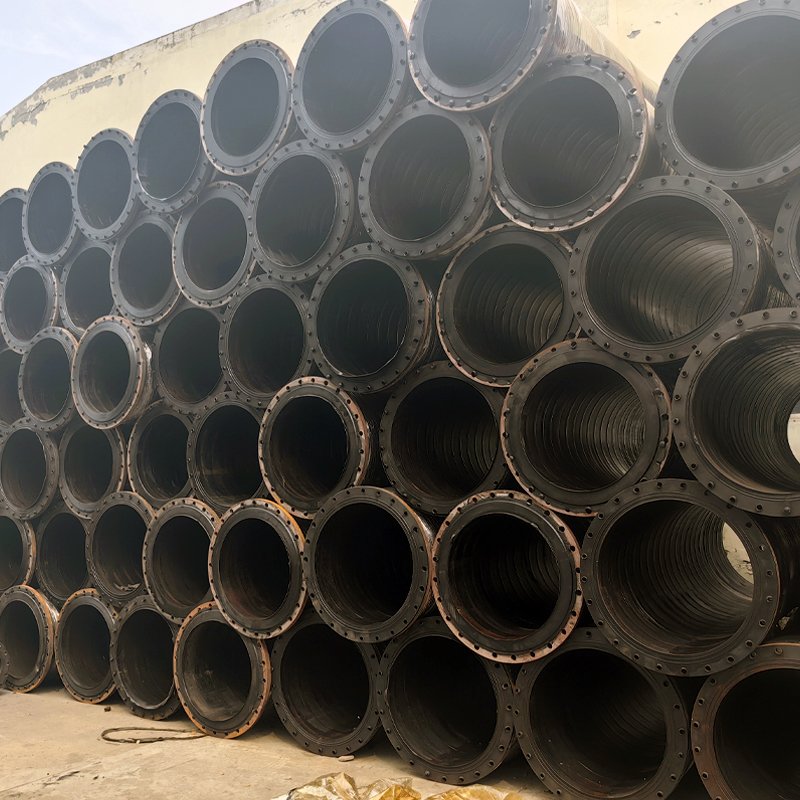
Regarding ‘abrasion-resistant rings for internal armor dredging rubber hoses’, the industry currently does not have a completely unified and strict definition. It does not refer to a single standard part, but rather is more of a general term within the industry for various structural abrasion-resistant components. Its specific form and technical details may vary depending on the manufacturer, product standards, or patent designs.
What is the wear-resistant ring of the inner armor dredging rubber hose?
In dredging projects (such as mud excavation and sand discharge), the inner wall of rubber hoses needs to withstand intense erosion from high-speed flowing sand, stones, and slurry. To significantly extend their service life, a common technique is to embed high-hardness wear-resistant components into the inner wall of the rubber hose. These components are typically referred to as ‘wear-resistant rings’, ‘wear-resistant pressure-bearing rings’, or ‘metal wear-resistant layers’, among others.
To help you better understand the differences between various technical approaches, we have compiled several mainstream wear-resistant ring implementation schemes as follows:
Feature dimension/Armored\” Metal Wear-Resistant Layer (Mentioned in Industry Standards)/Inlaid Wear-Resistant Pressure-Bearing Ring (Patent Solution)/External Abrasion-Resistant Spiral Ring (Patent Solution)
Core Structure and Location
A continuous layer composed of multiple metal conical tubes, located on the inner wall of the rubber tube.
Multiple independent circular hard metal rings are spaced and embedded in the inner layer of the rubber tube.
A spiral ring made by winding metal wire, mounted on the outer wall of a rubber tube.
Main Functions
Form a continuous lining protective layer to provide comprehensive wear resistance and pressure-bearing capacity.
Strengthen the local inner wall to enhance wear resistance and pressure-bearing performance while maintaining the flexibility of the pipe body.
Protect the outer wall of the rubber tube to prevent external wear and compression.
Key Technologies/Materials
The material is NM400 wear-resistant steel plate with hardness ≥ HB360.
The ring body is equipped with anti-drop pins and a rubber-compatible coating to prevent detachment and enhance adhesion to rubber.
The ring is equipped with a protruding wear-resistant sleeve, and the connection part uses an inclined surface plug-in sleeve.
Relevant standards/sources
《T/CHIDA 305.5-2021 Rubber Hose with Full-Metal Armor on Inner Wall》(Standard of China Dredging Association)
Patent technologies published by Jigao Network
💎 Summary and Notes
In general, the ‘wear-resistant ring’ you mentioned may refer to the following two scenarios:
– Broadly speaking: Refers to all ring-shaped or continuous metal components embedded in the rubber tube wall to improve the wear resistance of the inner wall.
– Narrowly speaking: Specifically refers to a continuous ‘metal wear-resistant layer’ made by rolling NM400 wear-resistant steel plate that meets industry standards (T/CHIDA 305.5-2021).
If used for procurement, maintenance, or technical selection, it is crucial to clarify the following points:
1. Confirm the specific product type: Contact the supplier to clarify whether the product follows industry standards or specific enterprise patent technologies.
2. Specify the wear-resistant component specifications: If it is a standard armor tube, confirm the steel plate material and thickness; if it is a patented product, understand the material, hardness, and arrangement method of the wear-resistant ring.
3. Refer to the latest patent information: Industry technology is constantly updated. For example, relevant patents in 2024 show that embedded wear-resistant rings have adopted designs such as anti-loosening pins and rubber-friendly coatings to enhance reliability.
If you can provide a more specific use scenario (such as which project it is used for, what the main worn material is), or if you are in contact with a product of a specific brand, I can further analyze the possible technical types it may adopt.