Maintenance and Care of Semi-Float Rubber Pipes
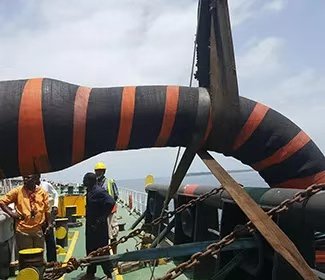
Maintaining and servicing semi-floating rubber hoses requires a focus on standardized daily operations, regular detailed inspections, and creating a suitable storage environment. Below is a table summarizing the main maintenance and service key, along with some additional details not covered in the table:
Daily Use Work
Pressure Avoid exceeding the specified work pressure, prevent sudden pressure impact .
The bending radius must not be less than the minimum bending radius specified. Avoid excessive bending at the joint .
Dragging and Twisting Avoid dragging on rough surfaces to prevent surface wear; it should not be in a twisted state during use .
Transport medium Ensure compatibility between the medium and the rubber hose -1, empty and clean it promptly after use .
Regularly inspect
for appearance issues, such as cracks, cuts, bubbles, localized swelling, and wear of the outer layer exposing the reinforcing layer.
Leakage and Connection Check the pipe body and joint for leakage, and confirm that the joint clamp is securely connected .
Clean storage
Cleaning Method Use the rear empty space for cleaning. Soap water is typically used during cleaning, and solvents such as gasoline and paraffin should be avoided (unless the medium to be transported is similar) . Industries such as food have higher requirements for hot water or chemical cleaning methods .
Storage Environment: Keep away from light (avoid direct sunlight), maintain moderate temperature (recommended 10℃-25℃), keep dry (humidity not exceeding 65%), and ensure good ventilation .
Storage Method: Coiled hoses are recommended to be placed horizontally to avoid deformation of the bottom layer caused by excessive stacking; straight tubes should be stored straight to prevent bending .
Isolation Requirements: Keep away from solvents, oils, acids, copper-iron alloys and other chemicals. Avoid contact with PVC and wood treated for corrosion resistance .
🔍 Additional Maintenance and Inspection Points
• Regular Pressure Testing: If the rubber hose is frequently subjected to high pressure or long-term contact with corrosive liquids, it is recommended to conduct hydraulic testing regularly to ensure its structural integrity.
• Fitting Attention: Pay special attention to the area near the fittings during inspection, as this region is prone to damage due to stress concentration.
• Markings and Date: Check the product markings and production date. Even without visible damage, replacement should be done promptly if it exceeds the recommended service life (e.g., assemblies up to 2 years, hoses up to 4 years).
🗄️ Storage and Other Precautions
• Prevent Electrochemical Corrosion: When storing, situations involving changes in electric or magnetic fields should be avoided, as this may cause current to flow through metal fittings, leading to electrochemical corrosion.
• Protection Against Biological Damage: If stored for a long time, measures should be taken to protect the rubber hose from damage by rodents and insects.
• Strictly Adhere to Service Life: Pay attention to the product’s service life. Even without obvious wear, replacement is required once it exceeds the date indicated on the hose.
Proper maintenance and care can significantly extend the service life of semi-floating rubber hoses. If you could inform me of the specific usage environment of the hose (e.g., dredging projects, industrial fluid transportation, etc.), I might be able to provide more targeted advice.