Maintenance and care of rubber expansion joints
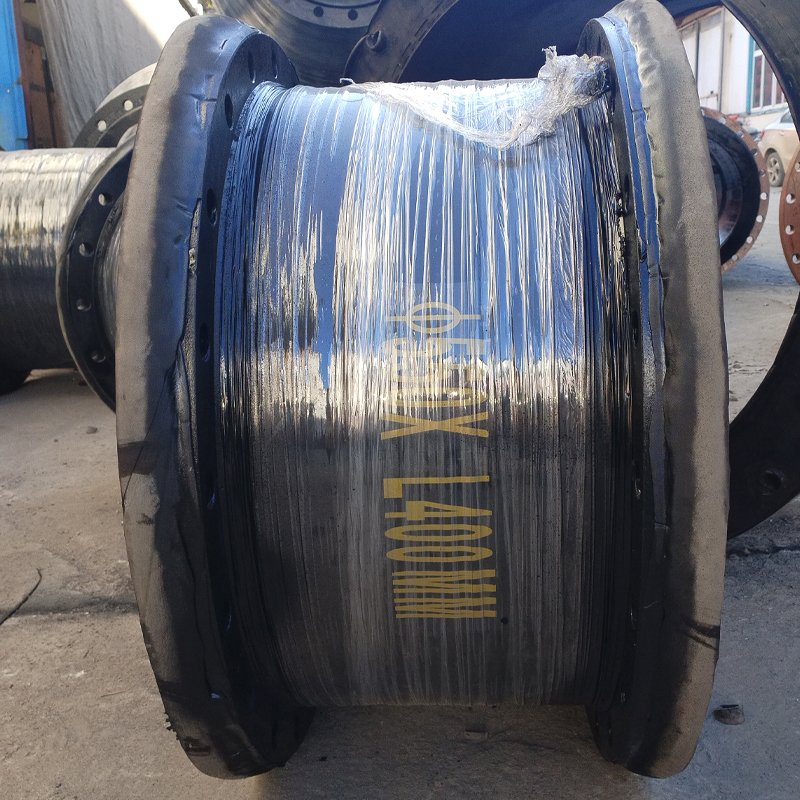
The maintenance and care of rubber expansion joints (also known as rubber flexible connectors or vibration dampers) are crucial for ensuring the safety and stable operation of pipeline systems. Proper maintenance can significantly extend their service life, preventing leaks, shutdowns, or even accidents caused by failure. Here is a detailed guide for the maintenance and care of rubber expansion joints:
1. Daily Inspection (daily or per shift): This is the most basic and important maintenance step, involving visual checks to identify potential issues promptly.
a. Check the appearance status:
– Bulging/swelling: Inspect the rubber surface for any abnormal bulges or swellings, which are usually signs of internal fabric skeleton damage, indicating that the joint may be about to fail.
– Cracks/aging: Check the rubber layer for surface cracks, crazing, powdering, or hardening and brittleness, which are typically caused by ozone, UV exposure, or high temperatures leading to rubber aging.
– Wear: Inspect the joint surface for wear marks, especially where it contacts and rubs against external objects.
b. Check the installation status:
– Offset/twist: Ensure the joint is in its natural state, not over-stretched, compressed, or twisted laterally. Installation errors should be strictly controlled within the product’s allowable range.
– Flange alignment: Check if the connecting flanges are parallel and aligned. Misaligned flanges can impose additional stress on the joint.
– Bolt condition: Check if all installation bolts are present, without any loosening or corrosion signs. Ensure all bolts are evenly tightened.
c. Check the operating status:
– Abnormal movement: Observe the joint’s movement during the operation of the pipeline system (especially when starting/stopping pumps or opening/closing valves) to ensure smooth and natural motion without any abnormal jumping or twisting.
– Leakage: Check for any medium leakage at the joint-flange connection (dripping or seeping).
2. Regular Inspection and Maintenance (monthly or quarterly): Conduct more thorough inspections during shutdowns.
a. Internal inspection (if possible): For large-diameter joints, ensure the system is fully depressurized, isolated, and safe before checking the lining for peeling, wear, or corrosion (especially when conveying abrasive or corrosive media).
b. Re-tighten bolts: After some time of system operation, bolts may loosen due to vibrations and temperature changes. Must re-tighten bolts uniformly using a torque wrench in a diagonal sequence when the system is pressure-free to avoid over-tightening on one side causing flange skew and rubber tearing.
c. Check limit rods/tension rods: For expansion joints with limit tension rods, check if the rod nuts are loose and if the rods are deformed. The limit tension rods absorb blind plate forces and must never be removed or fully tightened during normal operation. They should remain slack, allowing the joint to freely compensate within the set range.
Common Issues and Mitigation Measures
Issue Phenomenon Possible Causes Mitigation Measures
Surface Cracks Ozone/Ultraviolet aging, exceeding usage temperature Record the depth and range of the cracks. If it is surface micro-cracking, continue to observe; if the cracks reach the fabric layer, plan for immediate replacement.
Localized Bulging Internal fabric skeleton fracture, excessive medium pressure Replace immediately! The strength at the bulging area has greatly decreased and may burst at any time.
Joint Twisting Improper installation, insufficient pipe support Stop the machine to adjust the pipe support or reinstall, eliminate twisting stress. Long-term operation under twisting will significantly reduce lifespan.
Flange Leakage Bolt loosening, flange misalignment, damaged sealing surface Tighten bolts in a pressure-free state; if leakage persists, check and replace the gasket or rubber sealing surface; correct flange misalignment.
Excessive Stretching/Compression Incorrect installation length calculation, unexpected pipe thermal displacement Recalculate the required compensation amount, adjust the pipe support, replace with a suitable length joint.
Rubber Softening and Expansion Incompatibility with the medium (oils, chemicals, solvents) Replace immediately! Choose rubber material compatible with the medium (such as EPDM, NBR, fluororubber, etc.).
Installation precautions (preventive maintenance):
Proper installation is the best form of maintenance.
1. Alignment: Ensure that both flanges are parallel and concentric before installation, with any offset within the allowable range of the product.
2. Natural state installation: During installation, the length of the joint in its natural state (factory length) serves as the benchmark. Pre-adjust according to the compensation direction (stretching or compressing), but do not forcibly align the pipes by tightening bolts.
3. Bolt installation: The threaded end of the bolt rod should face outward from the flange for easy inspection and maintenance. Bolts should be tightened evenly, diagonally, and gradually to ensure full contact between the flanges.
4. Avoid sharp objects: Prevent the joint from contacting sharp metal edges, slag, etc., to avoid piercing or cutting the rubber. Protective devices should be added if necessary.
5. Environmental protection: Avoid prolonged exposure to ultraviolet light (sunlight) or ozone, such as when installed outdoors or near large motors, use protective covers to wrap the joint.
Storage and preservation:
Should be stored in a cool, dry, well-ventilated warehouse, avoiding direct sunlight.
Keep away from heat sources, ozone sources (such as high-voltage electrical equipment, motors, fluorescent lights).
Avoid contact with acids, alkalis, oils, and various organic solvents. Store flat, do not stack too high, and keep away from sharp objects.
Summary: The core of rubber expansion joint maintenance lies in ‘frequent inspection, early detection, correct installation.’ Through daily inspections to detect early abnormalities, regular maintenance to eliminate potential hazards, and correct installation and selection to solve problems from the source. Once serious issues affecting structural integrity (such as bulging, deep cracks, media incompatibility) are discovered, the safest option is to plan for immediate replacement, and do not operate while faulty.