Key Construction Precautions for Ultra-High Molecular Weight Polyethylene Pipes
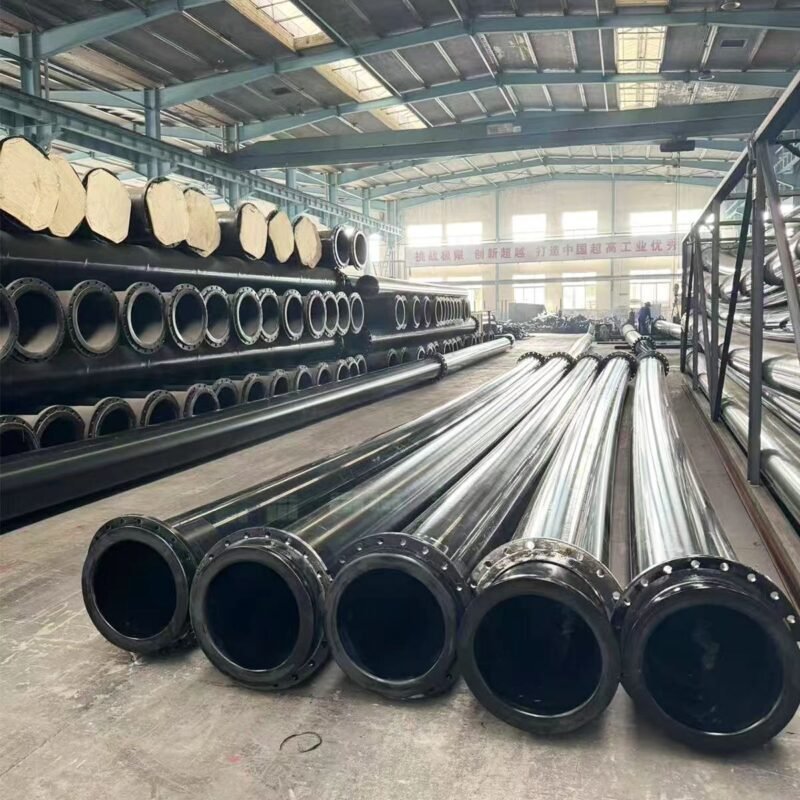
The construction of Ultra-High Molecular Weight Polyethylene (UHMW-PE) pipelines centers on leveraging their high wear resistance, self-lubrication, and impact resistance, while addressing their sensitivity to high temperatures and tendency to deform, to ensure the sealability of connections and long-term system stability.
Below is a summary of key precautions for critical construction stages:
**Construction Stage**
**Key Control Items**
**Specific Operation Key points and Explanations**
**Pre-Construction Preparation**
**Material Inspection and Storage**
Verify specifications and models; check for damage on inner and outer walls.Do not drop, throw, or subject to severe impact or scratching; store away from heat sources.
**Pipe Handling**
Use non-metallic slings (e.g., nylon straps) for lifting to prevent Laceration the pipe wall;Strictly prohibited direct contact between steel ropes and pipes.
**Pipe Connection**
**Selection of Connection Methods**
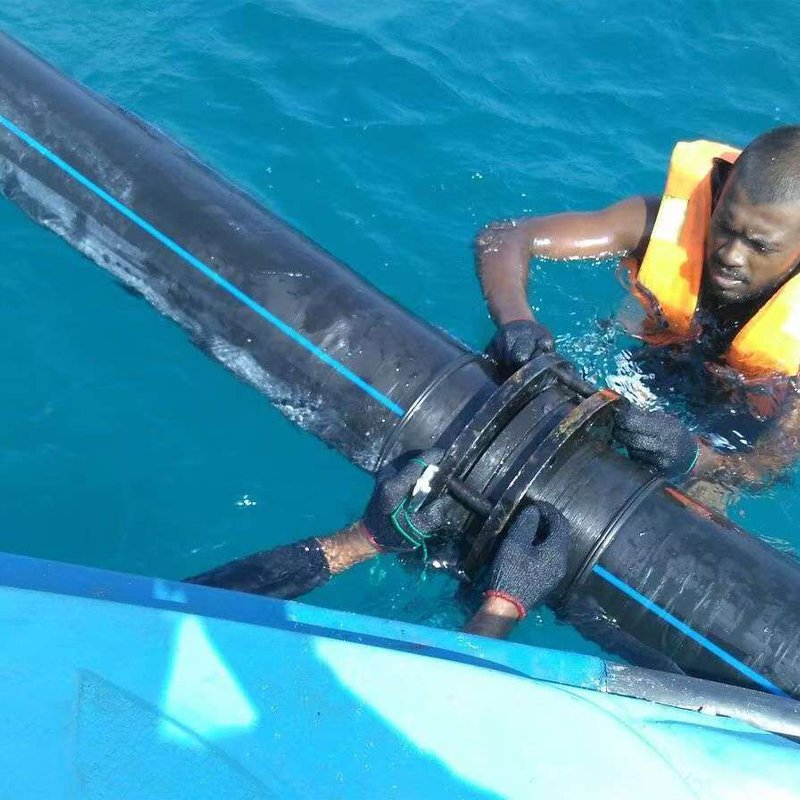
Common methods include electrofusion connection and flange connection; specific methods should be determined based on design requirements and on-site conditions.
**End Port Treatment**
The connection end face must be perpendicular to the pipe axis. Scrape off the surface oxide layer and thoroughly clean to ensure the end face is dry and free of oil.
**Electrofusion Connection**
Straighten the pipe and maintain coaxiality; strictly follow the voltage and heating time parameters provided by the fitting manufacturer; Strictly prohibited moving or rotating the pipe during heating and cooling.
**Flange Connection**
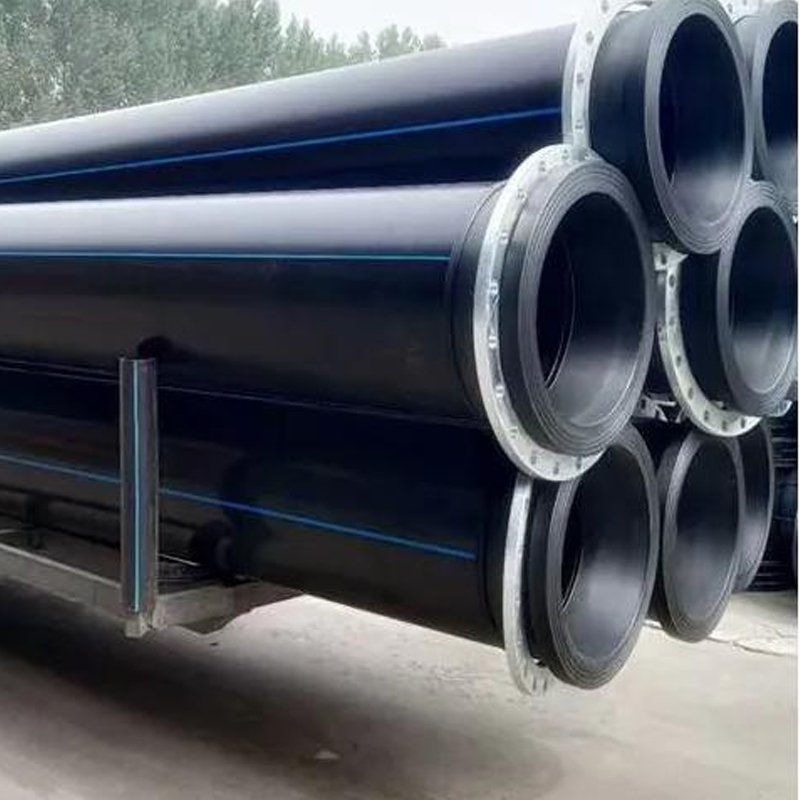
Tighten bolts symmetrically, in stages, and evenly to prevent leakage caused by uneven force; after tightening, the bolt ends should preferably be flush with the nut.
**Laying and Installation**
**Lowering Pipes**
Use non-metallic slings to lower pipes smoothly, avoiding collision with trench walls; after placing the pipe in the trench, promptly inspect for any damage.
**Support and Hanger Installation**
Reliable supports and hangers should be installed at both ends of connection parts such as flanges and valves to prevent additional loads on the connection points.
**Environmental Protection**
Pipes laid above ground should be wrapped with materials like aluminum foil to protect against long-term ultraviolet radiation causing aging.
**Pressure Testing and Flushing**
**Pressure Test**
Strictly prohibited using air pressure testing (except as otherwise specified by regulations); water pressure testing is recommended. The strength test pressure is 1.5 times the design pressure, and the tightness test pressure is 1.15 times the design pressure.
**Filling and Venting**
Slowly fill with water before testing, and Necessarily drain all air from the pipeline system to prevent pressure instability and safety hazards caused by gas compression.
**Pressure Test Observation**
After raising the pressure to the test pressure, the stabilization time should not be less than 2 hours. Closely monitor pressure drop and check for leaks or deformation in joints and pipe bodies.
**Flushing and Disinfection**
After the water supply pipeline passes the pressure test, flushing and disinfection must be performed. The water quality after treatment should comply with the requirements of the \”Hygienic Standard for Drinking Water\” (GB 5749).
### Key Points of In-depth Construction Technology
In addition to the above core steps, specific engineering scenarios require attention to the following points:
– **Construction in Special Environments**: When performing connection operations below -5°C or in windy weather, windproofing and insulation measures (such as setting up temporary sheds) must be taken to prevent the joint from cooling too quickly or getting dusty, which could affect connection quality.
– **Notes on Non-Digging Construction**: If using non-digging traction laying methods such as horizontal directional drilling, it is essential to strictly control the curvature radius of the pilot hole trajectory (usually not less than 1200 times the pipe diameter) and prepare high-quality lubricating mud to reduce retraction resistance and avoid pipeline scratches.
– **Quality Control Standards**: For ultra-high molecular weight polyethylene steel skeleton composite pipes, construction and acceptance must strictly follow the \”Code for Construction and Acceptance of Ultra-High Molecular Weight Polyethylene Steel Skeleton Composite Pipe Pipelines\” (CECS 306:2012). This code has detailed specification requirements for buried pipeline projects in fields such as petroleum, chemical industry, mining, water supply and drainage.
If specific construction scenarios (such as conveying mine slurries, municipal water supply and drainage, or chemical corrosive media) and key construction difficulties (such as construction in extremely cold regions, complex road crossing penetrations, etc.) can be provided, targeted construction recommendations can be further offered.