How to Select Dredging Pipelines

Selecting dredging pipelines involves considering various factors such as project requirements, environmental conditions, material properties, and cost-effectiveness. Here are specific steps and key points for selection:
1. Clarify Project Requirements
– Sludge Discharge Distance: For short distances (<1km), choose ordinary steel pipes or HDPE pipes; for long distances, consider wear-resistant and high-pressure resistant materials like composite steel pipes or ultra-high molecular weight polyethylene pipes.
– Conveyed Medium:
– Sand Characteristics: Particle size, hardness, concentration (e.g., high-concentration coarse sand requires wear-resistant pipes, corrosive sludge needs corrosion-resistant pipes).
– Flow Rate and Velocity: High velocity (>3m/s) requires enhanced wear resistance to avoid pipe wall erosion.
– Working Pressure: For high-pressure conditions (>1.6MPa), choose steel pipes or reinforced plastic pipes.
2. Comparison of Pipe Types
| Pipe Type | Advantages | Disadvantages | Suitable Scenarios |
|———–|————|—————|———————|
| Steel Pipe | High strength, high pressure resistance, easy welding | Prone to corrosion, heavy, higher cost | High pressure, short distance, temporary projects |
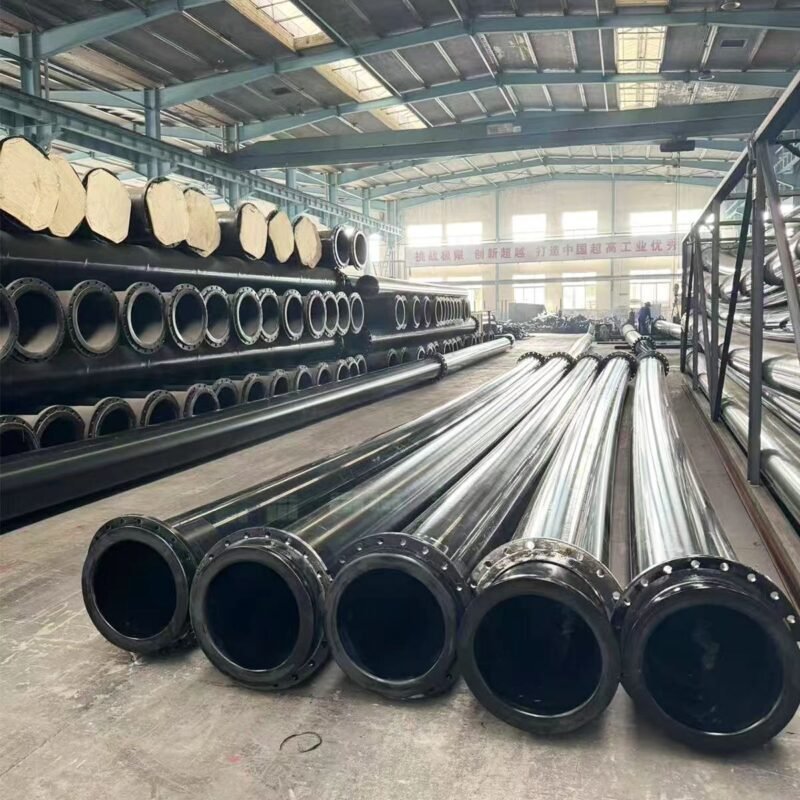
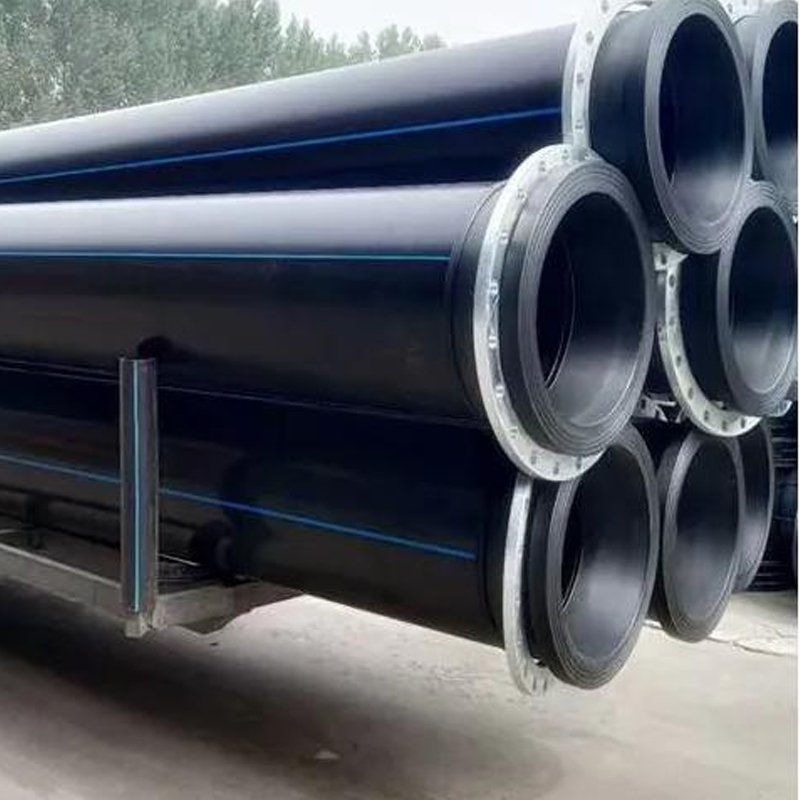
| HDPE Pipe | Corrosion-resistant, flexible, lightweight | Lower pressure resistance (usually ≤1MPa) | Medium-low pressure, corrosive environments, flexible laying |
| Ultra-High Molecular Weight Polyethylene Pipe | Excellent wear resistance (3-5 times that of steel pipes) | Higher cost, complex welding process | High-wear media (e.g., gravel, slag) |
| Composite Pipes (e.g., steel-plastic composite) | Combines wear resistance and corrosion resistance | Expensive, complex connections | Long distance, high wear + corrosive environments |
| Rubber Hose | Flexible, portable, resistant to deformation | Prone to wear, shorter lifespan | Mobile dredging, temporary connections |
3. Key Performance Indicators
– Wear Resistance: Prioritize pipes with ceramic, polyurethane, or ultra-high molecular weight polyethylene linings. Example: Ceramic-lined pipes can last five times longer than ordinary steel pipes when conveying quartz sand (Mohs hardness 7).
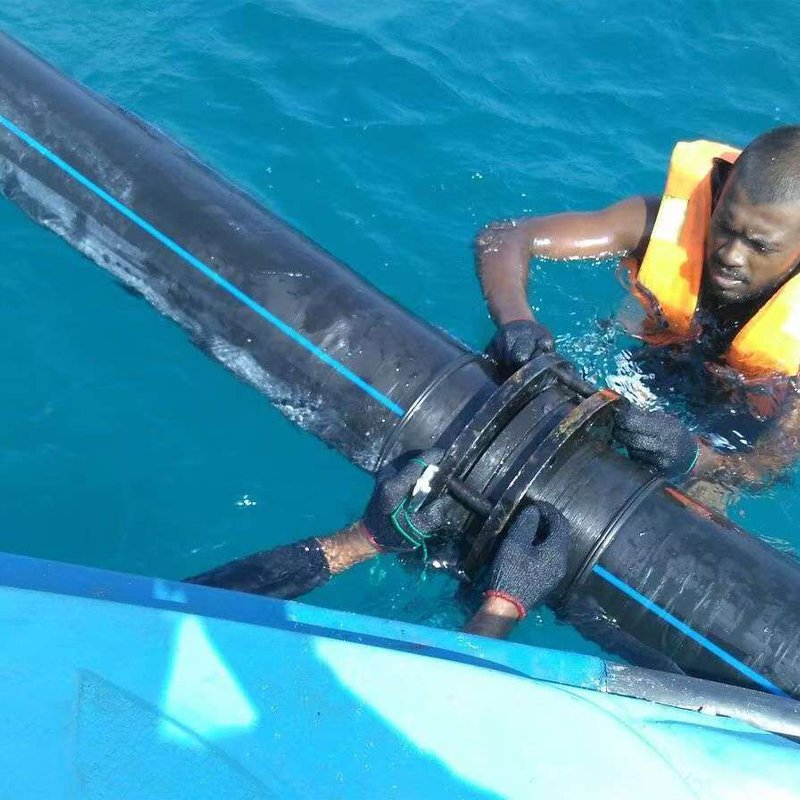
– Corrosion Resistance: Choose HDPE or fiberglass pipes for seawater environments; PP (polypropylene) pipes for acidic sludge.
– Pressure Capacity: Select based on pump pressure, e.g., centrifugal pumps (0.5-1MPa) can use HDPE, while plunger pumps (>2MPa) require steel pipes.
– Connection Methods: Flange connection (high pressure), electrofusion connection (HDPE), quick couplings (frequent assembly/disassembly).
4. Economic and Lifespan Assessment
– Initial Cost: Steel Pipes (~500-800 RMB/m) < HDPE Pipes (~600-1000 RMB/m) < Ultra-High Molecular Weight Polyethylene Pipes (~2000 RMB/m).
– Long-Term Cost: Calculate replacement frequency and maintenance costs. For example, HDPE pipes can last up to 20 years in seawater, whereas ordinary steel pipes need anti-corrosion maintenance every three years.
5. Environmental and Construction Factors
– Terrain Adaptability:
– Complex terrains (e.g., marshlands, reefs) select flexible HDPE pipes or segmented floating pipes.
– Underwater laying requires ballasting design (e.g., concrete-coated steel pipes).
– Environmental Requirements: Avoid pipeline leakage pollution by using double-walled pipes or real-time monitoring systems.
6. Recommended Selection Process
1. Determine medium parameters (particle diameter, pH value, concentration).
2. Calculate operating pressure (pump pressure + elevation difference + pipeline loss).
3. Preliminary selection of 2-3 types of pipes, compare wear test data (e.g., Taber abrasion test).
4. Evaluate overall cost (including transportation, installation, maintenance).
5. Small-scale trial: Test pipe performance on-site (e.g., one-month trial run).
Example Scenario
– Scenario: Coastal port dredging, conveying saline fine sand (particle size 0.1mm, concentration 30%), distance 2km, pressure 1.2MPa.
– Selection: Steel-reinforced PE composite pipe (salt corrosion-resistant + wear-resistant), flange connection, designed flow rate 2.5m/s.
By following these steps, you can balance performance and cost to select the optimal dredging pipeline.”
}
“`