How to distinguish the advantages and disadvantages of spiral welded steel pipes
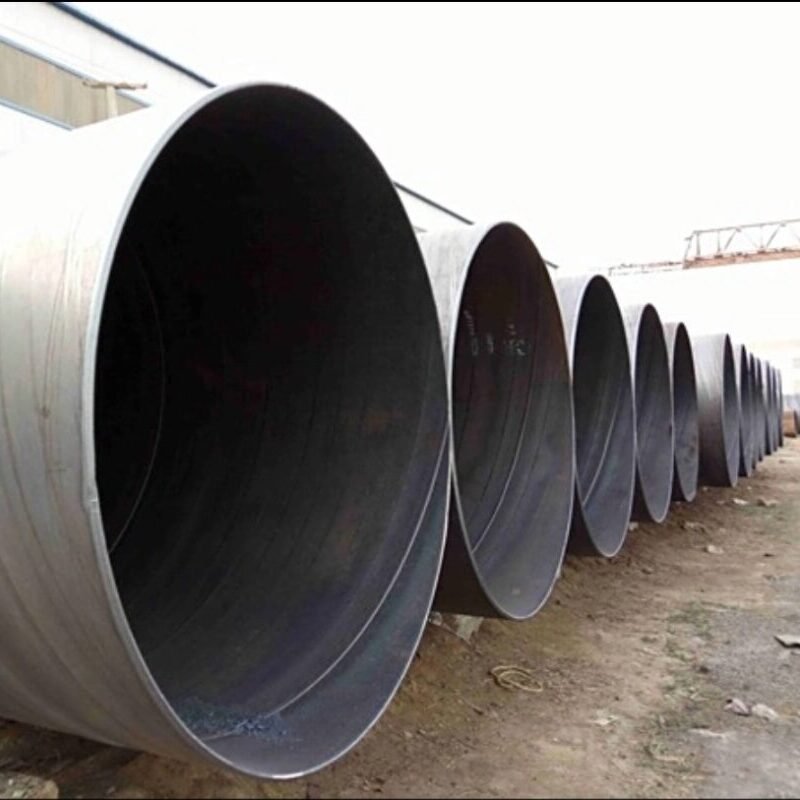
To distinguish the advantages and disadvantages of spiral welded steel pipes, a comprehensive evaluation from multiple aspects such as production process, material performance, and application scenarios is required. Here are specific analysis points:
I. Advantages of Spiral Welded Steel Pipes
High production efficiency and lower costs
The continuous production process of spiral welding allows for large-scale manufacturing, with high utilization of raw materials (steel coils) and lower costs compared to straight seam welded pipes.
Strong flexibility
The same width of steel coil can produce pipes of different diameters (by adjusting the spiral angle), suitable for diverse needs.
Good pressure-bearing capacity
The stress distribution of spiral welds is relatively uniform, providing strong resistance to circumferential stress when bearing internal pressure, making it suitable for high-pressure pipelines such as oil and gas transmission.
Customizable length
Typically, longer pipe sections (such as over 12 meters) can be produced, reducing on-site welding joints and lowering leakage risks.
Suitable for large-diameter pipes
Can produce large pipes with diameters exceeding 2000mm, while straight seam welded pipes have cost or process limitations in large diameters.
II. Disadvantages of Spiral Welded Steel Pipes
Higher risk of weld defects
Longer spiral welds are prone to defects such as porosity, slag inclusion, and incomplete penetration during welding, requiring strict inspection (e.g., X-ray, ultrasonic testing).
Lower dimensional accuracy
Compared to straight seam welded pipes, the roundness and straightness deviation of spiral welded pipes may be larger, requiring additional processing for high installation precision requirements.
Residual stress issues
Repeated bending during forming results in significant residual stress, which may affect long-term performance (such as stress corrosion cracking).
Fluctuations in surface quality
The surface welds are less smooth than those of straight seam welded pipes, requiring subsequent treatment (such as grinding) to meet high appearance requirements.
Not suitable for thin-walled pipes
The spiral process has difficulty controlling the shape of thin-walled steel pipes, making them prone to deformation, generally used for medium-thick-walled pipes (≥6mm).
III. Key Evaluation Indicators
Weld quality
Check non-destructive testing reports (such as RT/UT test results) to ensure no defects.
Material properties
Verify material certificates (such as API 5L standards) to ensure strength and toughness meet requirements.
Geometric dimensions
Measure diameter, wall thickness, ovality, etc., to check compliance with GB/T 9711, SY/T 5037 standards.
Anti-corrosion coating
For buried pipelines, inspect the adhesion and uniformity of anti-corrosion layers (such as 3PE, FBE).
Manufacturer qualifications
Choose manufacturers with API, ISO certifications for more standardized processes and stable quality.
IV. Application Scenario Selection
Prefer spiral welded pipes: long-distance oil/gas transmission, water conservancy projects, structural support (such as pile foundations) in large-diameter, high-pressure scenarios.
Avoid spiral welded pipes: precise machinery, high-purity fluid conveyance (such as food-grade pipes) or thin-walled requirements (<6mm).
V. Comparison with Straight Seam Welded Pipes
Comparison Item Spiral Welded Pipes Direct Seam Welded Pipes
Production Cost Lower (suitable for bulk production) Higher (suitable for custom sizes)
Weld Length Longer (higher defect probability) Shorter (easier quality control)
Pressure Bearing Direction Circumferential stress advantage Advantage in axial stress
Diameter Range Suitable for large diameters (≥508mm) Suitable for small diameters (≤1420mm)
Production Speed Fast (continuous forming) Slow (single-piece production)
Through the above analysis, combined with specific engineering requirements (such as pressure rating, corrosive environment, budget, etc.), one can more accurately determine the suitability of spiral welded steel pipes. For critical projects, it is recommended to commission a third-party testing agency for reinspection.