How to choose cable floats
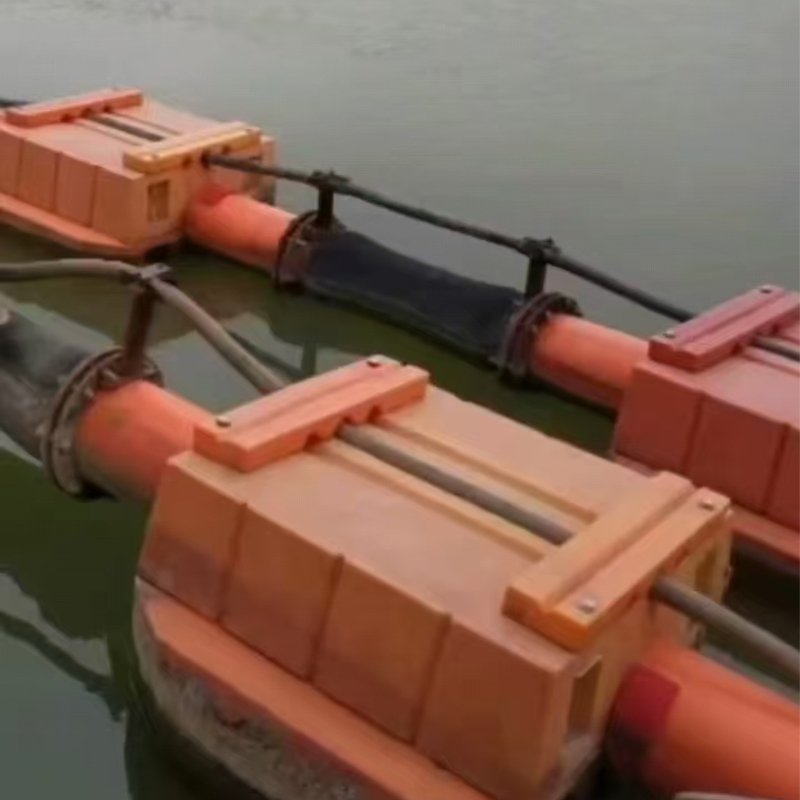
When selecting cable floats, consider the application scenario, environmental conditions, performance requirements, and cost factors. Here are key steps and considerations:
1. Clarify Application Needs
– Purpose: Determine the specific use of the float (e.g., submarine cable support, buoys, water platforms, pipeline floating).
– Supported Objects: Type of cables to be supported (power cables, communication cables), weight, diameter, and quantity.
– Installation Environment: Freshwater, seawater, still water, rapid currents, wave levels, temperature range, UV intensity, etc.
2. Select Float Material
– Based on environmental durability and cost, choose suitable materials:
– Polyethylene (PE)
– Advantages: Corrosion-resistant, UV-resistant, low cost, suitable for freshwater and seawater.
– Applications: Ordinary buoys, small cable supports.
– Polyurethane (PU)
– Advantages: High elasticity, wear-resistant, suitable for dynamic waters.
– Applications: Environments with frequent friction or impact.
– Expanded Polystyrene Foam (EPS)
– Advantages: Lightweight, high buoyancy, but requires an outer protective layer.
– Applications: Short-term or low-cost projects.
– Composite Materials (such as fiberglass)
– Advantages: High strength, strong weather resistance, but higher cost.
– Applications: Harsh marine environments or long-term use.
3. Calculate Buoyancy Parameters
– Buoyancy Requirement: Ensure the float provides sufficient buoyancy ≥ (cable weight + additional load) × safety factor (typically 1.2 to 1.5).
– Formula: Buoyancy (N) = Displacement volume (m³) × Water density (freshwater 1000 kg/m³, seawater 1025 kg/m³) × Gravity acceleration (9.81 m/s²).
– Float Size: Choose individual float sizes or continuous float structures based on cable length and spacing.
4. Structural Design Selection
– Individual Floats:
– Advantages: Flexible installation, easy maintenance.
– Applications: Short distances or scenarios requiring frequent adjustments.
– Continuous Floats (e.g., “float string”):
– Advantages: High stability, suitable for long-distance cable laying.
– Customized Design:
– Special needs (such as anti-ice, anti-biofouling) may require custom shapes or surface treatments.
5. Environmental Adaptability
– Weather Resistance:
– UV Protection: Choose materials or coatings with added UV inhibitors.
– Temperature Range: Use low-temperature resistant materials (such as HDPE) in extremely cold regions.
– Impact Resistance:
– High-toughness materials (such as PU) are needed in areas with many waves or floating debris.
– Anti-Biofouling:
– Anti-fouling coatings or smooth surface designs can be used in seawater environments.
6. Installation and Maintenance
– Installation Method:
– Are holes, hooks, or tie slots required? Is it convenient for divers or mechanical operations?
– Maintenance Cost:
– Choose maintenance-free or easy-to-clean designs (such as detachable structures).
7. Certification and Standards
– Ensure compliance with industry standards (such as ISO, ASTM) or specific national/regional marine equipment specifications.
– Check fireproofing, environmental protection (such as non-polluting materials) requirements.
8. Budget and Supplier
– Cost Comparison: Balance initial investment with long-term maintenance costs (e.g., cheap PE may need frequent replacement).
– Supplier Reputation: Choose manufacturers with marine engineering case studies and request samples to test durability.
Example Selection Process:
1. Scenario: Offshore communication cable, 500 meters long, moderate waves.
2. Material: High-Density Polyethylene (HDPE) + UV treatment.
3. Buoyancy: Single segment buoyancy must support cable weight + 20% margin, choose 30 cm diameter cylindrical floats, spaced 2 meters apart.
4. Structure: Modular float string with stainless steel fixing rings.
5. Verification: