Features of Dredging Rubber Slurry Pipes
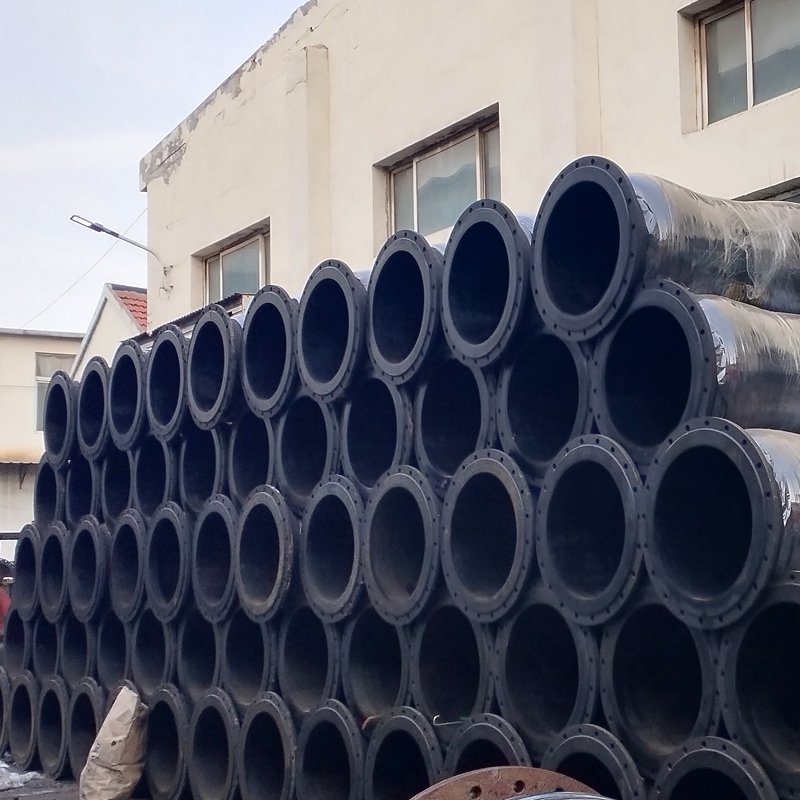
Rubber sludge discharge pipes used in dredging projects (also known as rubber floating pipes, rubber floating body sludge discharge pipes, or wear-resistant rubber pipes) are a key component of the entire sludge conveying system. They possess a series of characteristics that distinguish them from ordinary pipes. The following is a detailed analysis of their main features:
I. Core Advantages and Features
1. Excellent Abrasion Resistance
• Reason: The medium transported inside the sludge discharge pipe is usually a slurry mixture containing a large amount of mud, gravel, and even small stones, which is highly abrasive.
• Design: The pipe lining uses special wear-resistant rubber (such as natural rubber and high-wear synthetic rubber), whose wear resistance is typically 3-5 times that of steel pipes. It can effectively resist the scouring and wear from solid particles, significantly extending its service life.
2. Superior Corrosion Resistance
• Reason: Dredging environments are complex, and the sludge may contain seawater, salt, acidic and alkaline substances, and other chemical pollutants.
• Performance: Compared with metal pipes, rubber sludge discharge pipes do not undergo electrochemical corrosion or rusting. They are particularly suitable for use in corrosive environments such as oceans, estuaries, lakes, and polluted rivers, with low maintenance costs.
3. High Flexibility and Bendability
• Reason: In dredging operations, pipes need to move with the dredger, undulate with waves, and possibly bypass obstacles.
• Performance: Rubber pipes have excellent flexibility and can be bent and twisted without easy damage. They can absorb vibrations and stresses caused by vessel movement and water flow impact, avoiding cracking due to fatigue, unlike rigid steel pipes.
4. Light Weight, Easy to Deploy and Recover
• Reason: Dredging projects often require moving and reconfiguring pipelines.
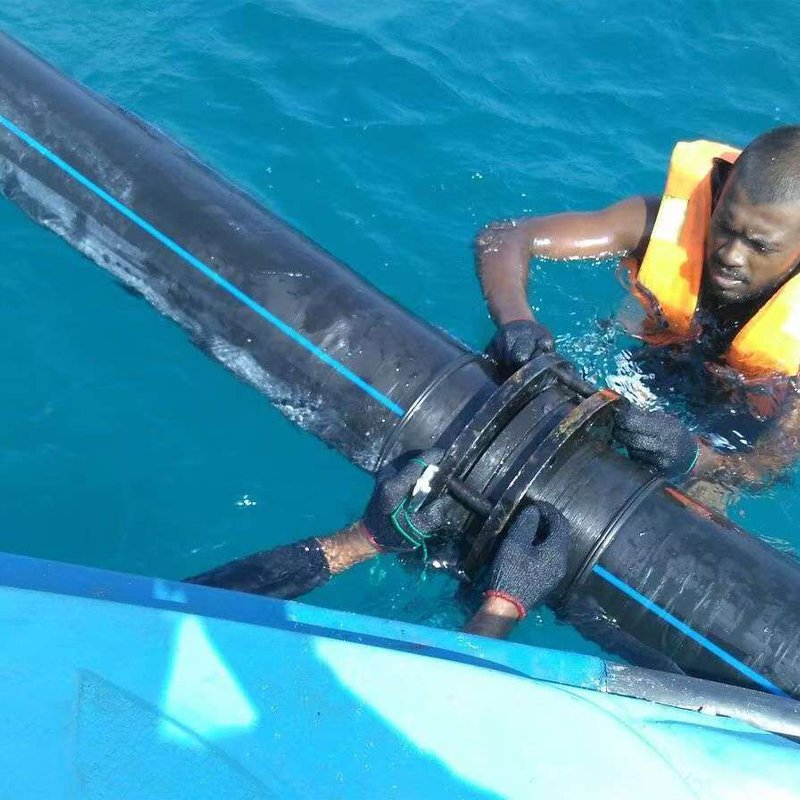
• Performance: Rubber pipes are much lighter than steel pipes of the same specification, making them easy to transport, install, dismantle, and connect. When used with floats, they can easily float on the water surface to form an overwater sludge conveying line, resulting in extremely high deployment efficiency.
5. Impact and Tear Resistance
• Reason: Pipes may be subjected to unexpected collisions, pulling during operation, and impacts from large stones inside.
• Design: The rubber pipe body typically uses high-strength synthetic fibers or steel cord as the reinforcing layer, endowing it with extremely high tensile strength and impact resistance. It can withstand internal high pressure and external mechanical damage.
II. Structural Design Features
1. Multi-layer Composite Structure
• A typical rubber slurry pipe, from inner to outer layers, includes:
• Lining Layer: Wear-resistant and corrosion-resistant rubber.
• Reinforcement Layer: Multiple layers of high-strength cord fabric (such as nylon, polyester, or steel wire) to withstand working pressure.
• Covering Layer: Weather-resistant, anti-aging, and UV-resistant rubber to protect the pipe body from erosion by sunlight, ozone, and external environments.
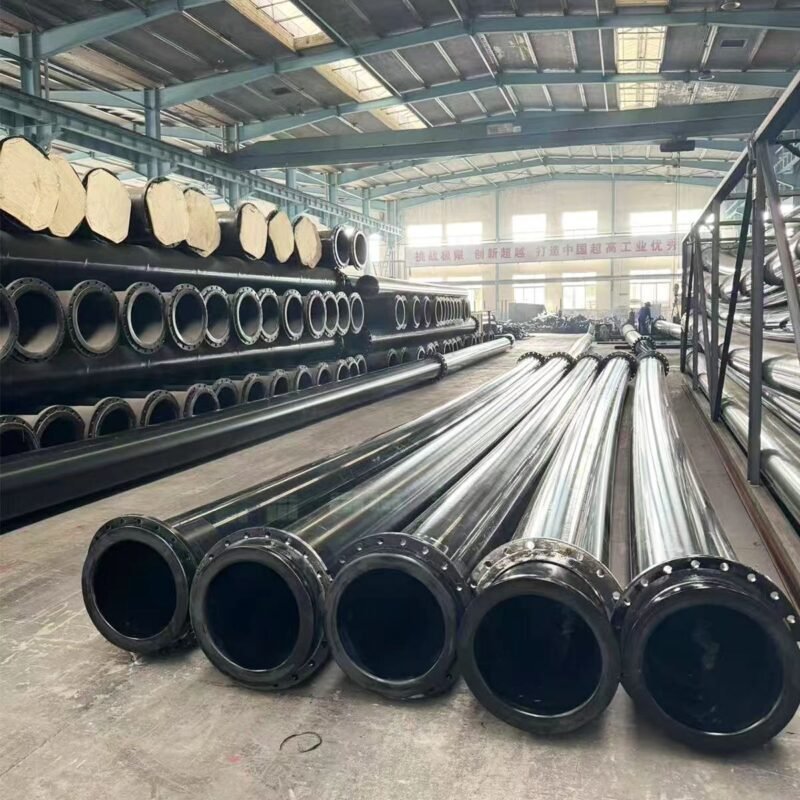
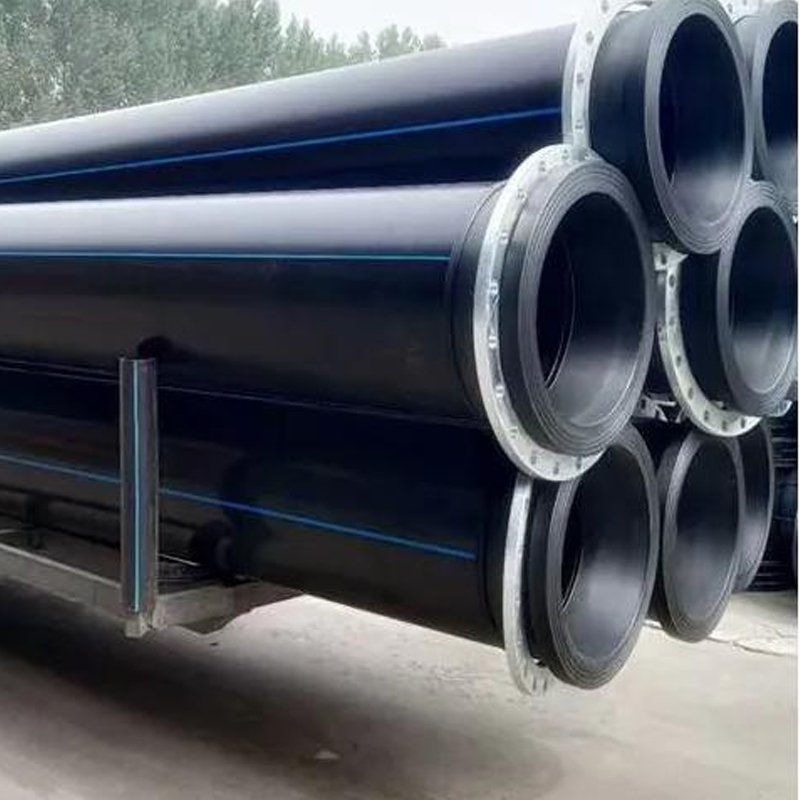
2. Flange Connection Design
• Both ends of the pipe are typically equipped with standard steel or rubber flanges, facilitating quick connection with other pipe sections, elbows, or equipment. The connection area usually has reinforcing structures to prevent bursting and leakage.
3. Optional Floatation Device
• When used as a floating pipe in water, it is secured to floatation barrels via straps or chains to maintain a floating state, forming a continuous underwater conveying line.
III. Application and Economic Characteristics
1. Long Service Life and High Comprehensive Economic Benefits
• Although the initial procurement cost may be higher than that of ordinary steel pipes, its superior wear resistance and corrosion resistance significantly reduce replacement frequency, minimizing downtime and replacement costs. From the perspective of the entire project cycle, the total cost is often lower.
2. Low Operating Resistance
• The smooth rubber inner wall has a low friction coefficient, which facilitates smooth slurry conveyance and reduces pumping energy consumption.
3. Strong Adaptability
• It can adapt to various complex dredging conditions, including river, lake, and sea sedimentation removal, port and channel dredging, land reclamation by filling, and mine tailings transportation.
Potential Limitations
• Initial Investment Cost: High-quality wear-resistant rubber slurry pipes have a higher unit price than ordinary steel pipes.
• Pressure Capacity Limit: While they can withstand high pressure, in ultra-high-pressure conditions (such as certain deep-sea mining operations), special design or combination with steel pipes may be required.
• Limited Heat Resistance: Rubber ages acceleratedly when exposed to high temperatures for a long time, making it generally unsuitable for conveying high-temperature media.
Summary
The core characteristics of dredging rubber slurry pipes are ‘wear resistance, corrosion resistance, flexibility, and lightness’. They are specifically designed to cope with harsh, highly abrasive dredging environments. Through their unique material properties and structural design, they ensure efficient, continuous, and economical operation of dredging work, making them an indispensable key equipment in modern dredging engineering.