Disadvantages of Internal Diameter Armored Dredging Rubber Hoses and Optimization Suggestions
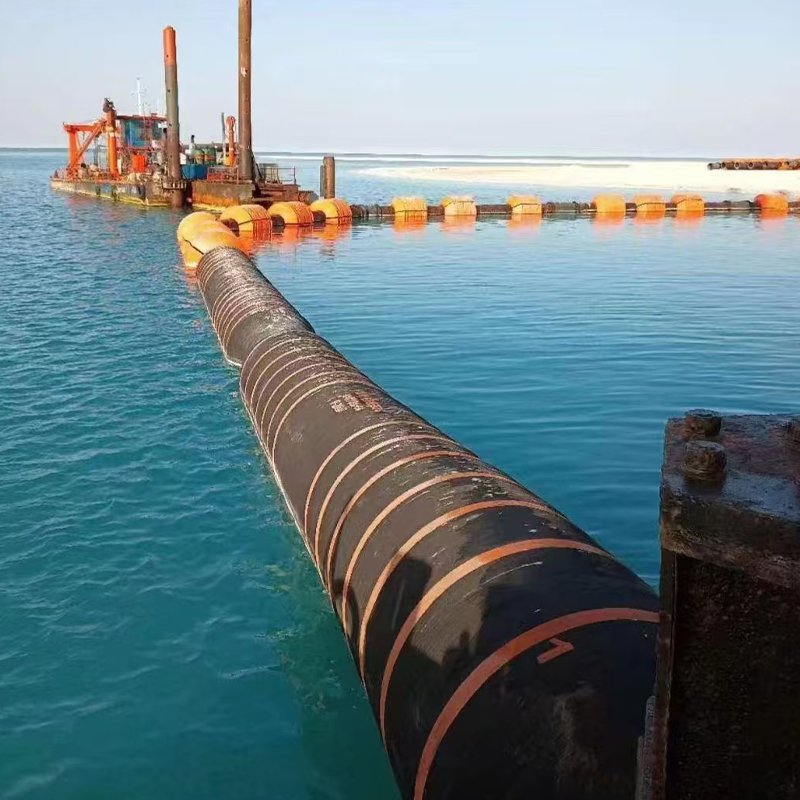
Inner Diameter Armored Dredging Rubber Hoses (also known as Armored Rubber Slurry Discharge Pipes) are widely used in dredging projects, but they have some inherent drawbacks. These shortcomings become more pronounced when dealing with specific harsh operating conditions.
For easy and quick understanding, the following table summarizes these disadvantages:
Disadvantage Categories
Specific Manifestations
Main Causes/Impacts
Limitations in Abrasion Resistance
When conveying materials containing hard and sharp particles (such as rocks, coral reefs), the inner rubber layer is prone to being cut or eroded, leading to failure.
The abrasion resistance of rubber is mainly applicable to fine particles; the impact and cutting of large particles can penetrate the wear-resistant layer and directly damage the rubber matrix.
Structural Disadvantages
Large diameter, high compression difficulty, and difficult installation on board; limited flexibility, with reduced bending and stretching performance compared to pure rubber hoses.
The internal armor structure (steel rings or springs) increases the pipe’s rigidity, resulting in inconvenient installation and reduced flexibility.
Maintenance and Cost Issues
Difficult and costly to repair after damage, which may cause the entire project to be suspended; initial purchase cost is usually higher than that of ordinary rubber hoses.
The complex pipe structure means that professional repair conditions are generally not available on-site, requiring the entire pipe section to be replaced, thereby affecting the schedule.
💡 Root Causes of the Problem
The root cause of the aforementioned issues largely lies in the inherent contradictions between rubber materials and armor structures when dealing with complex operating conditions:
– Material Performance Limits: Rubber’s inherent advantage is its ability to resist uniform wear from small particles through elasticity and cushioning. However, its impact resistance and cut resistance are far inferior to metal when it comes to sharp, large particles. Once the rubber protective layer between armor layers (such as steel rings) is worn through, the exposed metal may accelerate pipeline damage.
– Design Compromises: While armor structures enhance local impact resistance, they inevitably sacrifice some of the flexibility and vibration absorption characteristics of pure rubber hoses. This makes them potentially less effective in pipeline sections requiring frequent direction changes or adaptation to complex terrains compared to more flexible pipe materials.
🔧 Selection and Usage Recommendations
To the maximum extent mitigate the above drawbacks, consider the following aspects:
1. Accurately Match Operating Conditions: Before selection, clearly define the main components, particle size, hardness, and shape of the conveyed material. For fine-grained materials like clay or fine sand, internally armored hoses perform excellently. However, if the operating conditions involve a high proportion of large gravel or weathered rock, carefully assess the long-term durability risks.
2. Ensure Proper Installation: These pipes are typically heavy and low in flexibility, so installation must strictly follow manufacturer guidelines or engineering specifications. Special attention should be paid to the sealing and support stability of connection points to avoid early damage caused by installation stress.
3. Strengthen Process Monitoring and Maintenance:
– Regular Inspections: Focus on checking for abnormal bulges, local deformation, leaks, or outer rubber damage on the pipeline (especially vulnerable areas like bends and joints). Early inner rubber layer damage may manifest as ‘unbroken but excessive slurry leakage’—this requires close monitoring.
– Establish Maintenance Plans: Based on the severity of operating conditions and usage frequency, develop preventive inspection and replacement schedules. Avoid waiting until the pipe is completely破裂 to address issues—temporary repairs or replacements will cause engineering interruptions, ultimately increasing costs.
💎 Alternative Solution References
If the current operating conditions indeed exceed the applicable range of internally armored rubber hoses, consider the following alternatives:
– Fully Metal Abrasion-Resistant Elbows: For severely worn, high-impact critical areas (such as mud pump outlets), select metal elbows with liners made of abrasion-resistant materials like high-chrome cast iron, which typically have a much longer service life than rubber hoses.
– Composite Pipes: Keep an eye on industry new technologies, such as ‘internally fully metallic armored flexible rubber conveying pipes.’ This type of pipe combines the flexibility of rubber with the pressure and abrasion resistance of metal, and may be an important direction for resolving such contradictions in the future.
If you can share the specific operating conditions planned for using this pipe (such as the main type of conveyed material, bending degree requirements for pipeline laying, etc.), I can provide a more targeted analysis.