Detailed Explanation of the Structural Composition of Rubber Expansion Joints
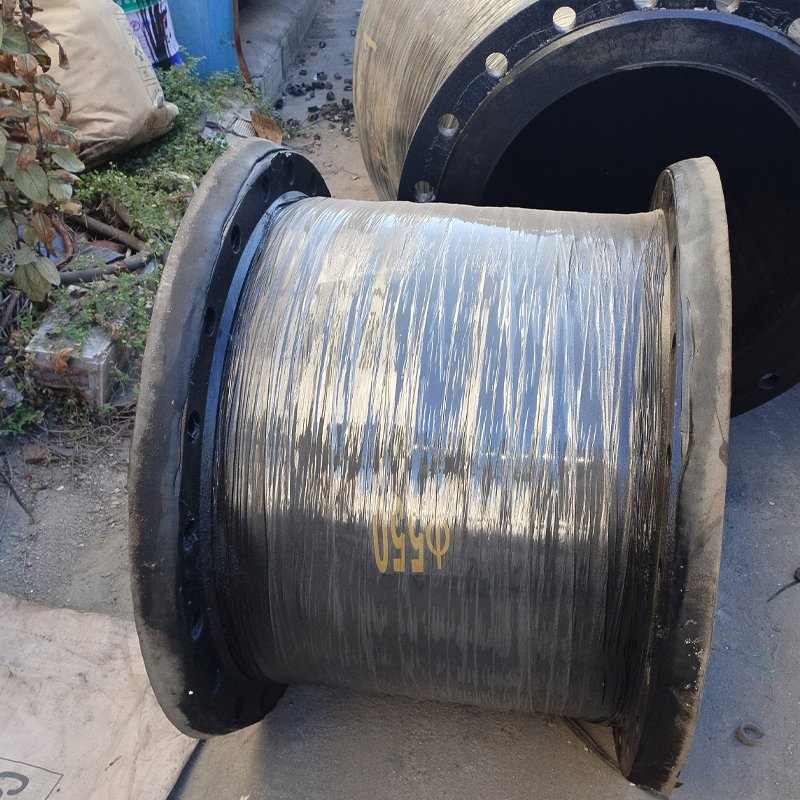
Rubber expansion joints, also known as rubber flexible couplings or vibration dampers, are flexible connection components used in pipeline systems. Their core functions are to absorb displacement (axial, lateral, angular), reduce vibration and noise, and compensate for installation errors.
Their structure mainly consists of the following parts, which we can understand from the inside out and from the main components to the accessories:
1. Main Structure This is the most basic and core part of the rubber expansion joint.
• Rubber Body/Tube:
◦ Material: Usually made of multiple layers of natural rubber, chloroprene rubber, nitrile rubber, ethylene propylene diene monomer (EPDM) rubber, etc., with different materials selected based on the medium (water, oil, chemicals, etc.) and temperature.
◦ Structure: It has a hollow pipe shape internally, with connection ends at both ends. The rubber body itself is elastic and is key to absorbing displacement and vibration.
◦ Liner Layer: The innermost layer of rubber that comes into direct contact with the fluid, typically requiring smoothness, corrosion resistance, and wear resistance.
◦ Reinforcement Layer: This is the \”skeleton\” of the rubber expansion joint and is crucial. It is composed of multiple layers of fabric reinforcement and/or steel wire rings.
■ Fabric Reinforcement Layers: Embedded in the rubber, they greatly enhance the strength and pressure-bearing capacity of the rubber component, preventing excessive expansion or rupture under pressure.
■ End Steel Wire Rings: High-strength steel wire rings are embedded at the edges of both ends of the rubber expansion joint. Their function is to provide sufficient rigidity and strength to the flange connection part, ensuring that it does not pull out or deform when tightened with the pipeline flange.
• Flange/Connection End: ◦ Used to connect to the pipeline system. There are mainly two forms:
■ Fixed Flange: Metal flanges (usually carbon steel galvanized or stainless steel) are vulcanized together with the rubber body during manufacturing. It is convenient to install and has high strength.
■ Loose Flange: Both ends of the rubber expansion joint are pure rubber lips. During installation, separate, sliding metal flanges are used to clamp the lips. This structure is more suitable for absorbing angular and lateral displacement and can relieve stress on the flange bolts.
2. Main Accessories (Provided as Needed by Model and Function)
To adapt to more complex working conditions, rubber expansion joints are equipped with some accessories.
• Anti-pull-off device:
◦ Function: When the internal pressure of the pipeline is too high or the absorbed displacement is too large, it prevents the rubber expansion joint from being over stretched, causing the steel wire ring to separate from the rubber (pull-off damage).
◦ Form: It is usually a limiting screw connected between two pipe flanges. When the expansion joint elongates, the screw will pull the two ends of the flange, limiting the maximum elongation and protecting the joint.
• Limiting rod: It is a specific implementation form of the anti-pull-off device.
• Tetrafluoroethylene lining/PTFE lining: ◦ Function: For pipelines conveying strongly corrosive media (such as concentrated acids and alkalis) or high-temperature media, a layer of polytetrafluoroethylene (PTFE) is applied on the rubber lining. PTFE has excellent corrosion resistance and heat resistance, protecting the main rubber body from corrosion damage.
• Outer cover layer:
◦ Function: Protects the internal reinforcing layer from damage caused by external environments (such as ultraviolet rays, ozone, and physical scratches).
◦ Material: It is usually rubber with better weather resistance, such as ethylene propylene diene monomer (EPDM) rubber, or a protective layer with special patterns.
3. Classification by Structural Form
According to the morphological structure of the main body, rubber expansion joints can be divided into several common types, with slight differences in their components:
1. Single-ball rubber expansion joint: ◦ Has only one spherical bulge. Good flexibility and strong ability to absorb displacement.
2. Double-ball rubber expansion joint: ◦ Has two spherical bulges. Compared with the single-ball type, it has a larger compensation capacity and is suitable for occasions with larger displacement.
3. Concentric reducer rubber expansion joint: ◦ The structure is similar to the single-ball type, but the diameters at both ends are different. Used to connect pipelines of different diameters while also having compensation functions.
4. Elbow-flow rubber expansion joint: ◦ The rubber main body is in the shape of a 90-degree or other angle elbow. Used at pipeline bends to change the flow direction while absorbing displacement and vibration.
Summary
A typical rubber expansion joint can be regarded as a composite structural body:
• Rubber provides flexibility for absorbing displacement and vibration.
• Cord fabric and steel wire ring provide strength and pressure-bearing capacity, ensuring safe operation.
• Flange provides the connection interface.
• Accessories (such as anti-pull-off rods) provide additional safety protection.
When selecting and using, it is necessary to comprehensively consider its structural composition and material based on the pressure, temperature, medium, required displacement compensation amount of the pipeline system, and installation environment.