Detailed Construction Points of Live Flange Dredging Rubber Hose
Live Flange Dredging Rubber Hose<br>Construction Precautions] –> B[Pre-construction Preparation]
A –> C[Flange Connection Construction]
A –> D[Pipeline Laying and Operation]
A –> E[Safety Inspection and Maintenance]
B –> B1[Inspect Rubber Hose<br>(Appearance, Pressure Range, Inner Diameter)]
B –> B2[Inspect配套法兰<br>(Sealing Surface, Bolts, Material)]
B –> B3[Prepare Specialized Tools<br>(Torque Wrench, Marker Pen)]
C –> C1[Step 1: Positioning and Pre-tightening<br>(Flange Alignment, Manual Pre-tightening of Nuts)]
C –> C2[Step 2: Symmetrical Tightening in Stages<br>(Tighten Symmetrically in Three Stages at 30%, 60%, and 100% of Target Torque)]
C –> C3[Step 3: Marking and Pressure Testing<br>(Draw Lines for Marking, Retighten After Hydrostatic Pressure Test)]
D –> D1[Ensure Minimum Bending Radius]
D –> D2[Avoid Extreme Friction<br>(Keep Away from Metal Sharp Edges)]
D –> D3[Control Pressure Fluctuations<br>(Open and Close Valves Slowly)]
E –> E1[Pre-use Inspection<br>(Fittings, Hose Body, Abnormalities)]
E –> E2[Regular Inspections<br>(Recommended Monthly)]
E –> E3[Personal Protective Equipment and Emergency Response Plan<br>(Wear PPE, Be Familiar with the Plan)]
📝 Detailed Key Points for Each Construction Phase
After mastering the above process, it is also necessary to understand the specific operating standards and safety requirements for each phase.
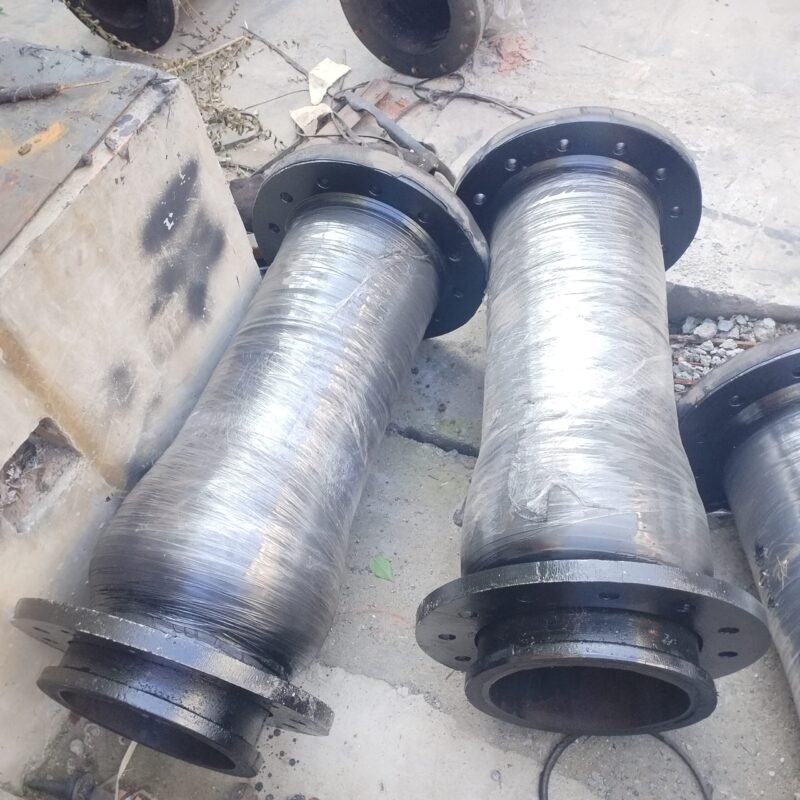
• Key Points for Pre-Construction Preparation: Before installation, rubber hoses must be carefully inspected to ensure there are no abnormalities such as external injuries, hardening, softening, discoloration, etc.. At the same time, it is mandatory to verify the applicable temperature, pressure, and medium range of the rubber hose, and over-range use is strictly prohibited. Check the Accompanying Flange (matching flanges) to ensure that the sealing surface has no defects, scratches, or severe rust that would affect the sealing performance. All bolts must be able to freely pass through the bolt holes, and their specifications must be consistent with the design. The Live Flange Structure (live flange structure, typically composed of a non-detachable short pipe, live flange, binding steel wire, etc.) must confirm that all components are complete and undamaged. In addition, please prepare tools such as torque wrenches, marker pens, and safety warning signs.
• Flange Connection and Tightening Steps: This is the core to ensure sealing. When connecting, ensure that the flange faces are parallel and aligned to prevent skewing. The tightening of bolts must follow the principle of \”symmetric and stepwise\”, tightened in three steps according to 30%, 60%, and 100% of the target torque value. The installation direction and exposed length of all bolts should be kept consistent. After tightening, it is recommended to draw a line mark on the bolts and nuts with a marker pen for easy inspection of looseness later. After installation, a hydrostatic test must be performed, and after the test, the bolts should be retightened in a symmetric sequence.
• Pipeline Laying and Operation Regulations: When laying, ensure that the bending radius is greater than the minimum specified bending radius of the rubber hose; otherwise, it may cause the hose to break or reduce its pressure resistance. Near metal parts, avoid the rubber hose being in an extreme bending state. When conveying media containing particulate matter (such as slurry), to reduce wear, the bending radius should be enlarged as much as possible. During operation, valves should be opened or closed slowly to avoid pressure shock damaging the hose. At the same time, vehicles are strictly prohibited from rolling over the hose.
• Safety Inspection and Maintenance Requirements: Before each use, check whether the joints are firm and whether there are any abnormalities in the hose body. During use, regular inspections are recommended at least once a month. Dredging operations belong to high-risk operations, and operators must wear personal protective equipment such as safety helmets, protective gloves, and anti-slip shoes.Obvious safety warning signs (obvious safety warning signs) should be set up at the operation site. It is recommended to hang identification plates on the pipeline, indicating information such as pipeline number, target torque, and operator, for easy management and traceability.
💡 Key Risks Requiring Special Attention
During Construction: There are several common risk points during construction that you need to be particularly vigilant about, as they are the main causes of leaks and failures.
1. Seal Surface Defects and Cleanliness: Even small scratches, dents, or residual stains and oils on the seal surface can lead to seal failure-1. Before installation, it must be thoroughly cleaned with appropriate cleaning agents and tools to ensure the seal surface is smooth and free of foreign matter.
2. Uneven Bolt Tightening: This is the most common mistake. Tightening by feel or in a random order can cause uneven stress on the flange, leading to leaks. It is essential to use a torque wrench and strictly follow the step-by-step, symmetrical tightening procedure.
3. Neglect of Pressure Shock and Wear: Pump start-up and shutdown, as well as valve operations during dredging work, are prone to water hammer effects (pressure shock), which can cause instantaneous damage to hoses and connections. Additionally, sand and gravel in the slurry cause severe wear on pipe walls, especially at bends. Operations should be carried out smoothly, and vulnerable areas such as bends and joints should be inspected regularly.
To make the suggestions more tailored to your situation, if you can tell me the specific engineering field (e.g., river dredging, port reclamation), I can provide more targeted references.