Construction Precautions for Cable Buoyancy Modules
The construction of cable floats is indeed a job that requires meticulous operation. It is like the ‘life jacket’ of cables in water bodies, and only when installed properly can it ensure the long-term stable operation of the cables. The following table summarizes the core construction precautions to help you quickly grasp the key points:
preliminary planning and path selection
Select areas with stable riverbeds, slow flow velocity, and far away from ship activity zones such as anchorages and piers . Conduct precise measurement and survey of the laying path.
Laying process control
Cables must not be dragged directly on the bottom of the water. Use professional cable-laying vessels equipped with untwisting frames, cable laying machines, tension gauges, etc. . Control the laying tension and maintain an entry angle of 30°-60° when entering the water . Choose small tide, slack water or dry season, and weather with wind force less than level 5 for the operation .
Cable burial depth and protection
In navigable waterways and other areas where external damage should be prevented, cables should not be suspended in the water but should be buried in the riverbed and protected with a stable covering. The burial depth in shallow water areas should not be less than 0.5m, and in deep water areas, it should not be less than 2m . For non-navigable small rivers, pipes can be used for protection .
Login segment and joint processing
When cables are led to the shore, they should be protected by passing through pipes or using trenches, working wells, etc. . The lower end of the protection range should be placed at least 1m below the lowest water level, and the upper end should be higher than the highest flood level . Underwater cables should not have joints , to avoid intermediate joints.
Safety and Identification
During installation, patrol boats are configured to maintain waterway order . After construction is completed, conspicuous warning signboards are set up in accordance with regulations on both sides of the cable line.
Understand the function of cable floats.
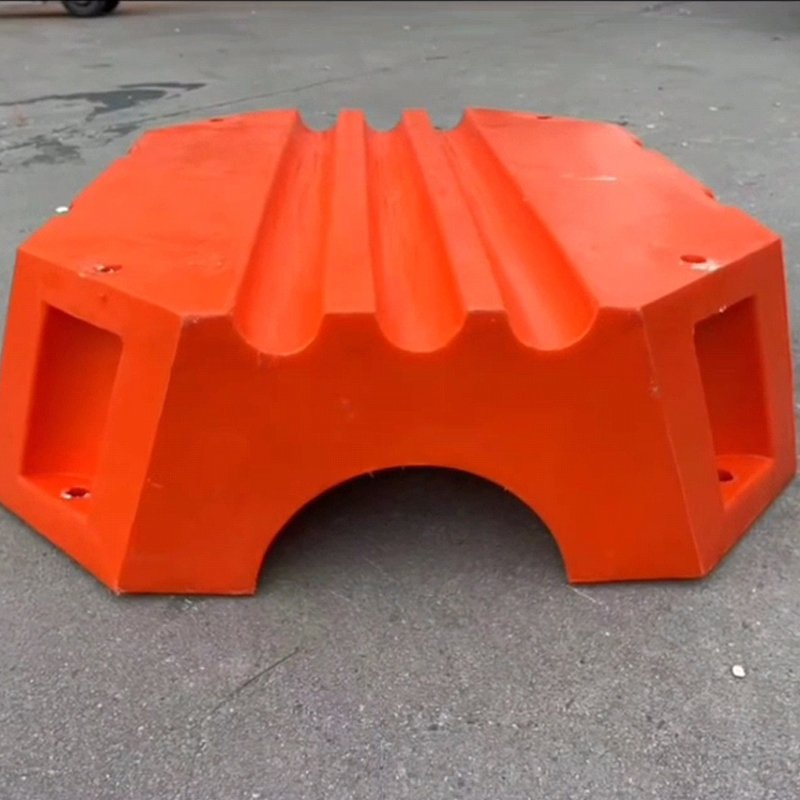
Cable floats mainly provide buoyancy to cables in specific sections, keeping them in a preset suspended state on the seabed. This prevents direct contact with sharp rocks or scour areas and helps control the cable’s bending radius, reducing internal mechanical stress. The key is to accurately calculate and arrange the floats according to design requirements to ensure the cable’s underwater shape is both safe and stable.
🔧 Key operation details supplement
The key points in the table are the foundation of construction, and there are also some practical details worth paying attention to:
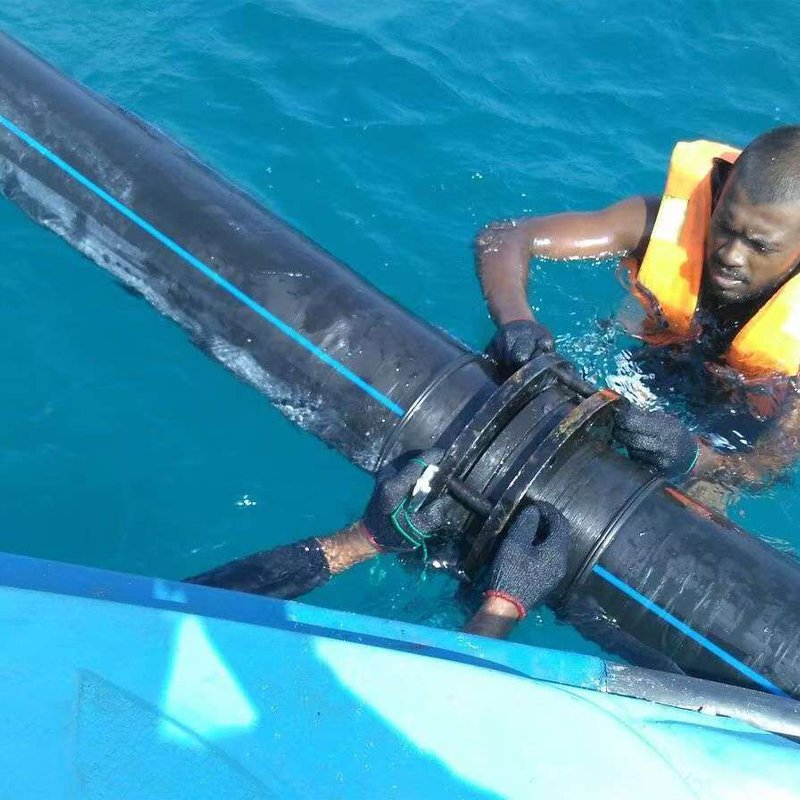
• Buoyancy assistance and anti-torsion: When landing at the beginning or end of the cable, part of the cable is often buoyed on the water surface. At this time, inflatable floats (such as inner tubes of cars) can be used for buoyancy assistance, with the spacing of the floats such that half of the cable is submerged . During operation, the cable should maintain appropriate tension, gradually expanding into the water in an ‘Ω’ shape to prevent sudden loss of tension from causing the cable to twist or knot .
• Accurate path control: During laying, guide markers should be set on both banks according to the design . The construction team needs to carry out positioning measurements simultaneously, promptly correct deviations in the route, and verify the laying length to ensure that the cable is laid along the designed path with the correct allowance .
• Inspection after laying: After the cable is laid, it is recommended to conduct a diving inspection to confirm whether the cable is flat against the riverbed, whether it is suspended at undulations of the riverbed, measure the exact position, and make corrections if necessary .
Diamond Core Principles Summary
The core of cable float construction lies in \”prevention\” and \”precision\”: • Safety first, prevention: All measures are aimed at preventing various risks that may occur over the next few decades. • Details determine success or failure: From the selection of weather windows to the control of immersion angles, every link must be strictly operated in accordance with specifications.
I hope this information will help you better plan and manage the construction work of cable floats. If you can share the specific project type (such as cross-river cables, offshore platform power supply, or other applications), perhaps I can provide more targeted analysis. 10 web pages