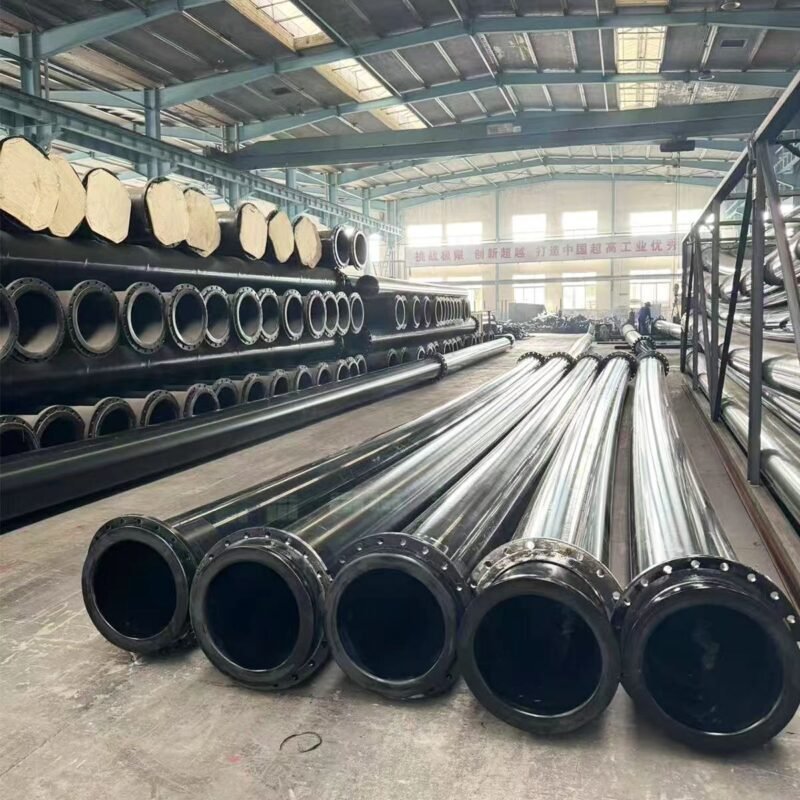
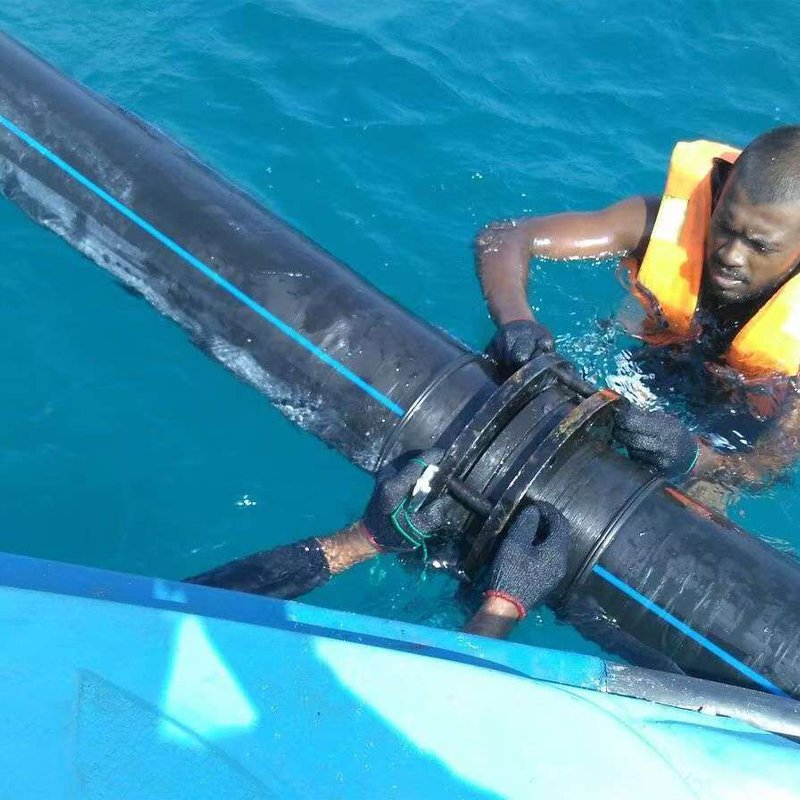
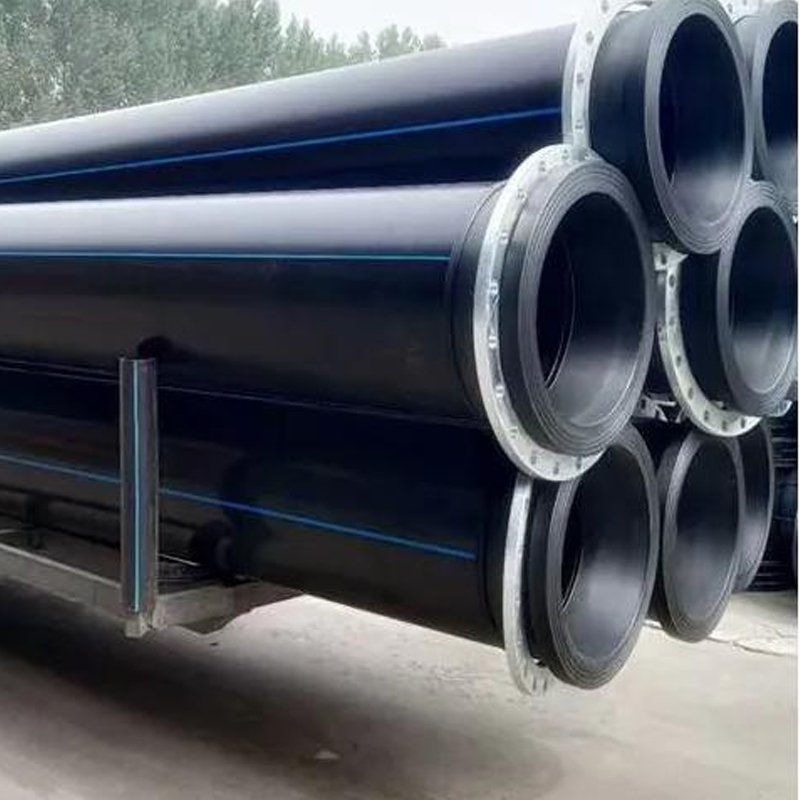
Comparison of dredging HDPE pipes and steel pipes
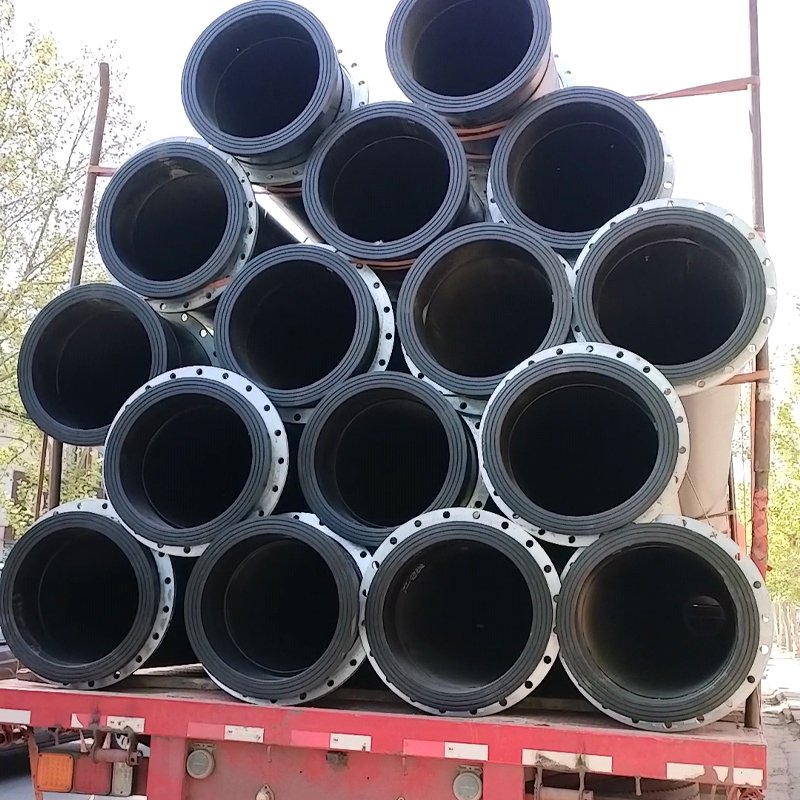
In dredging projects, HDPE pipes (high-density polyethylene pipes) and steel pipes are two commonly used pipeline materials, each having advantages and disadvantages in terms of performance, cost, construction, and maintenance. Here is a detailed comparison of the two:
1. Corrosion Resistance:
– HDPE Pipes:
– Excellent chemical corrosion resistance, capable of resisting seawater, acids, alkalis, salts, and other corrosive media without the need for anti-corrosion coatings.
– Long-term use is unlikely to rust or scale, suitable for harsh environments such as marine dredging.
– Steel Pipes:
– Prone to electrochemical corrosion, especially in seawater or humid environments, requiring additional anti-corrosion measures (such as coatings, cathodic protection).
– Higher maintenance costs, requiring regular inspection of the anti-corrosion layer status.
Conclusion: HDPE pipes significantly outperform steel pipes in terms of corrosion resistance.
2. Wear Resistance:
– HDPE Pipes:
– Good wear resistance, particularly suitable for conveying dredging materials containing sand, gravel, and other particles.
– Smooth inner walls with low friction coefficients, reducing wear and sedimentation.
– Steel Pipes:
– High hardness, but wear resistance depends on coatings or liners (such as ceramics, polyurethane).
– Unprotected steel pipes are prone to wear under high-speed particle abrasion and require frequent replacement.
Conclusion: HDPE pipes have superior wear resistance without protection; if steel pipes use wear-resistant liners, their performance approaches that of HDPE pipes, though at higher costs.
3. Weight and Installation:
– HDPE Pipes:
– Lightweight (density about one-eighth that of steel pipes), easy to transport and install, suitable for floating pipelines or land-based laying.
– Flexible connections, adaptable to terrain changes, reducing joint numbers.
– Steel Pipes:
– Heavy, requiring heavy equipment for hoisting, increasing construction difficulty and costs.
– Rigid connections, demanding high foundation requirements, needing additional support.
Conclusion: HDPE pipes are more convenient, with higher construction efficiency, especially suitable for complex terrains or floating dredging systems.
4. Flexibility and Impact Resistance:
– HDPE Pipes:
– Good flexibility, able to withstand certain deformations (such as foundation settlement), strong seismic performance.
– Low tendency to become brittle at low temperatures, but may soften at high temperatures.
– Steel Pipes:
– High rigidity, strong resistance to external impacts, but susceptible to stress concentration effects (such as weld point cracking).
– May become brittle in low-temperature environments.
Conclusion: HDPE pipes are better suited for dynamic environments (such as waves, settlements); steel pipes are more stable under high pressure or mechanical impact.
5. Lifespan and Maintenance:
– HDPE Pipes:
– Typically designed for over 50 years, almost maintenance-free.
– Requires UV stabilization additives or outer layer protection.
– Steel Pipes:
– Lifespan depends on anti-corrosion measures, generally 20-30 years, requiring regular maintenance.
– Higher maintenance costs (such as coating repairs, cathodic protection).
Conclusion: HDPE pipes have lower lifecycle costs.
6. Cost Comparison:
– Initial Costs:
– HDPE pipe unit prices may be lower than steel pipes, but large-diameter HDPE pipes can be similar or slightly higher in price.
– Overall Costs:
– HDPE pipes save on transportation, installation, and maintenance costs, offering better long-term economics.
– Steel pipes may be more cost-effective in high-pressure, high-temperature scenarios.
7. Applicable Scenarios:
– HDPE Pipes Recommended For:
– Medium and small-scale dredging projects, corrosive environments, floating pipelines, projects requiring quick installation.
– Steel Pipes Recommended For:
– High-pressure conveyance (such as high-head pumping), high-temperature media, fixed pipelines requiring high rigidity.
Summary Table:
Comparison Item | HDPE Pipes | Steel Pipes
—|—|—
Corrosion Resistance | Extremely good, no anti-corrosion required | Requires anti-corrosion measures
Wear Resistance | Good (smooth inner walls) | Moderate (depends on liners)
Weight | Light, easy to install | Heavy, complex construction
Flexibility | High, resistant to deformation | Low, rigid structure
Lifespan | Over 50 years | 20-30 years (requires maintenance)
Cost | Lower long-term costs
Choose recommendations:
Prioritize HDPE pipes for projects with strong corrosion resistance, complex terrain, limited budget, or need for quick construction. Prioritize steel pipes for high-pressure/high-temperature conditions, high mechanical strength requirements, or long-term fixed installations. Actual selection should combine engineering parameters (pressure, flow rate, medium characteristics) and comprehensive evaluation of lifecycle costs.