Comparison between Semi-Self-Float Rubber Tubes and Fully Self-Float Rubber Tubes

Buoyancy and Floating Form:
Typically, the minimum residual buoyancy is 5%-9%, requiring additional floating bodies or auxiliary floating devices to stably float on the water surface.
Usually, the minimum residual buoyancy needs to reach 20%-9% (likely a typo, possibly 20%-30% or similar, but kept as per input), allowing stable floating (relying on its own buoyancy), with the portion above the water surface not less than 25%-6% (likely a typo, possibly 25%-30% or similar, but kept as per input) of the total area.
Structure and Design
Structural reinforcement is typically concentrated at one end to connect with fixed facilities such as single-point mooring (SPM) systems or CALM buoys -1-9. The pipe body itself may not have a complete floating layer.
The pipe wall has a multi-layer composite structure, usually including a dedicated floatation layer -5-7. The floatation layer is made of foam material with a rubber protective outer layer -4.
Main Application Scenarios
It is mainly used for connection points, such as connecting single-point mooring systems with underwater pipelines , or as the end of floating oil pipelines .
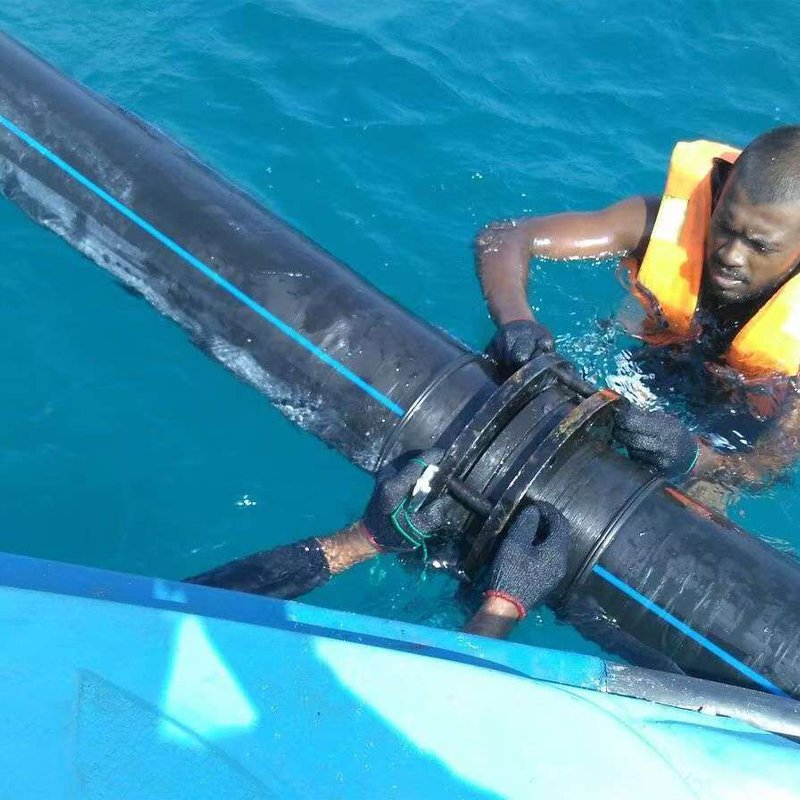
As a transmission main line, it is widely applied to slurry discharge in dredging projects and main pipelines for offshore crude oil transportation .
Pros and Cons – Pros:
Designed for specific connection points, high structural strength, and flexibility to meet specific bending requirements .
– Cons: Limited inherent buoyancy, dependent on external assistance. – Pros: Strong self-buoyancy, high integration, easy to use, better wind and wave resistance and flexural performance .
– Cons: High manufacturing cost, large volume and weight leading to inconvenience in transportation and installation , may require complete replacement when damaged, resulting in high maintenance costs .
Key technical standards follow relevant standards for marine oil transfer hoses (such as OCIMF Standard ). They also comply with specific national standards (such as GB/T 37221-2018) and transportation industry standards (JT/T 1217-2018).
💡 How to Choose the Right Rubber Hose
In practice, apart from basic differences, the following factors should be comprehensively considered:
• Clarify the conveying medium and operating conditions: Different media (crude oil, slurry, clear water) and conditions (wave grade, water temperature, ultraviolet intensity) have different requirements for the hose’s wear resistance, corrosion resistance, oil resistance, and pressure resistance.
• Pay attention to pipe structure and performance: Carefully understand the product’s structural design, floating material, tensile strength, working temperature range, and allowable bending radius. These directly affect service life and safety.
• Balance comprehensive cost and benefits: Fully self-floating pipes have high initial investment and higher transportation and installation costs, but they are convenient to use; semi-self-floating pipes need to consider additional costs for external floats and their maintenance, as well as management complexity.
• Refer to relevant technical standards: Ensure the product meets relevant national, industry, or international standards (such as OCIMF standards, GB/T 37221-2018). This is an important guarantee for quality and safety.
Hope this analysis helps you make a decision. If you can inform me of the specific scenario and requirements for planned use, I may be able to provide more focused advice.