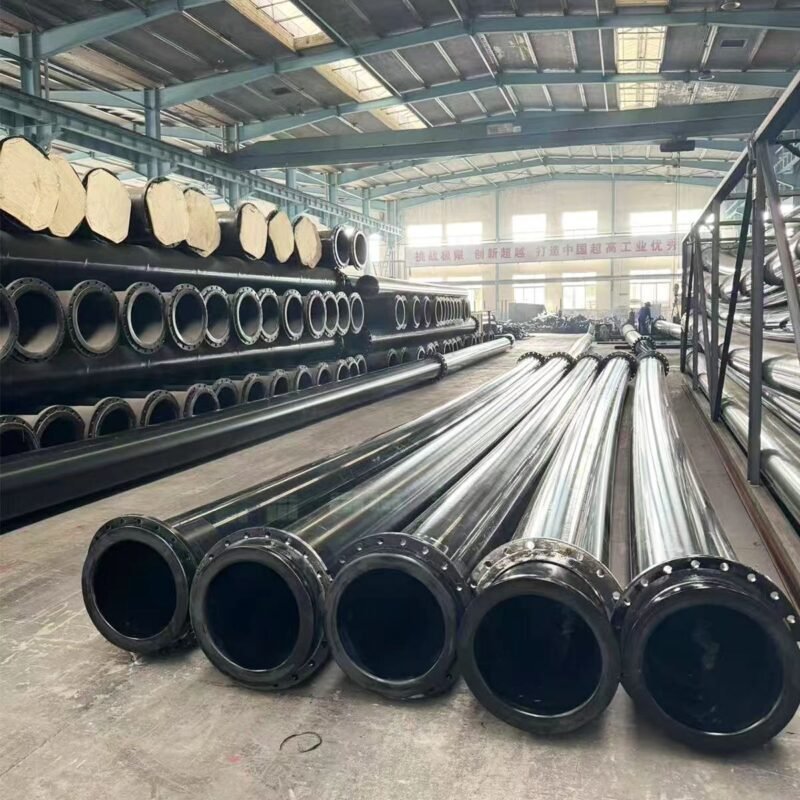
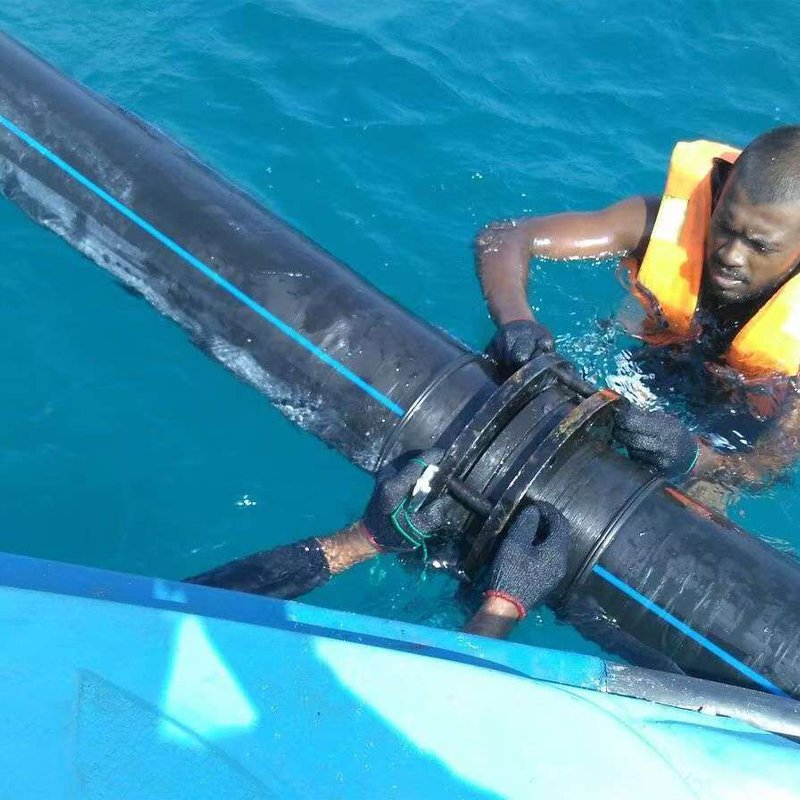
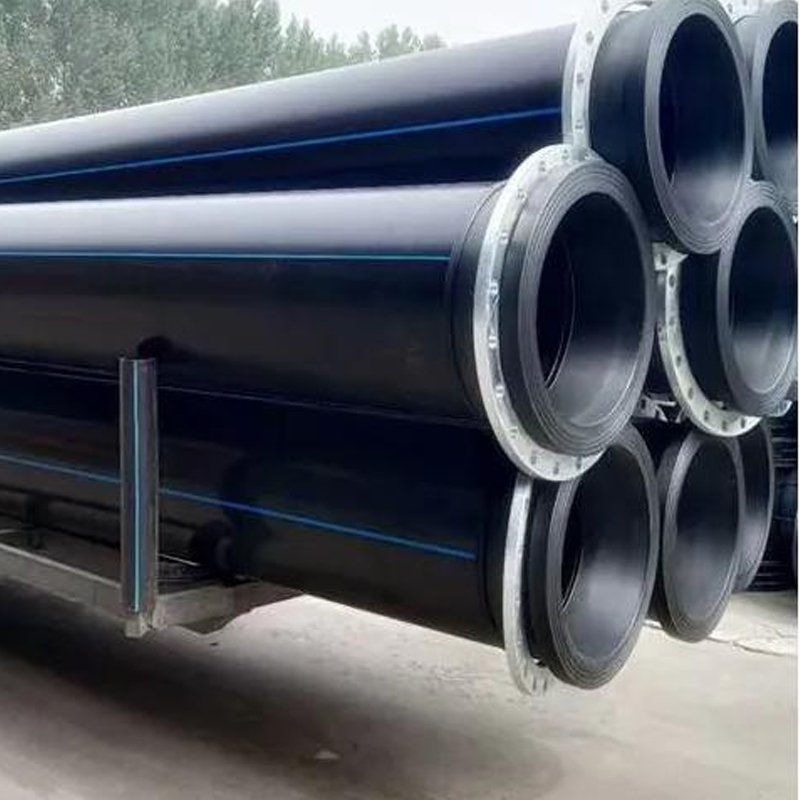
Comparison between rubber flange sludge suction pipes and steel flange sludge suction pipes
Core conclusions overview:
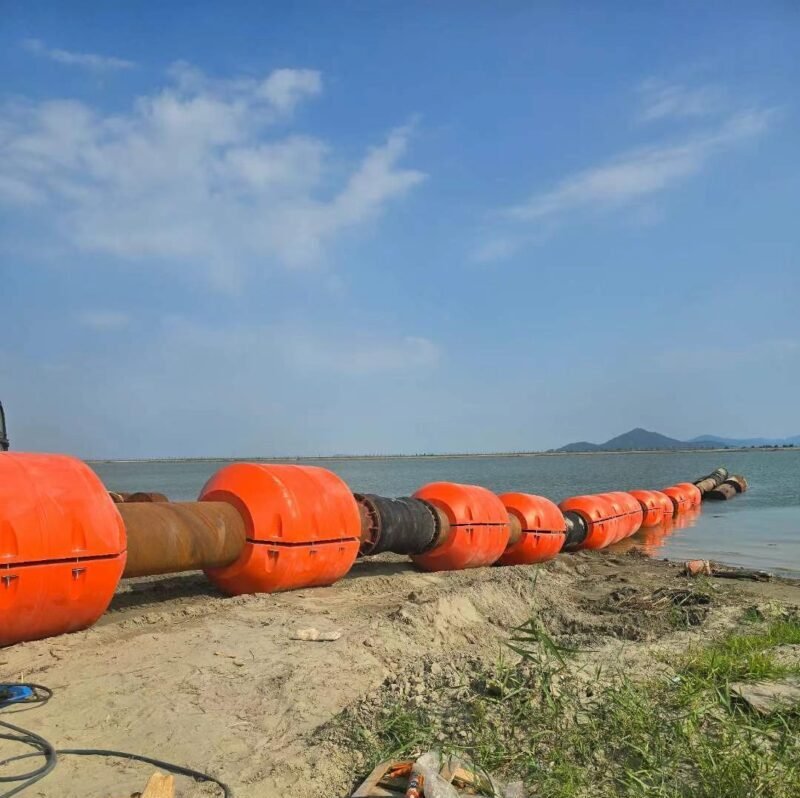
Rubber flange sludge suction pipes (flexible connection): The advantages lie in convenience, vibration reduction, and compensation for deviations, making them suitable for applications requiring frequent movement, alignment, and where precision is not critical, such as river dredging and temporary pump stations.
Steel flange sludge suction pipes (rigid connection): The advantages include strength, high pressure resistance, and reliable sealing, making them suitable for fixed installations, high pressure, high temperature, or applications with extremely high sealing requirements, such as large-scale permanent pipelines in pump stations and industrial slurry transportation.
Detailed comparison table comparing rubber flange suction pipes and steel flange suction pipes across various dimensions:
1. Structure and Weight:
– Rubber Flange Suction Pipe: Flexible flange, typically vulcanized or fitted with a rubber flange disc with a metal ring at both ends of the rubber hose. Very light in weight.
– Steel Flange Suction Pipe: Rigid flange, with a standard steel flange disc welded or cast onto the end of the steel pipe. Very heavy in weight.
2. Installation Convenience:
– Rubber Flange Suction Pipe: Excellent. Simply align the rubber flange, insert bolts, and hand-tighten the nuts without precise alignment. Usually completed by two people quickly, saving a lot of manpower and time.
– Steel Flange Suction Pipe: Poor. Requires precise alignment of bolt holes on two steel flanges, needs lifting equipment for installation. Tightening bolts requires a torque wrench to ensure even force on all bolts, time-consuming and labor-intensive.
3. Compensation Ability:
– Rubber Flange Suction Pipe: Excellent. The rubber material has natural elasticity and flexibility, capable of compensating for significant axial, radial, and angular deviations, absorbing vibrations and noise in the pipeline system.
– Steel Flange Suction Pipe: Almost none. Rigid connection, unable to compensate for any installation errors or thermal expansion and contraction. Requires additional expansion joints for compensation, with high requirements for installation foundation.
4. Pressure Resistance Performance:
– Rubber Flange Suction Pipe: Moderate. Generally suitable for medium and low-pressure conditions. Excessive pressure may cause deformation or even rupture of the rubber flange.
– Steel Flange Suction Pipe: Very high. Can choose flanges and bolts of different pressure ratings (such as PN10, PN16) according to needs, suitable for high and ultra-high-pressure systems.
5. Wear Resistance:
– Rubber Flange Suction Pipe: Good. High-quality rubber (such as natural rubber, wear-resistant sand mine rubber) itself has good wear resistance, especially suitable for conveying media containing solid particles.
– Steel Flange Suction Pipe: Depends on the lining. Ordinary steel pipes are not wear-resistant. However, wear resistance can be significantly improved by lining with high-chrome cast iron, ceramics, polyurethane, etc., extending service life.
6. Corrosion Resistance:
– Rubber Flange Suction Pipe: Good. Rubber has good corrosion resistance to general mud water, weak acids, and weak alkali media.
– Steel Flange Suction Pipe: Poor. Carbon steel is prone to rust and corrosion. However, this can be solved by upgrading materials (such as using stainless steel flanges, 316L flanges) or anti-corrosion coatings, but at higher costs.
7. Sealing Performance:
– Rubber Flange Suction Pipe: Good. Sealed by the compression deformation of rubber, with low requirements for the smoothness of the flange sealing surface.
– Steel Flange Suction Pipe: Excellent. Sealed by metal hard seal, usually requires adding rubber gaskets or metal gaskets between the two flange faces to achieve sealing, with high reliability.
8. Applicable Temperature:
– Rubber Flange Suction Pipe: Limited. Ordinary rubber is generally suitable for -20℃ to +80℃. High temperatures accelerate rubber aging, making it brittle and ineffective.
– Steel Flange Suction Pipe: Extremely wide. Carbon steel can withstand hundreds of degrees of high temperature, and special alloy steels can withstand even higher temperatures. Suitable for high-temperature media.
9. Cost:
– Rubber Flange Suction Pipe: Low initial procurement cost and extremely low overall installation cost.
– Steel Flange Suction Pipe: High initial procurement cost and high overall installation cost (including lifting equipment, labor, possibly required expansion joints, etc.).
10. Service Life and Maintenance:
– Rubber Flange Suction Pipe: Relatively short service life. Rubber ages over time, with prolonged exposure to sunlight, ozone, and oil reducing its lifespan. Easy to replace.
– Steel Flange Suction Pipe: Extremely long service life. Can be used for decades under appropriate corrosion and wear conditions. Maintenance mainly involves anti-corrosion and occasional replacement.
How to choose?
Application scenario recommendations: Choose rubber flange suction pipes when your working conditions meet the following characteristics:
• Frequent movement or short-term use: such as river dredging projects, cofferdam drainage, emergency rescue, temporary pumping stations.
• Limited installation space or need for rapid deployment: projects that require time and schedule urgency, or situations with insufficient manpower.
• Presence of vibration and offset: connected to pump outlets or other vibration sources, or where the foundation may experience settlement.
• Low working pressure and medium temperature within the rubber’s tolerance range.
• Limited budget, aiming to reduce overall costs.
Choose steel flange suction pipes when your working conditions meet the following characteristics:
• Fixed permanent installation: such as water treatment plants, sewage treatment plants, power plant slurry conveyance, and other permanent pipeline systems.
• High pressure and high temperature conditions: working pressure exceeds the range of rubber pipes, or medium temperature is high.
• Extremely high sealing requirements: conveying toxic, harmful, or valuable media, with no leakage allowed.
• Extreme wear conditions: can be addressed by lining with ultra-wear-resistant materials, requiring an extremely long service life.
• Stable installation base, ensuring high installation alignment accuracy.
Summary: In simple terms, rubber flanges are ‘flexible and efficient guerrilla fighters’, while steel flanges are ‘solid and reliable regular troops’. In actual projects, mixed usage is sometimes observed: for example, using a short section of rubber flange pipe near the pump inlet and outlet to serve as a vibration damping and compensation function (commonly known as ‘soft connection’), while the main pipeline uses steel flange pipes entirely. This way, it can absorb vibrations to protect the pump body while ensuring the strength and reliability of the main pipeline. The final choice should be based on specific engineering needs, working conditions, budget, and construction conditions for comprehensive judgment.