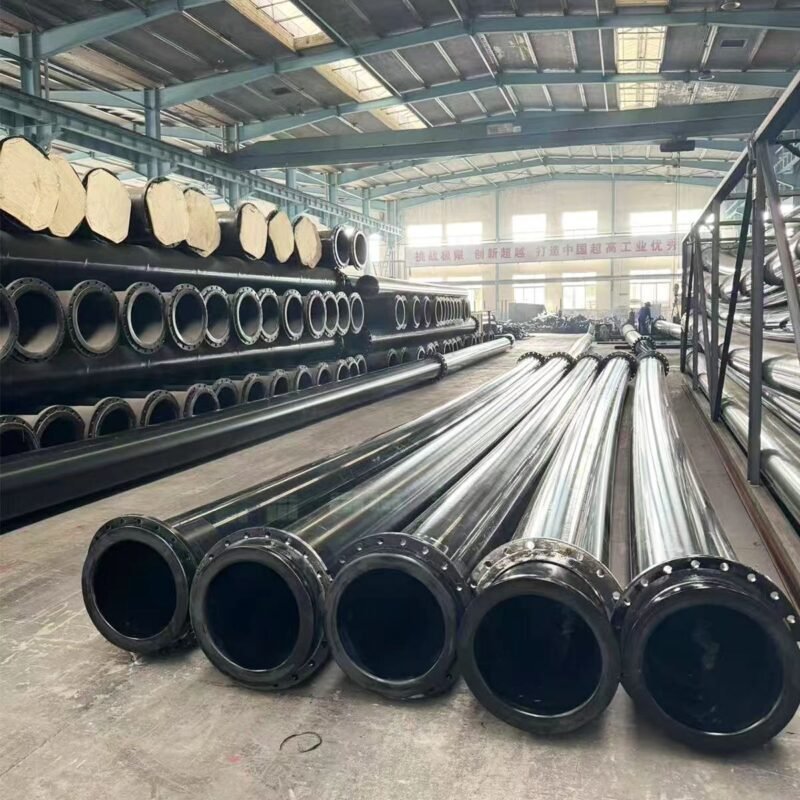
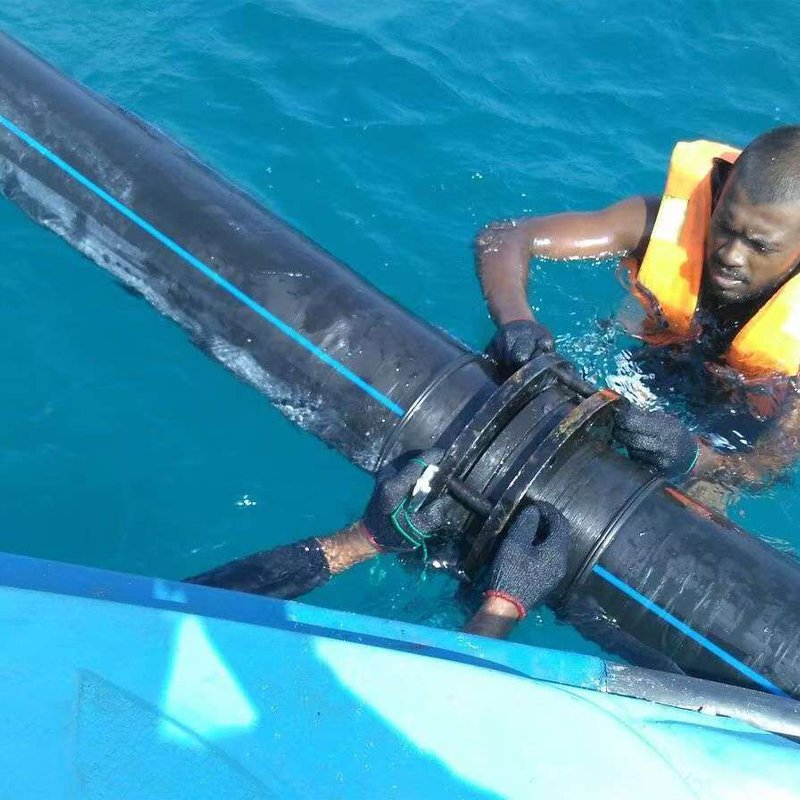
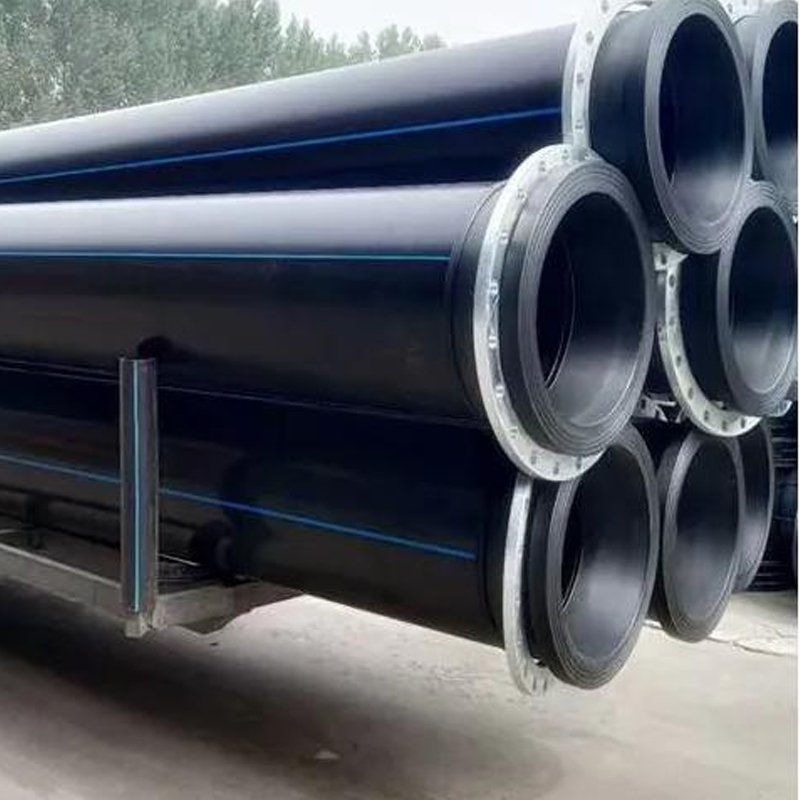
Comparison between End-Section Dredging Rubber Hoses and Ordinary Dredging Pipes
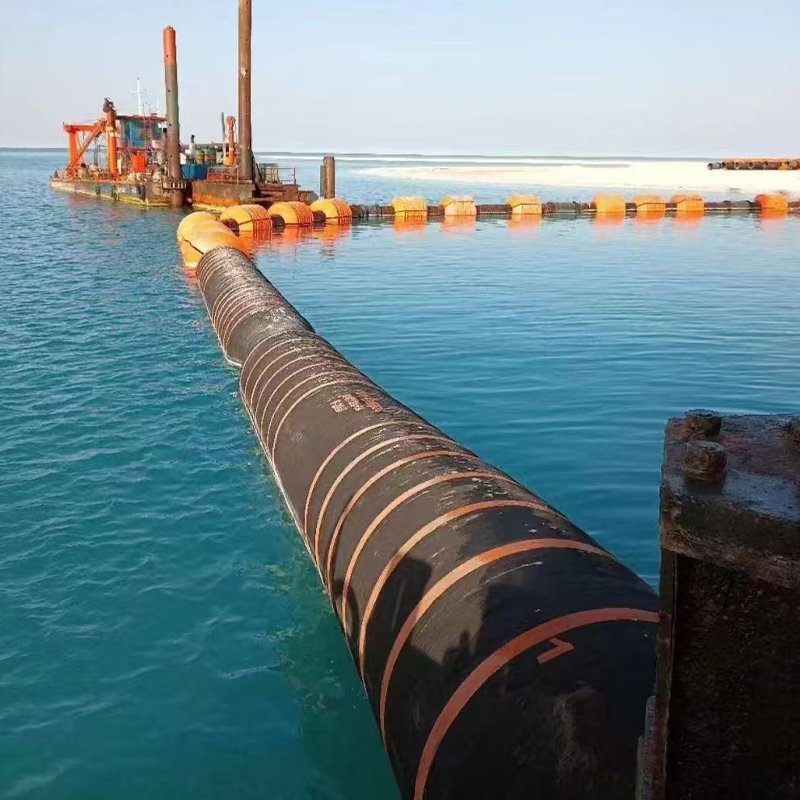
Main Functions:
Buffering, shock absorption, flexible connection;
long-distance conveying, pressure bearing
Installation location at both ends of the pipeline system:
1. Suction end: Connected to the dredger cutter head.
2. Discharge end: Connected to the shore discharge pipe or the spoil disposal pipe. The middle main part of the pipeline system:
The majority of pipe sections between ships and between ships and the shore.
Materials and Structure All-rubber composite material:
Lined with wear-resistant rubber (such as NR, SBR), multi-layer high-strength synthetic fiber or steel cord fabric skeleton, and covered with anti-aging and seawater-resistant rubber. No metal joints; usually connected to metal pipes via flanges or clamps.
1. Dredging steel pipe: Made of carbon steel or wear-resistant steel, with welded flanges. 2. Intermediate floating rubber hose: Similar structure to the end pipes, but with lower requirements for wear resistance and flex resistance, usually with metal flanges.
Core Features
1. Exceptional Abrasion Resistance: Directly withstands high-speed slurry impact containing solid particles. 2. Excellent Flexibility: Allows the cutter head to swing at multiple angles, absorbing hull movement and wave impacts. 3. Resistance to Flexural Fatigue: Withstands frequent bending and deformation without damage. 4. Lightweight and Good Buoyancy (if floating).
1. High Strength and Rigidity (Steel Pipe): Ensures structural integrity for long-distance transportation. 2. Strong Pressure Resistance: Withstands the internal pressure of the entire pipeline. 3. Good Abrasion Resistance (but generally lower than end pipes). 4. The intermediate rubber hose has certain flexibility for connecting different units.
Loading conditions are mainly dynamic:
subject to severe vibrations, swinging, bending, tension, and compression.
Loading conditions are mainly static/quasi-static: primarily internal slurry pressure and self-weight, with small bending and swinging amplitudes.
Cost and Lifespan:
The unit price is high, but it is a consumable part. Due to the extreme working environment, its lifespan is usually shorter than that of the intermediate pipe section. Regular inspection and replacement are crucial.
Steel pipe: High initial investment, but long lifespan, and can be used for many years with proper maintenance. Intermediate rubber pipe: Cost and lifespan are between the end pipes and steel pipes.
Detailed Explanation
1. Differences in Function and Location
• End Suction Dredging Rubber Hose:
• At the suction end: It connects to the most critical component of the dredging equipment—the cutter head. The cutter head stirs up mud and sand on the seabed, generating intense vibrations and forces in various directions. The end rubber hose acts like a ‘shock absorber’ and ‘universal joint’, absorbing these vibrations and allowing the cutter head to move flexibly without transmitting enormous stress to the rigid hull or pipeline, thus protecting the entire dredging system.
• At the discharge end: When slurry is discharged, if it directly impacts a fixed shore pipe or seabed, it creates significant impact force and noise. Here, the end rubber hose serves to ‘dissipate energy’ and ‘guide’ the flow, reducing the slurry velocity, protecting shore facilities, and minimizing environmental scouring.
• Ordinary Dredging Pipe:
• Its primary function is to construct a stable, efficient, and low-leakage conveying channel. Whether it is steel pipes on the ship, floating steel pipes connecting ships, or pipelines connecting ships to the shore, they need to convey slurry to designated locations with minimal resistance. Their design focuses more on structural strength, sealing, and long-term durability rather than extreme flexibility and vibration resistance.
2. Targeted Materials and Design
• The design philosophy of the end dredging rubber hose is ‘using flexibility to overcome rigidity’.
• Super Wear-Resistant Lining: Due to high and uneven slurry velocity at the inlet end, containing a lot of air, wear is most severe here, so the inner rubber lining uses the top-tier wear-resistant formula.
• Strong Reinforcement Layer: It employs multiple layers of high-strength steel cord or synthetic fibers (such as aramid), providing extremely high burst pressure and tensile strength while ensuring flexibility.
• Optimized Joint Design: To avoid stress concentration, the connection with metal flanges is specially reinforced to prevent joint detachment or tearing under frequent swinging.
• The design philosophy of ordinary dredging pipes is ‘stability and reliability’.
• Dredging Steel Pipes: They use thick-walled steel, sometimes with wear-resistant treatments on the inner wall (such as liners or spray-on wear-resistant coatings), but overall they are rigid structures.
• Intermediate Floating Rubber Hoses: Although they also have flexibility, their reinforcement layer and wear-resistant layer specifications are usually lower than those of end hoses because the flow field they are in is more stable, with much less wear and bending.
Summary and Analogy
You can understand it this way: Consider the entire dredging pipeline system as a long fire hose.
• The end dredging rubber hose is like the flexible coupling and nozzle at the front of the firefighter’s water gun. It needs to withstand the reactive force of water pressure, allow the firefighter to swing it left, right, up, and down, and the nozzle area experiences the most severe wear.
• Ordinary dredging pipes (especially steel pipes) are like the main fire hose connecting the fire truck and the water gun. Their job is to withstand high pressure and convey water from the source to the front end; they themselves do not need frequent bending or swinging.
Therefore, when selecting and using them, ordinary dredging pipes (even intermediate rubber hoses) must never be used arbitrarily as end hoses, as their insufficient wear resistance and bending resistance will cause rapid damage, leading to production interruptions or even safety accidents. Similarly, using expensive end rubber hoses as intermediate pipe sections is also an unnecessary cost waste.