Comparison between cable floats and ordinary floats
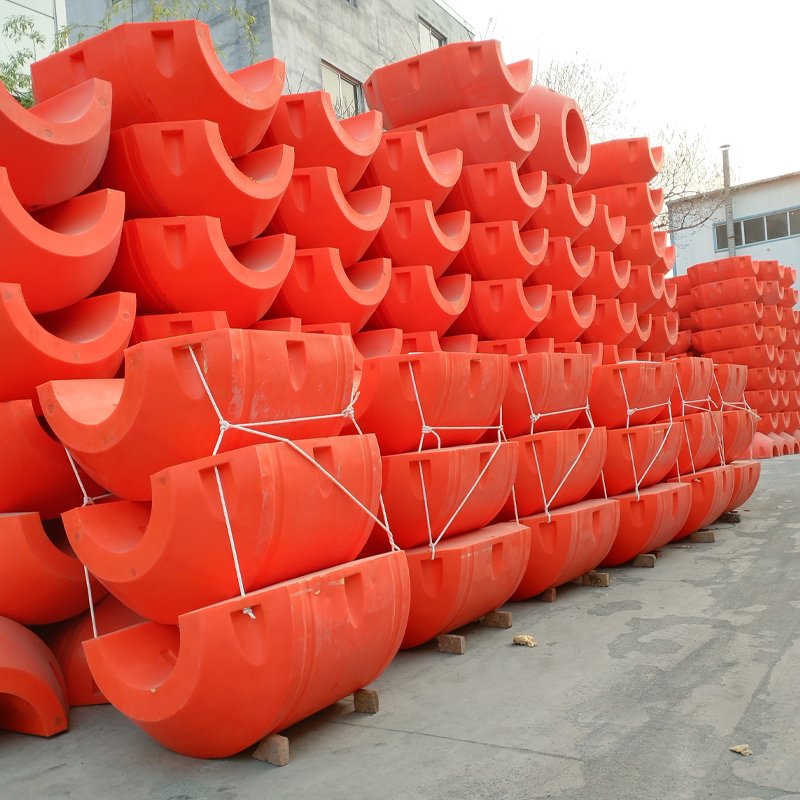
Cable floats and ordinary floats differ significantly in structure, function, and application scenarios. Here is a detailed comparison:
1. Structure and Design
Comparison Item | Cable Float | Ordinary Float
Core Function | Provides both buoyancy support and cable protection | Only provides buoyancy support
Internal Structure | Reserved cable channels or built-in protective conduits | Solid or simple hollow structure
Material | UV-resistant, corrosion-resistant materials (such as HDPE, polyurethane) | Ordinary plastic, foam, or metal (depending on use)
Sealability | High requirement (waterproof, sandproof) | General (some need waterproofing)
2. Application Scenarios
Cable Floats | Ordinary Floats
Suspension laying of underwater cables/pipelines (e.g., submarine optical cables) | Ship buoys, floating platforms, fishery facilities
Marine energy generation equipment (e.g., wave energy devices) | Swimming pool barriers, temporary floating docks
Cross-water projects (bridges, power supply for monitoring equipment) | Simple floating objects (e.g., lifebuoys, float balls)
3. Performance Characteristics
Comparison Item | Cable Float | Ordinary Float
Environmental Pressure Resistance | Resistant to deep water pressure, impact, and biofouling | Typically suitable for shallow water or low-risk environments
Maintenance Needs | Regular inspection of cable channel sealability required | Simple maintenance (e.g., cleaning, rust prevention)
Cost | Higher (due to complex design and special materials) | Lower (standardized production)
4. Special Requirements
Cable Floats:
Consider cable bending radius restrictions to avoid damage.
May integrate signal transmission or power relay functions (e.g., smart buoys).
Ordinary Floats:
More emphasis on buoyancy durability, such as freeze resistance (for polar use) or weathering resistance (for long-term outdoor use).
5. Typical Examples
Cable Floats:
Submarine cable suspension balls (used in offshore wind power projects).
Deep-sea observation equipment floats with armor protection.
Ordinary Floats:
Polystyrene foam balls (aquaculture).
Inflatable buoys (temporary water activities).
Summary Selection Recommendations
Choose cable floats: when the project involves underwater cable/pipeline protection, complex environments (such as salt erosion, high pressure), or requires integrated functions.
Choose ordinary floats: only basic buoyancy support is needed, budget is limited, or the application environment is mild (such as inland waters).
For specific application scenarios (e.g., deep sea vs. shallow water), further detailed comparison parameters can be refined (such as buoyancy coefficient, pressure depth).