Comparative Analysis of Live Flanges and Fixed Flanges in Dredging Rubber Hoses

Core Concept Comparison
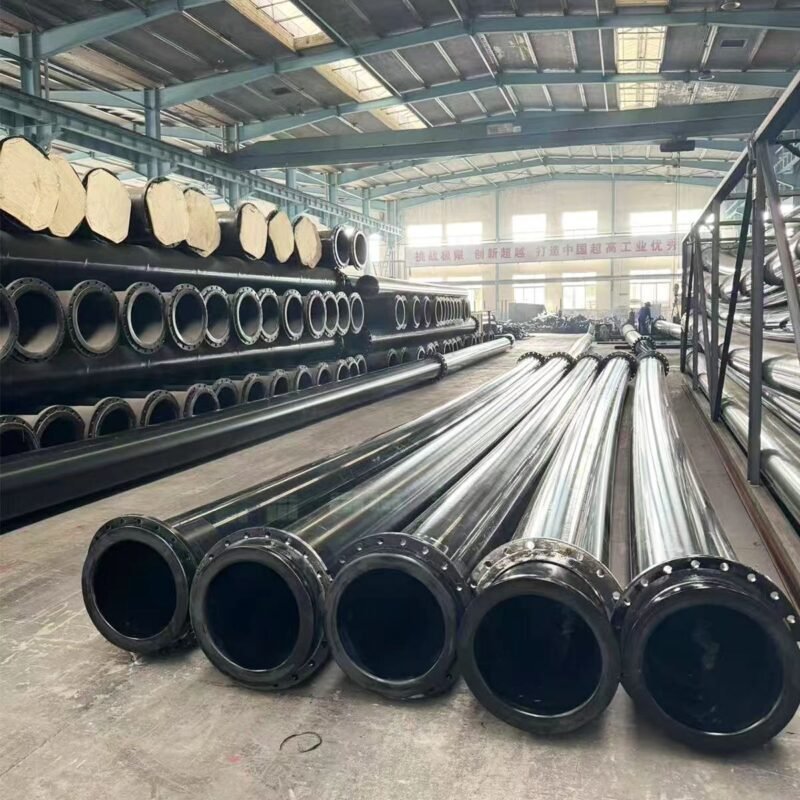
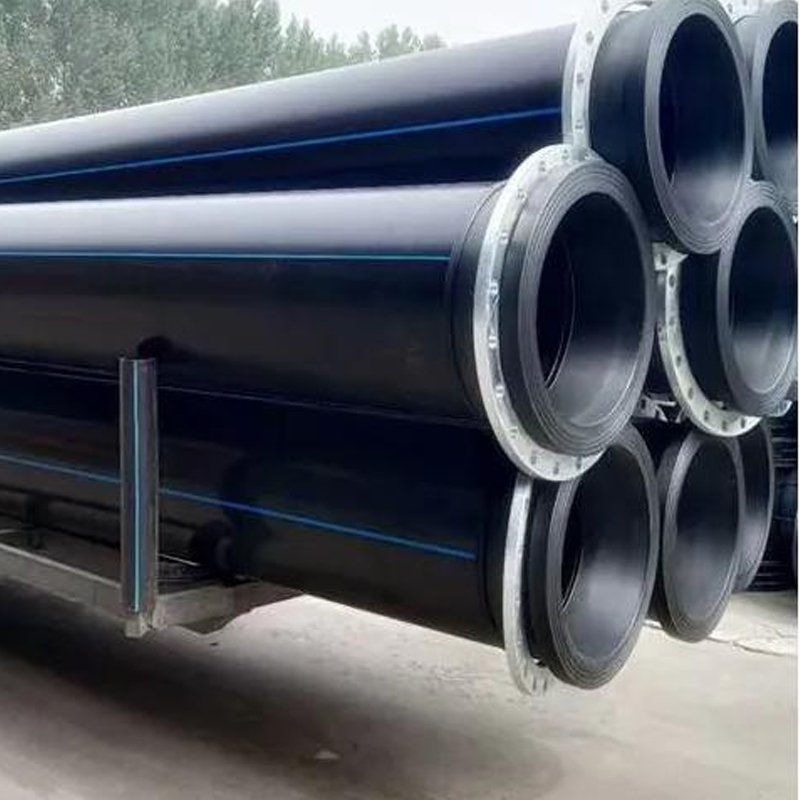
• Fixed Flange: The inner hole of the flange is rigidly connected to the reinforcing steel wire (or skeleton layer) on the outer side of the rubber tube through vulcanization, forming an integral whole. The flange itself cannot rotate relative to the rubber tube.
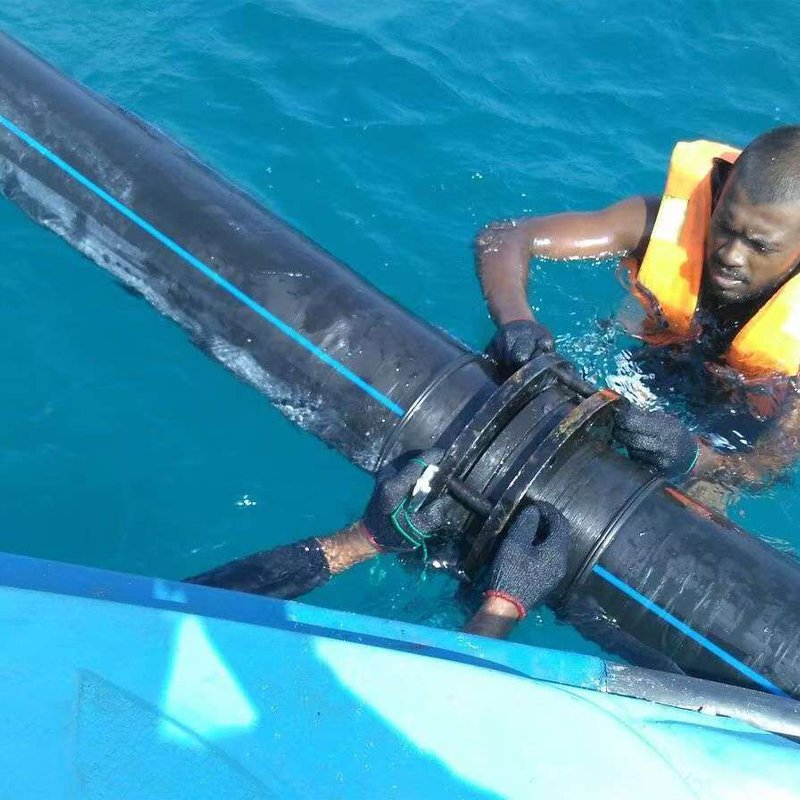
• Live Flange: The flange is an independent component and is not directly vulcanized onto the rubber tube. It presses the end of the rubber tube onto the flange sealing surface through a removable mechanical structure (such as a clamp, compression ring, or bolt tightening). The ‘live’ nature of the live flange is reflected in two aspects:
1. During installation, the flange can freely rotate around the axis of the rubber tube, facilitating alignment of the bolt holes.
2. It is a reusable connection piece.
Detailed comparative analysis
Comparison Dimensions: Live Flange vs. Fixed Flange
Structure and Installation
Complex structure: Composed of flange plate, pressure ring/collet, sealing ring, high-strength bolts, etc.
Installation is cumbersome: On-site precise alignment and step-by-step tightening of bolts are required, which has high demands on operators and results in slow installation speed.
Simple structure: The flange and rubber hose are vulcanized into one piece.
Quick installation: Simply align the bolt holes and tighten, with simple operation and fast installation speed.
Maintainability and Lifespan Significant advantages:
1. Flange can be reused: After the rubber hose is worn out and scrapped, the expensive flange can be disassembled and installed on a new hose, greatly reducing long-term usage costs.
2. Local repair is possible: If only local wear at the end or sealing issues occur, it can sometimes be disassembled and repaired on-site without replacing the entire rubber hose.
Disadvantages
Disadvantages are obvious:
1. Single-use: When the hose is scrapped, the flange is also scrapped, resulting in higher costs.
2. Not repairable locally: Damage to the end usually requires replacing the entire hose.
Dependable Installation Quality: Sealing is achieved through mechanical clamping force. If installed improperly (e.g., uneven bolt tightening torque), leakage is likely to occur. High requirements are placed on the quality and installation of seals (such as O-rings and lip seals).
Extremely Reliable: The flange and rubber hose are vulcanized as one piece, with no assembly gaps. This results in excellent and stable sealing performance, and basically no leakage at the root of the hose due to installation issues.
High versatility: A set of live flange components can be compatible with multiple hoses of similar specifications (ensuring size matching). It is more flexible in scenarios where different lengths and pressure ratings of hoses need to be replaced frequently.
Strong specificity: One hose corresponds to one set of flanges, with fixed specifications and poor interchangeability.
It depends on the design: High-quality live flanges (such as those with toothed rings and wire clamp structures) can provide pull-out resistance and pressure-bearing capacity comparable to fixed flanges. However, their overall reliability is slightly lower than that of fixed flanges, especially under high pressure and large particle impacts, where the mechanical connection point is a potential weak spot. Excellent performance: The steel wire skeleton is directly vulcanized with the flange, resulting in direct force transmission, optimal pull-out resistance, torsion resistance, and pulse pressure resistance, making it the preferred choice for high-pressure, heavy-load, and harsh operating conditions.
High upfront cost: The price of a single live flange component is much higher than that of a fixed flange.
Low long-term cost: Due to its reusability, in projects where hoses are replaced frequently, the total cost of ownership over the entire lifecycle is usually lower.
Low upfront cost: A single hose with a fixed flange is relatively inexpensive.
High long-term cost: Each time the hose is replaced, the flange also needs to be replaced, leading to high accumulated costs over the long term.
1. Medium and low-pressure dredging projects (such as river channel dredging and port maintenance).
2. Projects where hoses need frequent disassembly, replacement, or relocation.
3. Projects with high requirements for long-term operating cost control.
4. As a swivel joint in pipelines, it allows limited rotation between pipe sections to relieve torque.
1. High-pressure, high-strength deep-sea mining and large-scale land reclamation projects.
2. Harsh working conditions, severe wear, and occasions with extremely high reliability requirements.
3. Parts such as floating oil pipes and submerged pipes that require absolute sealing and underwater reliability.
4. Fixed pipeline segments that are not frequently disassembled.
Summary and Selection Recommendations
Feature Winner Explanation
Reliability/Sealing Fixed Flange One-piece molding, unparalleled stability and sealing performance.
Installation Convenience Fixed Flange Ready-to-install, saving time and effort.
Long-term Economy Live Flange Flanges can be reused, saving a large amount of replacement costs.
Usage Flexibility Live Flange Rotatable and reusable, adapting to variable operating conditions.
Pressure and Tensile Limit Fixed Flange Its structure enables it to withstand more extreme mechanical conditions.
Key Points for Selection Decision:
1. Project Budget and Timeline:
• If it is a short-term, one-time project with limited budget, fixed flange can be considered.
• If it is a long-term, large-scale project that emphasizes overall operating costs, live flange is a more economical choice.
2. Operating Conditions:
• High pressure, coarse particles, severe wear, underwater environment → Fixed flange should be prioritized.
• Moderate pressure, relatively stable operating conditions, requiring frequent connection and disassembly → Live flange should be prioritized.
3. Management and Maintenance Capability:
• If the on-site maintenance team is professional and can ensure standardized installation and maintenance of live flanges, their advantages can be fully utilized.
• If simplicity and maintenance-free are pursued, fixed flange is more hassle-free.
Modern Development Trends: In high-value, large-scale dredging projects, mixed use has become the norm.For example, fixed flange hoses are used in critical high-pressure sections such as the stern and pump outlets to ensure absolute safety; live flange hoses are used in intermediate pipeline connections for convenient pipe laying, adjustment, and cost reduction. Meanwhile, the design and manufacturing processes of live flanges are continuously improving, and their sealing and pressure-bearing performance are approaching those of fixed flanges.
The final selection should be based on a comprehensive evaluation of specific engineering parameters (pressure, pipe diameter, medium), project plans, cost models, and safety requirements.