Common Problems and Solutions of Dredging Rubber Expansion Joints
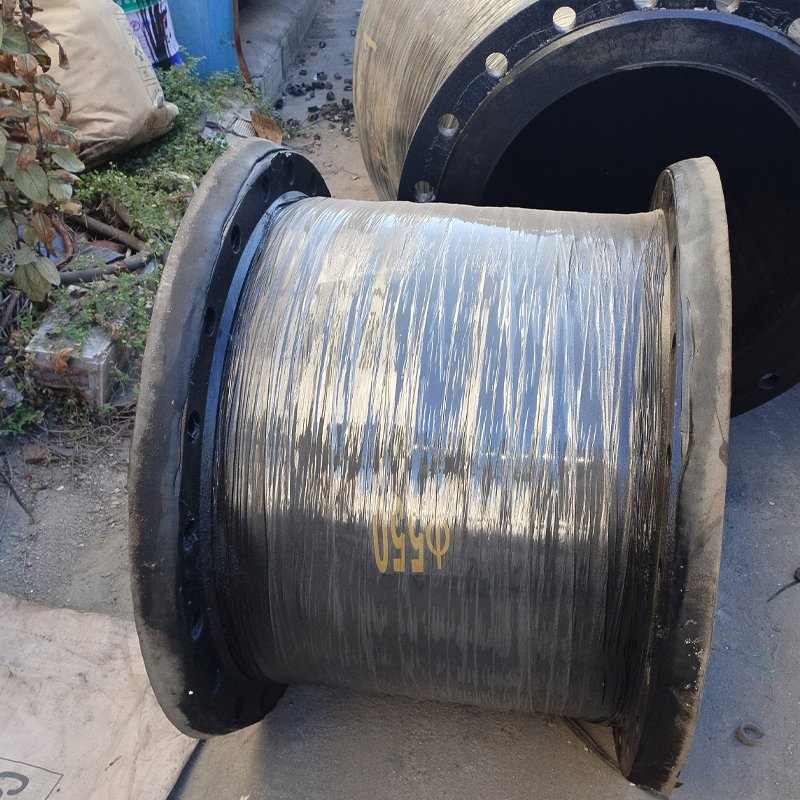
In dredging projects, rubber expansion joints are important components of pipeline systems, used for compensating displacement, reducing vibration and noise. Common failures are mainly concentrated in physical damage, connection failure, material aging, and improper installation and maintenance.
To help you quickly understand and address these issues, the following table summarizes common problems, causes, and solutions for dredging rubber expansion joints.
Common Problems | Main Causes | Solutions
— | — | —
Fatigue fracture
Frequent axial, lateral displacement or angular deflection of the pipeline, leading to fatigue damage in the bellows section due to cyclic stress.
Verify if the actual pipeline displacement exceeds the compensation capacity of the expansion joint. When selecting the model, fully consider the maximum displacement range under working conditions.
Failure caused by press ure thrust
Blind plate force effect. The internal pressure of the pipeline acting on the cross-sectional area of the expansion joint bellows generates enormous pressure thrust. If the pipeline supports or anchor bolts fail to effectively restrain this force, it will be transmitted to the weak parts of the system, causing excessive stretching or compression of the expansion joint and resulting in damage.
The pipeline system design must include main fixed supports to resist pressure thrust, supplemented by guide supports to control pipeline deformation. During installation, limit rods should also be set according to specifications to prevent excessive compression or stretching.
Tearing or perforation of rubber layer
Continuous scouring and wear from dredging materials (such as sand and gravel); excessive stretching, compression, or bending beyond the design range; foreign objects entering the pipeline and getting stuck or colliding with the interior of the expansion joint.
Regularly inspect the wear condition of the rubber surface. Select more wear-resistant and cut-resistant rubber materials. Strictly control the displacement and angle of the expansion joint during operation to avoid exceeding limits. Install protective plates or filters before and after the expansion joint to prevent impact from large foreign objects.
Leakage or detachment at connection points
Insufficient or uneven pre-tightening force of flange connection bolts; aging or damage of gaskets; loosening of bolts due to vibration.
Tighten the flange bolts uniformly and symmetrically according to the torque provided by the manufacturer. Use anti-loosening nuts or regularly check and retighten. Replace aged or damaged gaskets.
Rubber aging and corrosion
Long-term exposure to ultraviolet radiation and ozone; contact with water temperature, oils, or chemicals that accelerate rubber aging.
If the environment is harsh, consider using rubber formulations with specific resistance (e.g., EPDM for ozone and hot water resistance). Add protective covers during non-operational periods to avoid direct sunlight.
Faults caused by improper installation
Forcing the expansion joint into alignment by twisting or stretching during installation; welding spatter or slag scorching the rubber surface; misalignment with the pipeline centerline, causing initial stress.
Strictly follow installation specifications to ensure the expansion joint is in a natural state during installation without bearing additional forces. Cover the expansion joint during welding for protection. Use calibration tools to ensure pipeline alignment.
💡 Daily Maintenance and Installation Recommendations
In addition to addressing specific issues, proper daily maintenance and correct installation can effectively prevent most failures and extend the service life of expansion joints.
• Regular Inspection and Maintenance: It is recommended to establish a regular inspection plan, paying close attention to whether there are cracks, bulges, abnormal deformation, or wear on the rubber surface; check for loose bolts or signs of corrosion in the flange connections; and inspect the entire system for any leakage conditions-5. When cleaning, avoid using sharp tools to scratch the rubber surface.
• Standard Installation Procedures: Before installation, confirm that the model and specifications of the expansion joint match the pipeline design conditions. During installation, it is strictly prohibited to use the deformation of the expansion joint to forcibly compensate for pipeline installation errors. When performing welding operations, ensure effective covering and protection of the expansion joint to prevent damage from welding slag. All limit rods and anchor parts should be installed and tightened correctly according to design requirements.
Hope the above information helps you better understand and use the dredging rubber expansion joint. If you can share more details about the specific situation you are encountering, such as the type of damage or working environment, I may be able to provide a more specific analysis.