Common Problems and Solutions for Tapered Floating Hose
Common Question Categories Specific Manifestations/Impacts Possible Solutions
🛩️ Aviation Field (Aerial Refueling)
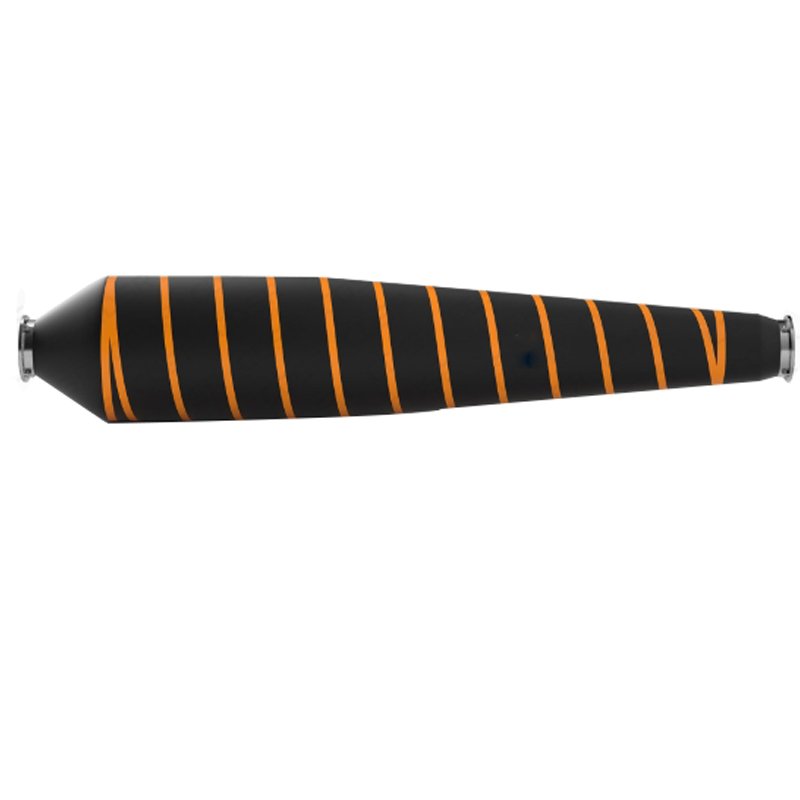
Cone Stability
Atmospheric turbulence causes cone oscillation, making difficult inconnect for the receiving aircraft .
Adopt advanced control algorithms (such as LQG controllers combined with Kalman filtering) to suppress disturbances and stabilize the cone -.
🏭 Industrial Field (Fluid Conveyance)
Seal and Connection Failure
Leakage at joints; excessive movement may cause hoses to break at joints ; improper crimping or use of unsuitable seal materials lead to sealing issues.
Use appropriate seal materials (such as high-quality seal tape and thread compound) ; ensure hoses are slack with sufficient slack to avoid tightness; use proper tools for correct crimping ; install with \”two-wrench\” method according to specified torque.
Hose Layout and Wear
Hoses break at joints due to excessive movement or overly short hose assemblies ; small bending radius causes hose damage ; hoses rub against other parts of the equipment.
Ensure minimum bending radius during installation ; keep hoses slack with straight segment length at least twice the hose outer diameter ; secure with hose clamps to prevent excessive movement and friction, while ensuring clamps do not cut into the hose .
Hose Kinking and Deformation
Hoses twist during installation or sharp bends cause fluid blockage and pressure loss.
Avoid twisting hoses during installation; use \”two-wrench\” operation to minimize twisting; for areas prone to kinking, consider using high-flexibility hoses with cross-braided layers or external auxiliary support (such as dedicated springs ).
Pressure and Vibration Issues
Joints loosen due to vibration; pressure fluctuations cause abnormal stretching or contraction of hoses.
Ensure joints are tightened to recommended torque ; check if hose pressure rating matches -10; consider using vibration-resistant joint designs (such as flange connections ).
💡 Suggestions for the Use and Maintenance of Industrial Hoses
In industrial settings, proper installation and maintenance can effectively prevent most issues:
• Installation should be standardized: Ensure the minimum bending radius of the hose to avoid sharp bends. Leave some slack during installation to prevent shortening and damaging the fittings when under pressure.
• Fitting seals must be reliable: It is recommended to use high-quality sealing tape (such as pink thick type) and thread sealant.
• Regular inspection and maintenance: Regularly check if the outer layer of the hose is worn, if the fittings are leaking or loose. Replace promptly if wear, bulging, or cracks are found.
• Selection is crucial: Choose the appropriate hose based on working pressure, medium characteristics, and environmental conditions.
💎 How to Choose a Solution
When dealing with the issue of ‘cone sleeve floating hose’, first clarify whether you are referring to the aviation fueling system or the industrial fluid conveying system.
• If you are handling the cone sleeve stabilization control problem in the aviation field, the core lies in researching how to optimize control algorithms to cope with atmospheric disturbances.
• If you are encountering leakage, wear, or kinking problems with industrial hoses and fittings, please focus on the ‘Industrial Field’ section in the above table and the content of ‘Suggestions for the Use and Maintenance of Industrial Hoses’, with an emphasis on mechanical structure, sealing technology, and standardized installation.
Hope this information helps you. If you can more specifically describe the scenario in which your ‘cone sleeve floating hose’ is applied and the specific problems encountered, I may be able to provide more targeted advice. 10 web pages