Common Problems and Solutions for Slope Rubber Hoses
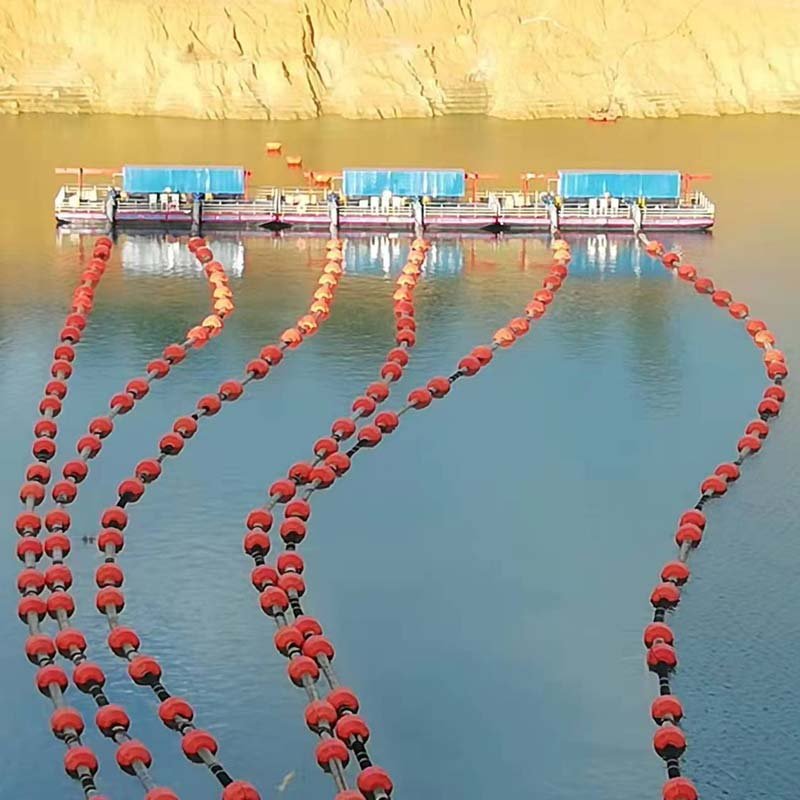
“Ascent rubber hose” typically refers to a rubber hose laid and used in inclined, curved, or complex terrains, commonly found in high-pressure hydraulic systems. Its core issues are consistent with those of general rubber hoses, but due to its special working environment, failures caused by improper installation and abnormal pressure are more prominent.
According to common needs, the typical faults, causes, and solutions of “ascent rubber hoses” are summarized in the table below for easy comparison and troubleshooting:
| Fault Location | Common Fault Phenomena | Main Cause Analysis | Solutions and Preventive Measures |
Outer rubber layer
Surface appears cracks | Forced bending in cold environments; natural aging of materials after long-term use; accelerated aging due to ultraviolet radiation. | Avoid moving the hose in cold environments, or directly replace it with a cold-resistant hose; replace promptly when signs of aging are found, and avoid exposure to sunlight.
Surface appears bubbles | Poor quality of the hose itself; excessive extrusion during joint installation causing damage to the outer rubber; high-pressure fluid seepage to the outer rubber layer after inner rubber damage. | Contact the supplier to replace with qualified products; install joints according to specifications (avoid over-tightening/extrusion); Check and install the joint correctly .
No breakage but massive oil seepage , High – pressure liquid flow erodes the inner rubber until the steel wire layer is exposed . Commonly occurs at bends. Replace the hose and ensure its bending radius meets the requirements .
Inner Rubber Layer
Inner rubber hardens and has cracks , Excessive working oil temperature causes plasticizer to overflow or oil decomposition . Check the system oil temperature, replace the hose after eliminating problems such as oil passage blockage and poor heat dissipation .
Inner rubber seriously deteriorates and swells , Hydraulic oil is used beyond the expiration date/deteriorated, or the oil is incompatible with the hose material . Check and replace with qualified hydraulic oil to ensure the oil is compatible with the hose .
Reinforcement Layer
Rust on the steel wire at the break , After the outer rubber is damaged, moisture or corrosives invade the steel wire layer . Replace the hose and check the working environment to prevent external damage.
Irregular steel wire breakage (no rust) , There is high – frequency impact pressure in the system . Select a steel wire – wound skeleton rubber hose that is more suitable for withstanding pulse pressure .
Overall/Installation
Neat breaks at one or more places , System pressure is too high, exceeding the rated working pressure of the hose . Check the system pressure to ensure the pressure – resistant grade of the selected hose meets the standard.
Torsion at the rupture, The hose is twisted during installation or use . Re – install correctly, ensure the axes of the two ends of the joint are in the same plane and avoid torsion.
The tube body is sucked flat , Negative pressure occurs in the system; The pipeline bending radius is too small; Quality or strength problems of the hose itself. Check the exhaust system; Increase the bending radius; Select high – quality hoses .
Rupture due to over – stretching, Over – tight installation, insufficient length allowance
⚠️ Special Notes for Climbing Installation
In the “climbing” working condition, the rubber hose needs to bear gravity for a long time, and may move frequently or be subject to friction and extrusion from the terrain.
The following points need to be focused on:
Control of Bending Radius: Sharp bends are strictly prohibited. The minimum bending radius of the hose should not be less than 9 times its outer diameter (refer to the product manual for details; some high-pressure hoses require ≥10 times). The distance from the bend to the end face of the joint should be greater than 2 times the outer diameter of the hose to avoid stress on the root of the joint.
Anti-friction and Anti-stretching: Securely fix with pipe clamps and brackets (with a spacing not exceeding 1.5 meters) to avoid direct friction with rocks and metal structural parts. Wear-resistant spring sheaths or rubber protective sleeves can be added; do not stretch and tighten during installation, and keep a certain degree of slack to cope with pressure deformation and terrain settlement.
Heat Source Isolation: If the slope is close to heat sources such as engines and exhaust pipes, the distance between the rubber hose and the heat source should not be less than 30cm, or use flame-retardant heat-insulating sleeves or metal protective plates for isolation to prevent high temperatures from accelerating the aging of the rubber hose.
Keep away from heat sources: If the ramp is close to heat sources such as engines, it should be separated by heat-insulating sleeves or protective plates
💡 Daily inspection and maintenance suggestions
1. Regular inspection: Establish an inspection system, with a focus on external rubber wear, bulges, cracks, joint oil leakage, and abnormal deformations (such as flattening, kinking) .
2. Standardized operation and storage:
– Before use: Confirm that the hose appearance is intact and the medium is compatible with the hose material.
– During storage: Place it in a cool and dry place (recommended around 15°C), avoid contact with oils and solvents, store it flat, and avoid piling too high .
If you can inform what specific equipment (such as excavators, water pumps, etc.) the climbing rubber hose is applied to or what medium it transports, I can provide you with a more targeted analysis.