Common issues and solutions for steel ring sludge suction pipes (五)
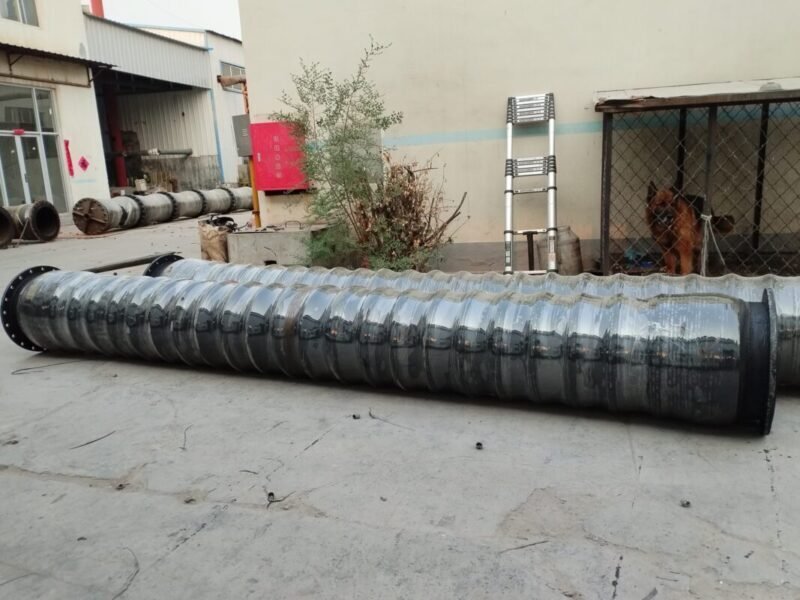
Poor fluidity or blockage:
Symptoms include decreased flow, increased pump load, and eventual complete blockage.
Main causes:
1. Medium issues: High concentration of silt, excessive viscosity, or presence of large amounts of debris such as fibers and plastic bags.
2. Insufficient flow rate: Inappropriate pump selection or operating conditions leading to low flow rates within the pipe, causing gradual silt deposition.
3. Unreasonable pipeline layout: Presence of too many sharp bends or ‘V’ shaped sections, which can cause sedimentation at low points.
Solutions:
1. Shutdown and cleaning: Disconnect from the lowest point or detachable section of the pipe and clean using a water gun or mechanical methods.
2. Reverse flushing: If the system allows, use clean water for reverse flushing to dislodge blockages.
Preventive measures:
– Reasonable design of pipelines: Minimize the number of bends and avoid sections prone to sediment accumulation.
– Maintain sufficient flow rate: Ensure the working flow rate can carry solid particles to prevent settling.
– Source control: Install grates or shredders at the suction inlet to prevent large debris from entering the pipe.
Summary and recommendations:
1. Correct selection is fundamental: Choose suitable pressure and grade pipes based on specific operating conditions (positive and negative pressure, medium characteristics, temperature, wear resistance).
2. Standard installation is a guarantee: Strictly follow operating procedures for connection and sealing, especially surface treatment.
3. Regular maintenance is key: Establish a daily inspection system to check fasteners, sealing, wear, and deformation signs.
4. Civilized operation is the foundation: Avoid dragging, crushing, and excessive bending operations.