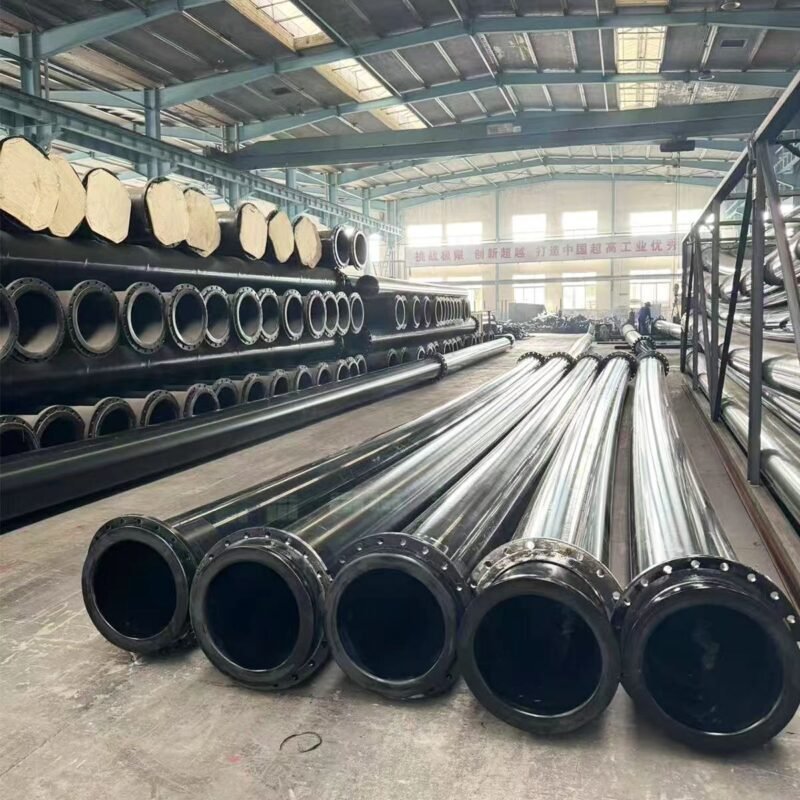
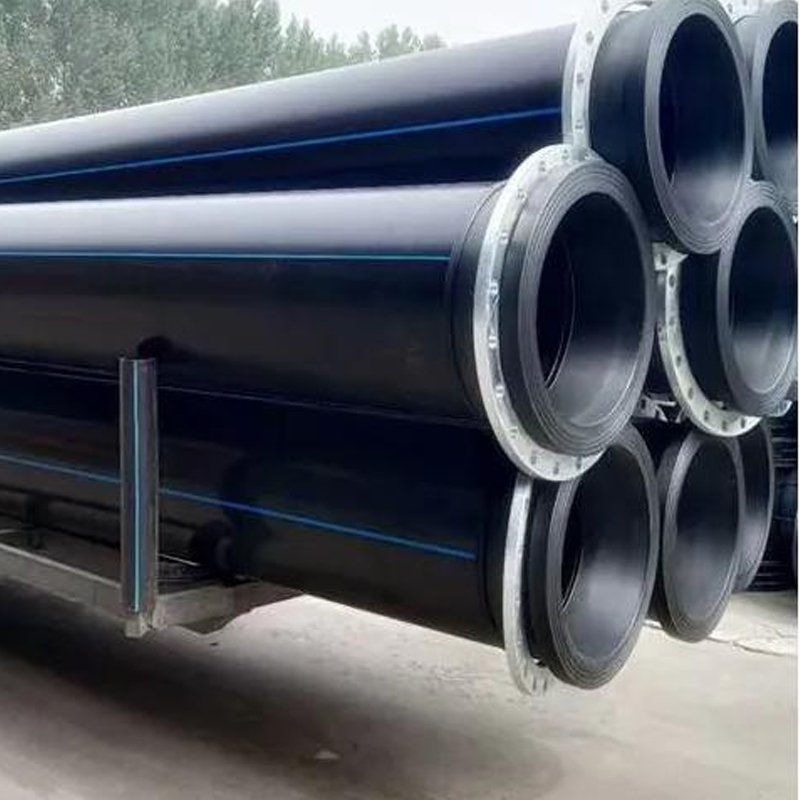
Classification of Dredging Rubber Hoses
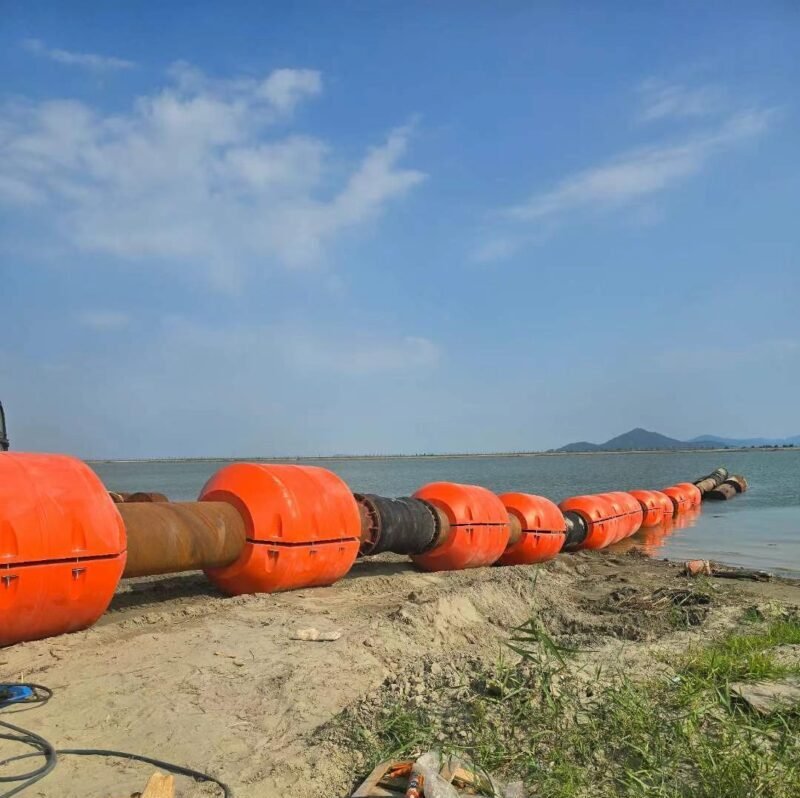
Regarding the classification of dredging rubber hoses, we can make detailed divisions from multiple dimensions. Dredging rubber hoses are mainly used in projects such as waterways, ports, and land reclamation to convey slurry containing abrasive materials like silt and gravel. Therefore, their structure, materials, and design are significantly different from ordinary rubber hoses. Here is the detailed classification of dredging rubber hoses:
1. Classification by structure and working principle (the most core classification method)
This classification is based on the position of the rubber hose during dredging operations and the pressure/tension it withstands.
• Floating Rubber Hose
◦ Purpose: Connects between the dredger and the discharge pipe, floating on the water surface.
◦ Characteristics:
■ Buoyancy: The hose body is usually wrapped with high buoyancy foam or hollow floats to ensure it can float on water.
■ Flexibility: It has good flexibility to adapt to the movement of the ship’s hull and wave fluctuations.
■ Pressure: Usually withstands medium pressure.
◦ Structure: Typically consists of an inner rubber layer, a reinforcement layer (cotton fabric or steel wire), an outer rubber layer, and a float body.
• Submerged Rubber Hose
◦ Purpose: Connects the suction nozzle with the ship’s pump or is used for conveying in the submerged section.
◦ Characteristics:
■ Negative pressure/vacuum: Mainly used at the suction end, requiring anti-collapsing (anti-negative pressure) capability.
■ Abrasion resistance: Directly contacts seabed silt and sand, so the inner lining requires extremely high abrasion resistance.
■ Flexibility: Needs certain flexibility to adapt to underwater terrain and ship movement.
◦ Structure: The hose body usually has an internally built-in spiral steel wire ring to prevent being sucked flat under vacuum suction conditions.
• Shore Rubber Hose
◦ Purpose: Transports silt from the shore to the designated deposition area.
◦ Characteristics:
■ Abrasion and impact resistance: Directly placed on land or shallow beaches, rubbing against the ground, and possibly containing large gravel particles, so it has the highest requirements for abrasion and impact resistance.
■ Pressure: Withstands the pressure from pumping, but usually lower than the high-pressure part of ship use.
■ Robust structure: The hose body is usually thicker, with excellent abrasion resistance of the outer rubber layer.
2. Classified by Reinforcement Material
This determines the rubber hose’s pressure-bearing capacity and tensile performance.
• Cord (Cord Fabric) Reinforced Rubber Hose
◦ Material: Uses high-strength synthetic fiber cords such as nylon and polyester as the skeleton material.
◦ Features: Relatively lightweight, good flexibility, and low cost. Commonly used for floating pipes or shore pipes with low pressure requirements.
• Steel Wire Reinforced Rubber Hose
◦ Material: Uses high-strength steel wires woven or wound as the skeleton layer.
◦ Features: Extremely strong pressure-bearing capacity, excellent tensile performance, and long service life. Mainly used for high-pressure conveying, core pipe sections of large-scale dredging projects, and connection parts requiring high tensile strength. This is currently the mainstream choice for large-scale dredging projects.
• Steel Wire Ring Reinforced Rubber Hose
◦ Material: A spiral steel wire ring is embedded inside the hose.
◦ Features: Mainly imparts the rubber hose with negative pressure resistance (collapse resistance) and good bending retention. Commonly found in underwater suction mud pipes.
3. Classified by Specific Use and Form
In practical applications, there are also more specific names:
• Dredger-Specific Rubber Hoses: A general term covering all types of rubber hoses used on board the ship.
• Slurry Conveying Rubber Hoses: Generally refers to all pipes used for conveying sand and mud mixtures, including floating and shore types.
• Suction Rubber Hoses: Specifically refers to underwater rubber hoses used at the suction end and subjected to negative pressure.
• Floating Rubber Hoses: Also known as floating rubber hoses.
• Submerged Rubber Hoses: Also known as underwater rubber hoses.
• End Rubber Hoses: Installed at the end of the pipeline system, they withstand the maximum wear and impact, and are usually designed with thickened ends or special protective structures.
4. Classified by Diameter and Pressure Rating
• Diameter: Ranges from a few inches to large diameters over 1 meter, determined according to the scale of the dredging vessel and engineering requirements.
• Pressure Rating: Divided into low pressure, medium pressure, high pressure, etc., which is directly related to the reinforcement material and structural design.
Summary and Selection
When selecting dredging rubber hoses, the following factors need to be comprehensively considered:
Work location
floating surface connection, requiring buoyancy and medium pressure
Submerged suction end, requires resistance to negative pressure and high wear resistance
Shore-based land transportation, extremely high wear resistance and impact resistance
Reinforcing materials, warp-reinforced, for low-pressure, low-cost, lightweight applications
Wire-reinforced large-scale engineering with high pressure and high tensile strength
Wire ring reinforced mud suction pipe that must resist collapse
Other factors
Orifice Matching the pump’s flow rate and delivery efficiency
Length according to engineering layout and connection requirements
Lining material: Rubber with a wear-resistant formula is selected based on the
In short, dredging rubber hoses are industrial products with strong professionalism and clear classification. Correct classification and selection are crucial for ensuring the efficiency of dredging projects, reducing operating costs, and guaranteeing operational safety. In actual procurement, detailed working condition parameters (such as medium composition, particle size, flow rate, pressure, working environment, etc.) are usually needed to be provided to professional manufacturers to obtain the most suitable product.