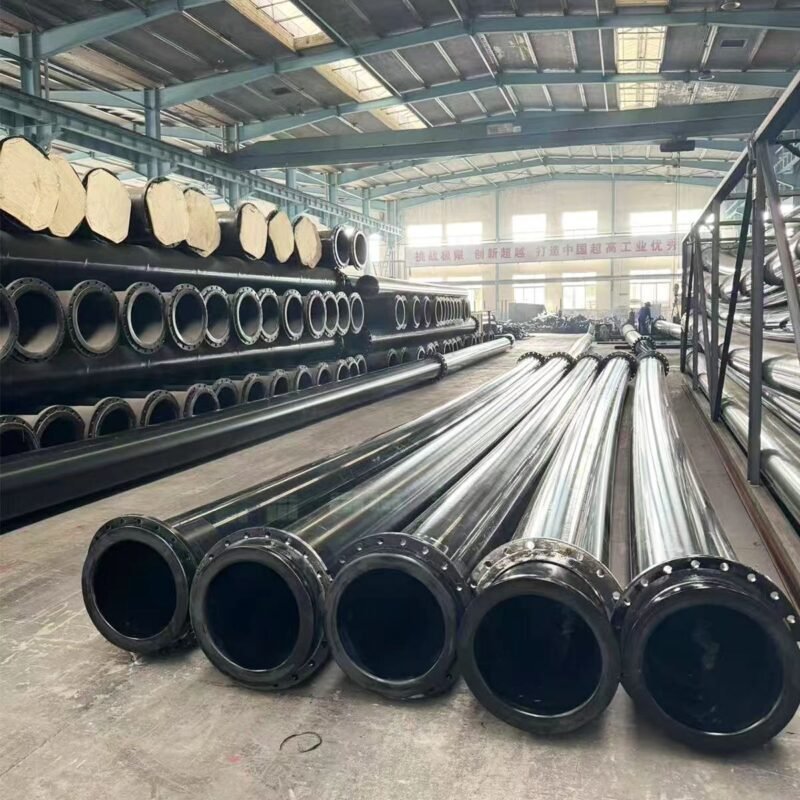
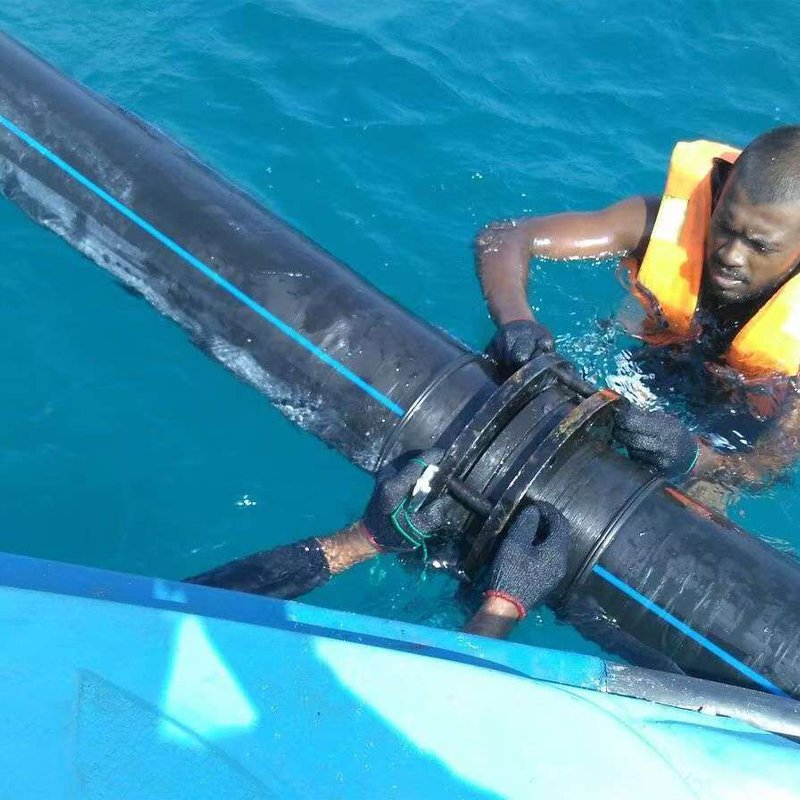
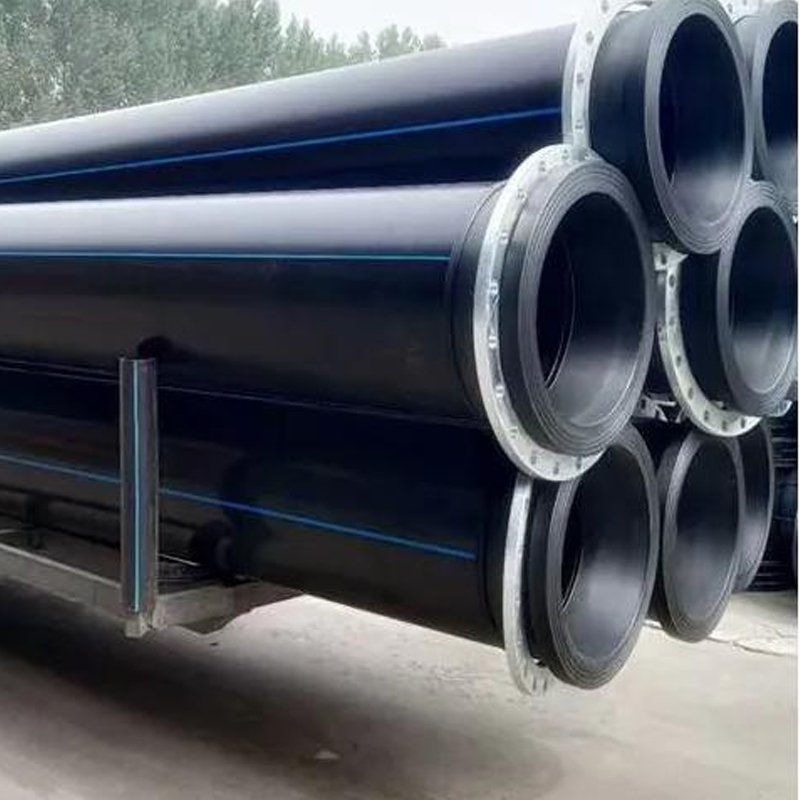
Characteristics of Inner Armor Dredging Rubber Hoses
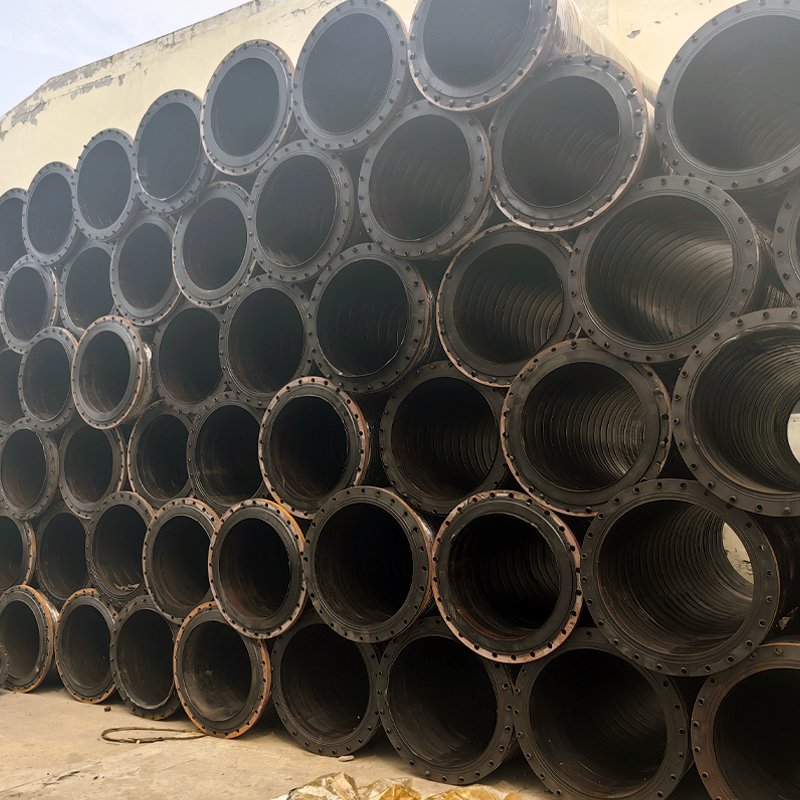
The Inner Armor Dredging Rubber Hose is a core conveying equipment commonly used in dredging projects. Its advantages and limitations in practical applications are as follows, which can provide reference for engineering selection:
I. Core Advantages
1.Exceptional wear resistance and long service life.
The inner layer of the pipe is mostly made of high-performance wear-resistant rubber materials such as natural rubber and styrene-butadiene rubber, which can effectively resist long-term erosion and wear from solid materials like mud, sand, and gravel. Even under harsh conveying conditions, it can maintain a longer service period, reducing the frequency of equipment replacement.
2. High pressure and impact resistance, high structural stability
Its core advantage lies in the ‘internal armor’ structure — by incorporating an internal layer of steel wires or high-strength fiber skeleton, it significantly enhances the overall pressure resistance of the pipe body. In high-pressure slurry conveying or negative pressure suction operations, the pipe is less likely to experience collapse, deformation, or other issues, ensuring stable operation of the conveying system.
3. Excellent flexibility and strong adaptability.
The rubber material itself has good bending and stretching properties, allowing the pipeline to adapt to complex terrain conditions and ship movement requirements in dredging projects. Compared with rigid pipelines, installation, debugging, and relocation operations are more flexible and convenient.
4. Excellent corrosion resistance and wide range of applicable scenarios.
The rubber material has natural tolerance to seawater, common acidic and alkaline media, and can be directly applied to highly corrosive working environments such as marine dredging, sewage treatment, and sludge conveying, without the need for additional anti-corrosion treatment.
5. Vibration absorption and noise reduction to protect system equipment
The elastic properties of rubber can effectively buffer impact loads during material conveying and vibrations generated by pump operation. This not only reduces the operating noise of the pipeline system but also minimizes damage to associated equipment, thereby extending the service life of the entire conveying system.
6. Reliable sealing to prevent slurry leakage
When using flange or quick-connect fittings, the pipe joint has excellent sealing performance, which can effectively prevent leakage of high-concentration slurries, avoiding material loss and environmental pollution. It is especially suitable for conveying operations of high-viscosity and high-concentration slurries.
II. Main Limitations
1. Heavy self-weight and high operation difficulty
Due to the built-in armored skeleton layer and relatively thick rubber wall, the overall weight of the pipeline is high. Manual handling and disassembly are difficult, and mechanical equipment such as cranes and forklifts must be used for auxiliary operations, increasing the complexity of on-site operations.
2. High cost and large initial investment.
The production cost is significantly higher than that of ordinary rubber hoses and some polyethylene pipes due to high-performance rubber raw materials and armor composite processes, and the equipment procurement investment in the early stage of the project is relatively large.
3. Temperature range is limited and easily affected by the environment.
Rubber materials have obvious temperature adaptability limitations: they tend to age and crack quickly when exposed to high temperatures for a long time, and may become hard and brittle under low-temperature conditions, leading to a decrease in flexibility and wear resistance. Therefore, products with a suitable temperature range should be accurately selected according to specific working conditions.
4. Chemical resistance varies, so targeted material selection is required.
Ordinary rubber layers are easily corroded by chemical media such as oils and organic solvents. If the conveying conditions involve such media, special-purpose oil-resistant rubber materials like nitrile butadiene rubber should be used for pipelines; otherwise, the service life will be shortened.
5. High maintenance requirements, regular inspections needed
The outer rubber layer of the pipe is prone to being scratched by sharp debris on the construction site. If damaged areas are not repaired in a timely manner, leading to exposure of the armor layer, it will accelerate skeleton corrosion and pipe body damage. Therefore, a regular inspection and maintenance mechanism needs to be established.
6. Limited single-section length increases interface risks.
Due to restrictions on production processes and transportation conditions, the length of a single pipe section is typically 6-12 meters. For long-distance transportation, multiple interfaces are required to connect these sections. This not only increases installation workload but also raises the potential risk of interface leakage.
Ⅲ. Scientific Selection Recommendations
1. Based on the characteristics of the conveyed medium (such as abrasiveness, corrosiveness, temperature, etc.), determine the specific material of the rubber hose. For example, nitrile rubber should be prioritized for conveying oil-based media, and fluororubber should be selected for conveying acidic and alkaline liquids, etc.
2. According to the system working pressure and slurry flow velocity, match the strength grade of the armored skeleton layer and the pipe wall thickness to ensure that the pressure resistance requirements are met.
3. In combination with the operating environment temperature range, select products suitable for the corresponding temperature range to avoid rubber performance degradation caused by extreme temperatures.
4. If it is an open-air operation scenario, priority should be given to pipes with anti-ultraviolet (UV) protective layers to slow down outdoor aging.
5. Comprehensive consideration of conveying distance and installation conditions, reasonably plan the pipe length and interface type to reduce installation and maintenance costs.
In conclusion, the Inner Armor Dredging Rubber Hose, with its core advantages of wear resistance, pressure resistance, and reliable sealing, performs outstandingly in high-pressure and highly abrasive dredging and slurry conveying conditions. Although it has limitations such as relatively high cost and greater self-weight, its performance advantages can be fully utilized through scientific selection and standardized maintenance. In actual engineering applications, it is necessary to comprehensively balance various factors in combination with operational requirements, making it an ideal choice to improve engineering efficiency and job safety.