Application scenarios of rubber expansion joint
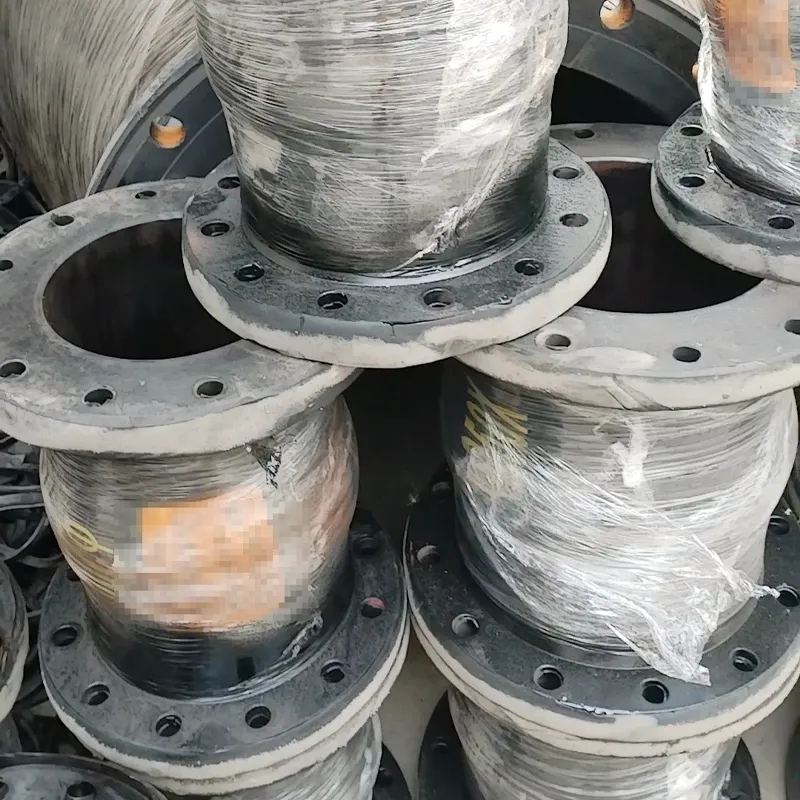
Rubber expansion joints, also known as rubber flexible connectors or vibration dampers, are flexible pipeline components made of a rubber body, reinforcement layers (usually fabric or wire), flanges, or threaded connections. Their primary function is to compensate for pipe system displacement, absorb vibrations and noise, and accommodate certain installation errors.
They are widely used across various industrial fields and civil facilities that require flexible pipe connections.
Key application scenarios:
1. Compensating for thermal expansion and contraction of pipes.
This is the most basic and important application. When the temperature of the medium inside the pipe changes (such as hot water, steam, chilled water, etc.) or the ambient temperature changes, the pipe will undergo thermal expansion and contraction, generating significant stress. Rubber expansion joints can absorb this length change through their elastic deformation, protecting the pipe system from damage.
Typical scenarios include HVAC systems, district heating networks, and solar systems.
2. Absorbing mechanical vibrations and reducing noise.Pumps, compressors, and other power equipment in the pipeline system are major sources of vibration and noise. Rigid connections transmit these vibrations throughout the system, causing structural noise, equipment wear, and loosening of connections. Rubber expansion joints effectively isolate and dampen these vibrations. Typical scenarios include pump inlets and outlets, compressor pipelines, and generator exhaust and cooling pipelines.
3. Compensating for installation deviations and foundation settlement.
It is difficult to achieve perfect alignment of all flange holes during pipe installation. The flexibility of rubber expansion joints allows for axial, lateral, and angular deviations, simplifying the installation process. Additionally, in long-distance pipelines or building connections, uneven foundation settlement may occur, and rubber expansion joints can compensate for this displacement, preventing the pipe from being pulled apart. Typical scenarios include large building pipe connections, complex pipeline system installations, and pipes crossing building expansion or settlement joints.
4. Addressing pressure changes and water hammer effects. In fluid conveyance systems, the rapid opening and closing of valves (especially pump startups and shutdowns) can cause water hammer, leading to a sudden increase in pressure within the pipe, forming shock waves that damage the pipe and equipment. Rubber expansion joints absorb impact energy through their elastic deformation, providing a cushioning effect. Typical scenarios include near pump outlet check valves and near quickly operated valves such as solenoid valves and electric valves.
Specific industry applications examples:
– Building water supply and drainage: Connects domestic water and fire protection water pipes within buildings, reducing pump vibration and noise.
– Municipal waterworks: Conveys raw water and clear water in water plants and pumping stations.
– Power industry: Used in circulating water pipes, slurry conveyance pipes, and flue gas desulfurization systems in power plants.
– Petrochemical industry: Conveys corrosive chemical media (special rubber materials such as EPDM, FPM/Viton should be selected).
– Shipbuilding: Exhaust, cooling water, and fuel pipes for ship engines, compensating for hull deformation and vibration.
– Papermaking industry: Conveys pulp and chemical solutions.
– Metallurgical industry: Cooling water systems for steelmaking and rolling mills.
Important considerations:
Although widely used, the selection of rubber expansion joints must take the following points into account:
1. Medium compatibility: The correct rubber material must be chosen based on the chemical properties (acids, alkalis, oils, solvents, etc.) and temperature of the conveyed medium (e.g., NBR for oils, EPDM for hot water and chemicals, FPM/Viton for high temperatures and strong solvents).
2. Working pressure and temperature: Must not exceed the maximum working pressure and temperature range specified by the product.
3. Installation standards: Over-limit twisting, stretching, or compressing during installation is not allowed. Pre-compression or pre-stretching according to design values is required. Limiting rods are usually needed to prevent excessive stretching under pressure thrust, which could damage the joint.
4. Environmental factors: For outdoor use, ozone and UV aging issues must be considered, and products with anti-aging coatings or protective covers should be selected.
In summary, rubber expansion joints are indispensable ‘safety guards’ in modern pipeline systems, with core application scenarios revolving around ‘compensation, vibration reduction, noise reduction, and alignment correction.’ They are widely used across various fields from residential buildings to heavy industries, ensuring the safety, stability, and quiet operation of pipeline systems.