Analysis of the Structure and Properties of Semi-Float Rubber Tubes
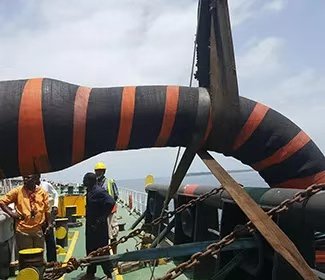
Semi-self-floating rubber hoses are specially designed soft tubes for conveying media (such as oil, water, sludge, etc.) in water or underwater. The name \”semi-self-floating\” reveals its core characteristic: it has a certain buoyancy itself, but it is not sufficient to make the entire tube float completely on the water surface; usually, additional floating bodies are needed or it remains partially suspended in the water body. Its structural composition is typically multi-layered composite to meet requirements for strength, pressure resistance, buoyancy, and weather resistance.
Below is its typical structural composition, from inner to outer layers:
1. Liner Layer
• Material: Usually made of synthetic rubber that is oil-resistant, wear-resistant, and corrosion-resistant (such as Nitrile Butadiene Rubber, NBR).
• Function: As the layer directly in contact with the conveyed medium, its main role is to ensure smooth flow of the medium, prevent leakage, and resist chemical erosion and wear from the medium (especially oils).
2. Reinforcement Layer
This is the \”skeleton\” of the rubber hose, responsible for withstanding internal pressure and external tensile forces. It is usually composed of multiple layers:
• Steel Wire Winding/Braiding Layer: This is the most critical structural layer. It is made by winding or braiding high-strength steel wires in a spiral manner.
◦ Function: Provides extremely high burst pressure and axial tensile strength, allowing the rubber hose to withstand internal pressure during operation and pulling force during connection.
• Fabric Reinforcement Layer: In some designs, synthetic fiber fabric layers such as nylon or polyester are added between the rubber layers.
◦ Function: Provides additional support and shape retention capability, enhancing the hose’s anti-torsion and anti-flattening performance.
3. Buoyancy Layer This is the core layer that realizes the \”semi-self-floating\” characteristic.
• Material: Typically made of low-density, closed-cell foam plastics such as polyethylene foam or polyurethane foam. These materials have extremely low water absorption and can provide durable and stable buoyancy.
• Function: This layer is compounded into the tube wall, providing inherent net positive buoyancy to the rubber hose. However, due to cost and weight considerations, its buoyancy is designed to only partially offset the weight of the hose body and the internal medium, hence it is \”semi-self-floating\” rather than \”fully self-floating.\”
4. Cover Layer
• Material: Made of synthetic rubber that is weather-resistant, wear-resistant, seawater (or freshwater)-resistant, UV-resistant, and aging-resistant (such as Chloroprene Rubber, CR).
• Function:
◦ Protection: Protects the internal reinforcement layer and buoyancy layer from mechanical damage, friction, sunlight, ozone, and seawater erosion.
◦ Durability: Extends the service life of the rubber hose and ensures stable operation in harsh marine or river environments.
Structural Summary Diagram
The cross-sectional structure of a typical semi-self-floating rubber hose is as follows (from inside to outside):
Liner rubber → (optional fabric layer) → steel wire reinforcement layer → buoyancy layer → outer cover rubber
Accessories and Equipment
In addition to the hose body itself, semi-self-floating rubber hoses are usually equipped with:
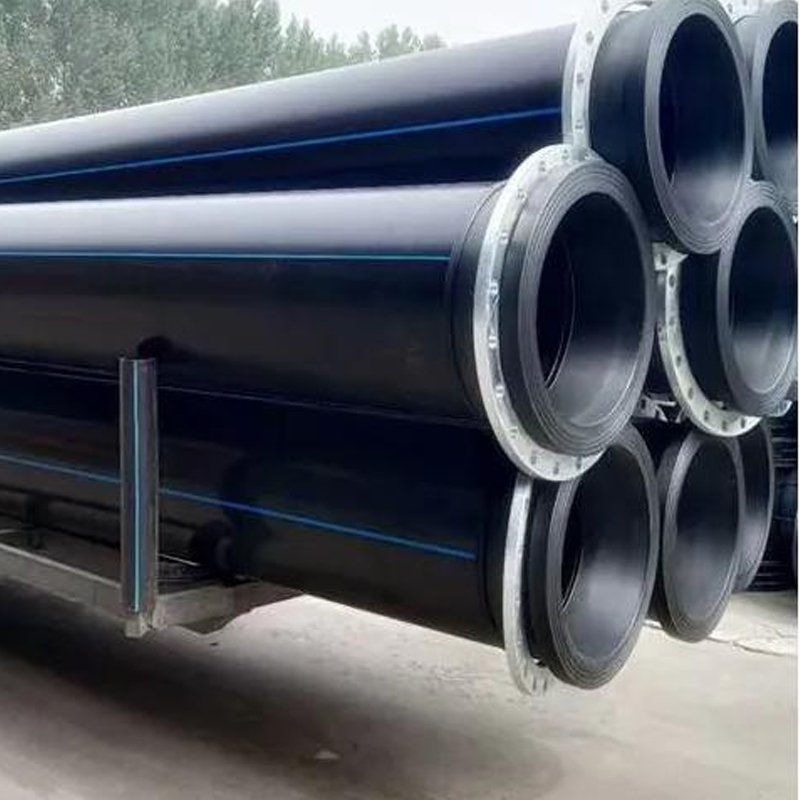
• Flanges or quick couplings: located at both ends of the hose section, used for connecting with other hose sections or equipment, requiring high strength and good sealing performance.
• Floats: Due to being ‘semi-self-floating’, in practical applications, to make it fully float on the water surface for easy deployment and recovery, independent buoyancy tanks or floats are usually attached to the outside of the hose at intervals.
Main Features and Applications
• Features:
◦ Light weight, convenient for handling and deployment.
◦ Good flexibility, able to adapt to bending caused by waves and tides.
◦ Inherent buoyancy, reducing complete reliance on external floats.
◦ Pressure-resistant, wear-resistant, and corrosion-resistant.
• Applications:
◦ Waterborne oil transportation (such as from oil tankers to shore, or ship-to-ship transportation).
◦ Sand suction and dredging projects in rivers and lakes.
◦ Water fire fighting.
◦ Temporary water supply or drainage pipelines.
In summary, the semi-self-floating rubber hose is a high-performance industrial flexible hose that integrates conveying, pressure-bearing, tensile, and buoyancy functions through a precise multi-layer material composite design.