Analysis of the Skeletal Layer of Dredging Rubber Hoses
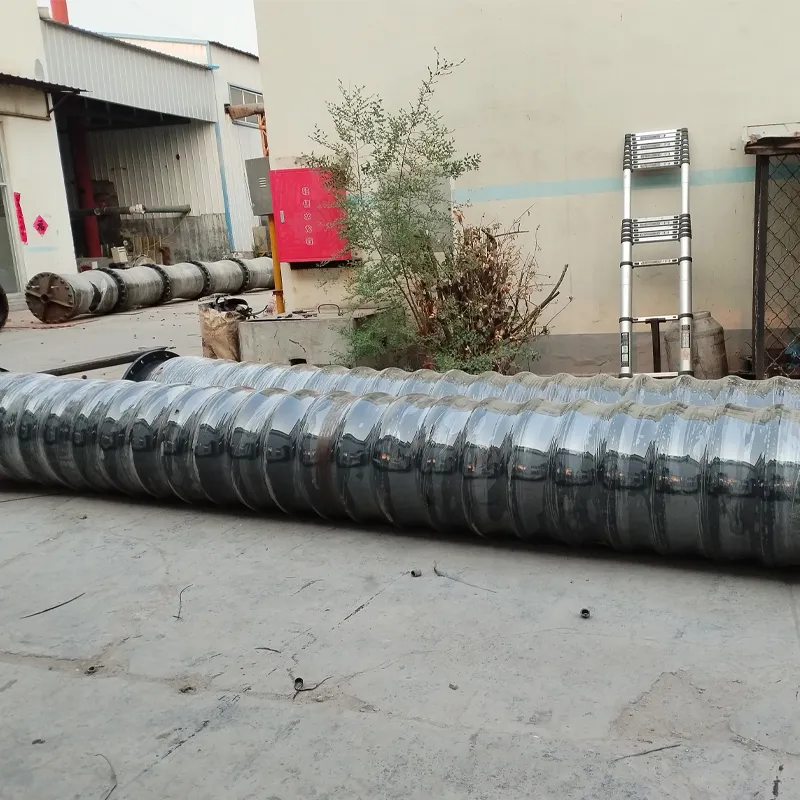
Dredging rubber hoses are critical equipment for conveying high-wear, high-pressure materials such as silt, gravel, and pulp. The core pressure-bearing and tensile components are the cord layer, which directly determines the hose body’s strength, pressure rating, and service life.
### I. Core Function of the Cord Layer
The cord layer is like the ‘skeletal system’ of the rubber hose, with main functions including:
1. Withstanding Internal Pressure: Resisting the radial expansion force generated by the medium inside the hose (such as water and silt) to prevent hose rupture.
2. Providing Strength: Endowing the rubber hose with sufficient longitudinal strength and circumferential stiffness to withstand external forces such as tension, bending, and torsion.
3. Maintaining Shape: Ensuring the rubber hose does not undergo excessive deformation or collapse under working pressure.
4. Absorbing Impact: Collaborating with the rubber layer to buffer dynamic stresses from medium flow and external environments.
### II. Structure and Materials of the Cord Layer
The cord layer of dredging rubber hoses typically adopts a multi-layered structure of fabric cords or steel wire winding/woven. Depending on materials and processes, it is mainly divided into two categories:
1. Fiber Cord Layer
– **Materials**: Primarily high-modulus synthetic fibers, such as:
◦ Polyester Cords: Most commonly used, offering good strength, fatigue resistance, and dimensional stability with high cost-effectiveness.
◦ Nylon Cords: High strength and good toughness, but wet strength decreases slightly, and dimensional stability is slightly inferior to polyester.
◦ Aramid Cords: Extremely high strength, high modulus, lightweight, and excellent fatigue resistance, used in high-end ultra-high-pressure and lightweight dredging hoses, but at a high cost.
– **Structural Forms**:
◦ Woven Structure: Fibers are interlaced at certain angles, providing excellent flexibility, suitable for applications requiring frequent bending.
◦ Wound Structure: Cords are spirally wound around the hose mandrel at an angle close to 90 degrees relative to the hose axis. This structure more effectively withstands internal pressure with high circumferential strength, but longitudinal flexibility is slightly poorer.
– **Application Scope**: Fiber cord layers are mainly used in medium-to-low pressure dredging conditions and floating sludge discharge pipes requiring excellent flexibility.
2. Steel Wire Cord Layer
This is the most mainstream and critical structure for high-pressure, large-diameter dredging rubber hoses.
– **Materials**: High-strength steel wires, usually treated with yellow brass plating or zinc plating to enhance adhesion to rubber and prevent corrosion.
– **Structural Forms**:
◦ Wound Steel Wire Layer: This is the core and classic structure. Steel wires are spirally wound around the hose mandrel at an angle close to 54.7 degrees (the ‘balanced angle’).
■ Why 54.7 degrees? This is calculated based on the ‘network theory’. At this angle, the wound steel wire layer, under internal pressure, achieves balance between radial and axial forces, so the cord layer only bears tensile stress and no bending stress, thus maximizing the utilization of steel wire strength and ensuring dimensional stability and pressure resistance of the hose body.
■ Multi-layer Winding: High-pressure dredging hoses typically use multi-layer steel wire winding, with adjacent layers wound in opposite directions (one left-handed, one right-handed) to form a stable ‘network’ structure that collectively bears pressure.
◦ Woven Steel Wire Layer: Superior flexibility compared to wound structures, but with slightly lower strength and pressure resistance, commonly used in suction and discharge sludge pipes requiring certain bending performance.
III. Key Points and Analysis of Skeletal Layer Design
When designing the skeletal layer of dredging rubber hoses, the following key factors need to be comprehensively considered:
1. Working Pressure: This is the primary factor determining the number of layers, wire diameter, and winding angle of the skeletal layer. Higher pressure requires greater skeletal layer strength.
2. Pipe Diameter: Larger pipe diameters result in greater total tension on the pipe wall under the same internal pressure, necessitating a stronger skeletal layer.
3. Safety Factor: Dredging conditions are complex and variable, involving dynamic loads such as water hammer and impact. Adequate safety margin must be reserved in design (typically burst pressure is 3-4 times or even higher than the rated working pressure).
4. Flexibility Requirements: – Land Use Pipes/Rigid Pipes: Low flexibility requirements; priority is given to winding structures to achieve maximum strength. – Floating Pipes/Flexible Pipes: Need to bend and float on water, so braided structures or winding structures at specific angles are adopted to balance strength and flexibility.
5. Fatigue Life: Dredging pipes continuously withstand pressure fluctuations and bending during operation. The bending fatigue resistance of the skeletal layer material (especially steel wires) and the adhesion strength with rubber are crucial. Adhesion failure can cause the skeletal layer to separate from the rubber, leading to bulging, and ultimately pipe body failure.
6. End Connection and Reinforcement: The joint between the pipe body and the flange is the area of highest stress concentration. Special treatment of the skeletal layer is usually required here, such as increasing the number of winding layers, using reinforcing rubber sheets, or adopting special anchoring structures to prevent \”pull-out\” failure.
IV. Analysis of Common Failure Modes of the Skeletal Layer
Understanding the failure modes of the skeletal layer helps in the correct use and maintenance of dredging pipes:
1. Wire Rusting: If the outer rubber wears or is damaged, exposing the steel wires to saltwater and air, they will rust rapidly. Rusting significantly reduces wire strength, eventually leading to skeletal layer fracture and pipe burst.
2. Adhesion Failure: Due to poor rubber-steel wire adhesion formula, process defects, or long-term overloading, the steel wires separate from the rubber. This manifests as local bulging, which eventually ruptures at the bulging area.
3. Fatigue Fracture: In areas with frequent pressure fluctuations or repeated pipe bending, micro-cracks develop in the steel wires due to metal fatigue and gradually expand until fracture occurs.
4. Excessive Wear: After the outer rubber is worn through, the medium directly erodes the skeletal layer, quickly wearing it out.
5. Torsional Damage: During installation or use, excessive torsional force on the pipe body disrupts the original balanced angle of the skeletal layer, causing a sharp drop in strength.
Summary
The skeletal layer of dredging rubber hoses is the source of their strength and the line of defense for their life. From fibers to steel wires, from braiding to winding, their design and manufacturing represent a complex engineering technology. An excellent skeletal layer design must achieve the optimal balance between high strength, high pressure resistance, fatigue resistance, and good flexibility, while ensuring perfect adhesion with rubber, to meet the harsh challenges of dredging operations and ensure the smooth progress of projects.
When selecting or evaluating a dredging rubber hose, the structure, material, and process level of its skeletal layer are the most core indicators to measure its quality and value.