Analysis of the Outer Rubber Layer of Dredging Rubber Hoses
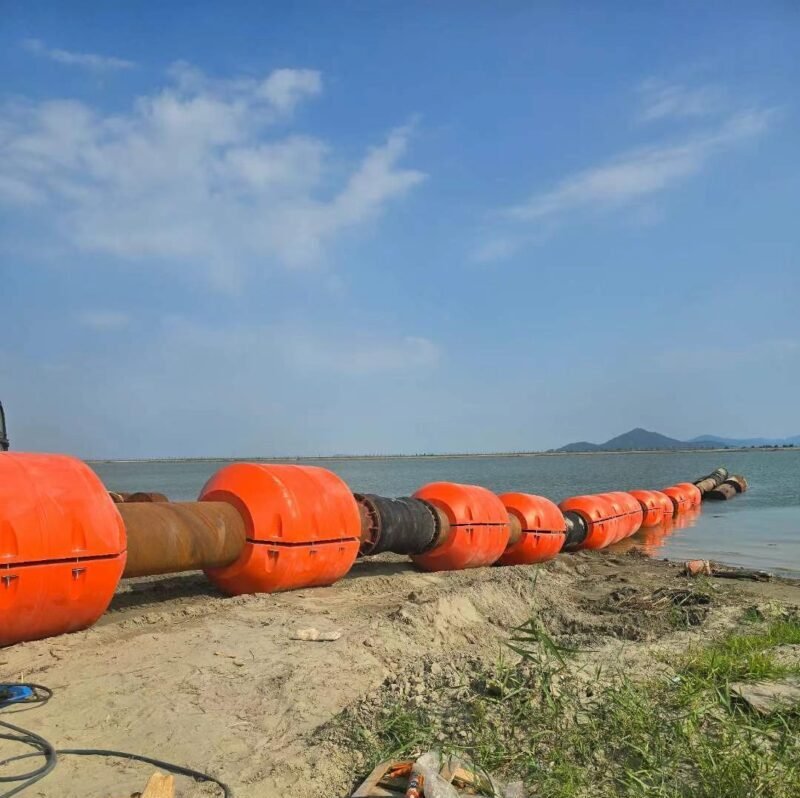
Dredging rubber hoses are critical equipment for conveying highly abrasive materials such as silt, gravel, and pulp. Their structure typically includes an inner rubber layer, a reinforcing layer (skeleton layer), and an outer rubber layer. Among these, the outer rubber layer serves as the ‘first line of defense’ and ‘armor’ of the hose body; its performance directly affects the overall service life and operational safety of the hose.
### I. Main Functions of the Outer Rubber Layer
The outer rubber layer is not a simple protective cover but a multifunctional composite with primary responsibilities including:
1. **Abrasion and Tear Resistance
– Core Function: Dredging operations occur in extremely harsh environments. During material conveyance, the hose rubs against piers, decks, ground surfaces, rocks, and other pipes, experiencing friction, collisions, and dragging. The outer rubber layer must possess high mechanical strength to withstand continuous physical wear and potential tearing.
– Performance: An excellent outer rubber layer remains resistant to deep scratches or overall rupture even when its surface becomes rough.
2. **Resistance to Weather Aging and Ozone Erosion
– Environmental Challenges: Dredging hoses are long-term exposed to outdoor conditions, enduring sunlight, rain, seawater (salt spray), ultraviolet radiation, ozone, and extreme temperature variations.
– Protection Mechanism: Antioxidants, antiozonants, and UV absorbers are added to the outer rubber compound to prevent rubber molecular chain scission or cross-linking, thereby avoiding phenomena such as cracking, powdering, hardening, and loss of elasticity.
3. **Resistance to Medium Properties
– Contact Media: The outer rubber layer comes into contact with seawater, oils, and potentially splashed chemicals.
– Protection Requirements: It needs good resistance to seawater and oil to prevent swelling, softening, or loss of strength in the rubber layer.
4. **Impact and Mechanical Damage Resistance
– Operating Conditions: During operations, it may suffer unexpected injuries such as rock falls and equipment compression.
– Role: A tough outer rubber layer can absorb and disperse impact energy, protecting the vulnerable internal skeleton layer (e.g., steel wires, cord fabrics) from damage. Once the skeleton layer is damaged, the hose’s pressure-bearing capacity will drop sharply.
5. **Identification and Safety
The outer rubber layer is usually made in conspicuous colors (e.g., yellow, orange) and printed with information such as brand, specifications, and pressure ratings for easy identification and management.
### II. Common Rubber Materials for the Outer Rubber Layer
To meet the above stringent requirements, the outer rubber layer typically uses high-performance synthetic rubbers. The most common ones include:
1. **Natural Rubber (NR) and Its Blends
– Advantages: Extremely high mechanical strength, excellent elasticity, and tear resistance.
– Disadvantages: Poor resistance to ozone, oil, and aging.
– Applications: Often blended with other rubbers (e.g., SBR, BR) or optimized through formulations (adding protective systems) to compensate for deficiencies. It is an economical and balanced performance choice.
2. **Styrene-Butadiene Rubber (SBR)
– Advantages: Excellent abrasion resistance, superior to NR, and low cost.
– Disadvantages: Moderate resistance to aging and ozone, and slightly inferior elasticity.
– Applications: Frequently blended with NR to enhance abrasion resistance and reduce costs.
3. **Polybutadiene Rubber (BR)
– Advantages: Excellent elasticity, superior abrasion resistance, and low dynamic heat build-up.
– Disadvantages: Poor tear resistance and processing performance.
– Applications: Rarely used alone; typically added as a third component in NR/SBR blends to improve rubber elasticity and abrasion resistance.
4.Chloroprene Rubber (CR)
◦ Advantages: Known as the ‘universal rubber’, it boasts excellent ozone resistance, weathering resistance, flame retardancy, and good oil resistance.
◦ Disadvantages: Relatively high cost, poor low-temperature resistance, and higher specific gravity.
◦ Applications: It is the preferred material in harsh environments with special requirements for aging resistance, seawater resistance, and flame retardancy.
Industry Trends:
• Mainstream Choice: For most general-purpose dredging pipes, the combination of Natural Rubber (NR), Styrene-Butadiene Rubber (SBR), and Butyl Rubber (BR) is the most common and economical technical solution. Through scientific proportioning, it can achieve a perfect balance between performance and cost.
• Premium Choice: In strongly corrosive environments such as marine and port areas, Chloroprene Rubber (CR) is becoming increasingly prevalent. Although the initial cost is high, its long service life results in better overall benefits.
III. Key Points of Formulation and Manufacturing
Process for Outer Rubber Layer
1. Reinforcement System
◦ Carbon Black: The most important reinforcing agent for the outer rubber layer. Using high-structure, high-wear-resistant carbon black (such as N220, N330) can significantly enhance the wear resistance, tensile stress at fixed elongation, and tear strength of the rubber compound.
2. Protective System
◦ Key Aspect: This determines the aging resistance of the outer rubber layer. Multiple efficient antioxidants and antiozonants need to be compounded to form a synergistic effect, providing long-term protection for the rubber.
3. Vulcanization System
◦ Usually adopts a sulfur vulcanization system to obtain good comprehensive physical and mechanical properties and elasticity.
4. Process Requirements
◦ Adhesion: The outer rubber layer must have extremely strong adhesion strength with the internal skeleton layer (such as steel wire braiding layer or wrapping layer) to prevent interlayer separation during use.
◦ Extrusion Process: The outer rubber is typically extruded onto the pipe blank using an extruder. The rubber compound requires a smooth, dense extrusion surface with no bubbles or impurities.
IV. Common Problems and Failure
Analysis Phenomenon Possible Causes
Surface cracking Insufficient or failed antiozonant; poor aging resistance of the rubber compound; long-term exposure to a strong ozone environment.
Abnormally rapid wear Insufficient wear resistance of the rubber compound; improper selection or dosage of carbon black; excessively harsh operating environment.
Large-scale peeling of the outer rubber layer Insufficient adhesion strength with the outer steel wires or cord; problems with the rubber compound formula or vulcanization process.
Hardening of the outer rubber and loss of elasticity Severe oxidative aging; failure of the protective system.
Bulging and blistering of the outer rubber Trapped air or moisture during manufacturing; poor interlayer adhesion leading to local delamination.
Summary
The outer rubber layer of dredging rubber pipes is a highly technical component, far more than a simple ‘rubber sleeve’. Its design requires a delicate balance among multiple properties such as high wear resistance, aging resistance, and tear resistance. Selecting appropriate rubber materials (such as compounded NR/SBR/BR or high-performance CR), combined with scientific reinforcement systems, protective systems, and manufacturing processes, is key to producing long-lasting, highly reliable dredging pipes. When purchasing, users should also consider the performance of the outer rubber layer as an important indicator, rather than focusing solely on price and pressure-bearing capacity.