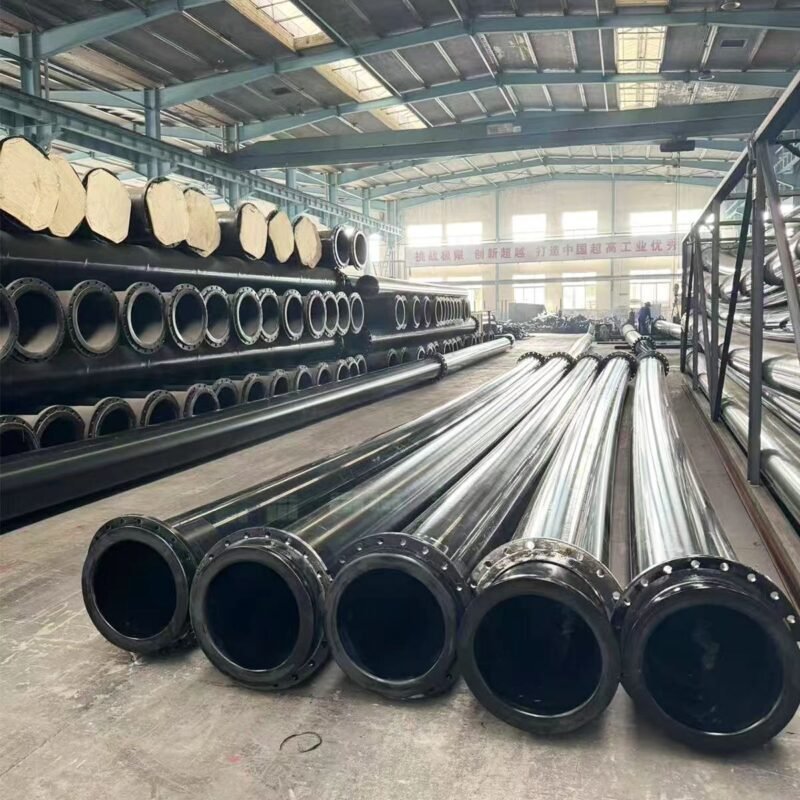
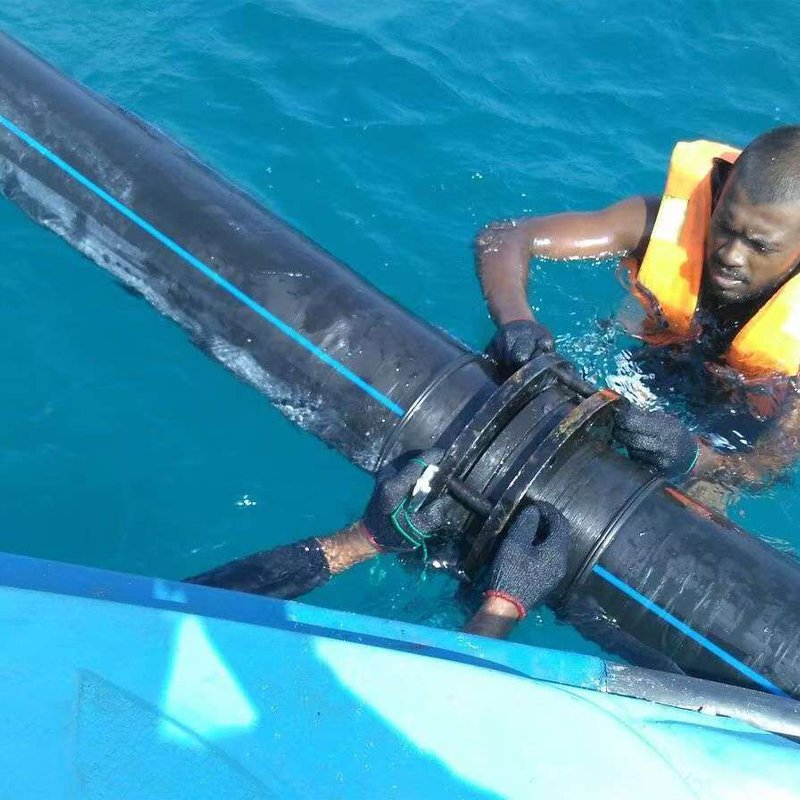
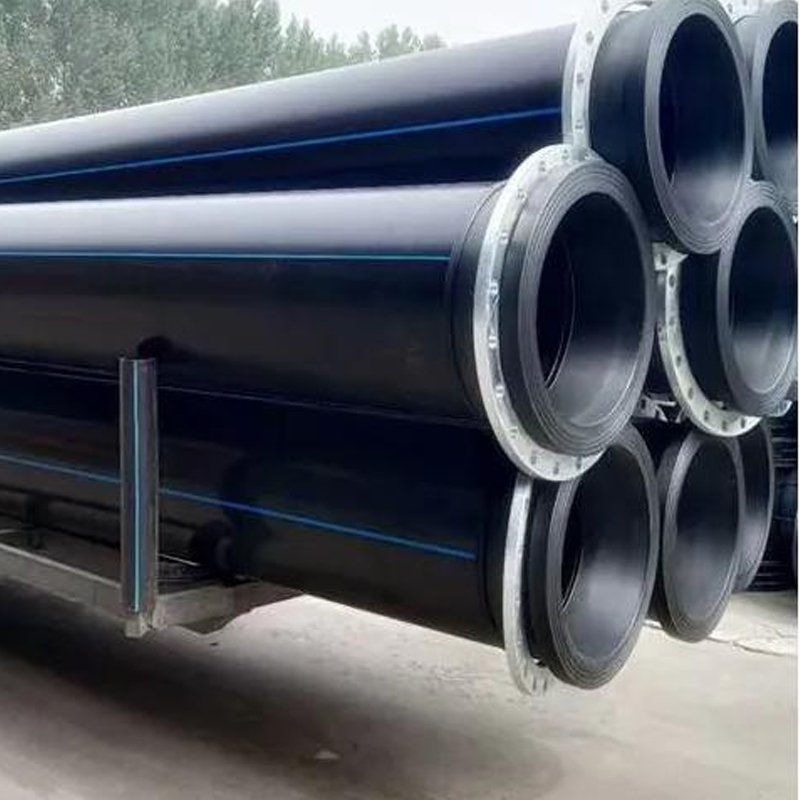
Analysis of the Inner Rubber Layer of Dredging Rubber Hoses
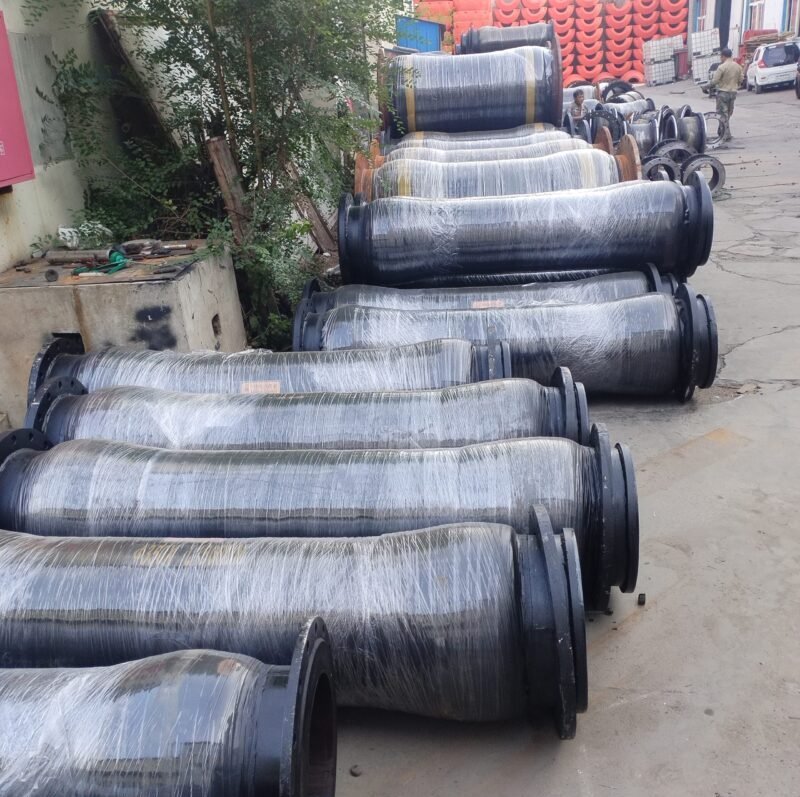
The inner rubber layer of a dredging rubber hose is its most critical component, directly in contact with abrasive media such as sand, gravel, and other sediments. Its performance directly determines the hose’s service life and efficiency. Below, I will provide a detailed analysis from four aspects: the core functions of the inner rubber layer, commonly used materials, key performance indicators, and common issues with repair.
### I. Core Functions of the Inner Rubber Layer
1. **Abrasion Resistance**: This is the most important function. Dredging materials (such as sand, stones, and slag) are highly abrasive, so the inner rubber layer must be able to withstand continuous scouring and wear.
2. **Impact Resistance**: Larger stones or debris inside the pipeline can impact the pipe wall along with the water flow. The inner rubber layer needs good elasticity and toughness to absorb these impacts, preventing rupture or localized damage.
3. **Corrosion Resistance**: The dredging environment may contain seawater, acidic, or alkaline substances. The inner rubber layer must resist corrosion from these chemical agents.
4. **Flow Maintenance**: The surface of the inner rubber layer should be as smooth as possible to reduce fluid resistance, improve conveying efficiency, and prevent material accumulation and blockage.
### II. Commonly Used Inner Rubber Layer Materials
The selection of inner rubber layer materials depends on the characteristics of the dredging materials (particle size, hardness, shape), working pressure, and environment. The main types are as follows:
1. **Natural Rubber
– Advantages: Excellent elasticity, with very good impact and tear resistance, especially suitable for conveying large, angular rocks.
– Disadvantages: Lower abrasion resistance compared to synthetic rubber, and poor oil and aging resistance.
– Applications: Commonly used in harsh impact conditions but where abrasiveness is not extreme.
2. **Abrasion-Resistant Natural Rubber
– This is made by adding a large amount of abrasion-resistant fillers (such as carbon black) and optimizing the formula based on natural rubber.
– Advantages: Significantly improves abrasion resistance while maintaining good elasticity. It is currently the most commonly used and cost-effective inner rubber material in the dredging field.
– Applications: Suitable for most dredging scenarios involving sand, soil, and gravel.
3. **High Abrasion-Resistant Synthetic Rubber
– Usually refers to styrene-butadiene rubber, polybutadiene rubber, and their mixtures with natural rubber.
– Advantages: Possesses extremely high pure abrasion resistance, outperforming natural rubber.
– Disadvantages: Elasticity, impact resistance, and self-healing ability (the rubber’s ability to rebound after impact) are typically inferior to natural rubber.
– Applications: Suitable for highly abrasive conditions with small particles and minimal impact, such as concentrate transportation and fine sand conveyance.
4. **Specialty Rubbers
– Such as chloroprene rubber, mainly used in special environments requiring oil resistance, ozone resistance, and aging resistance.
Summary of Material Selection Trends:
– For high impact and large particles: Prefer natural rubber or abrasion-resistant natural rubber.
– For high wear and fine particles: Prefer high abrasion-resistant synthetic rubber.
– For general conditions: Abrasion-resistant natural rubber is the mainstream choice.
III. Performance Indicators of the Inner Rubber Layer When selecting or evaluating the inner rubber layer, attention can be paid to the following technical parameters:
• Abrasion Resistance (Ackerlon Wear Volume): The lower the numerical value, the better the wear resistance. The Ackerlon wear volume of high-quality dredging pipe inner rubber is typically less than 0.1 cm³/1.61km.
• Shore Hardness (Type A): Usually between 55° and 70°. Higher hardness means better wear resistance but reduced impact resistance; lower hardness has the opposite effect. A balance needs to be struck based on operating conditions.
• Tensile Strength and Elongation at Break: Reflect the material’s mechanical strength and deformation capacity before fracture. Higher numerical values indicate better performance.
• Tear Strength: Critical for resisting impact from foreign objects and scratches.
IV. Common Damage to the Inner Rubber Layer and Repair
Even the best inner rubber layer will gradually wear or damage in harsh dredging environments.
Common Damage Forms:
• Uniform Wear: This is a normal failure mode, characterized by overall uniform thinning of the inner wall.
• Local Impact Damage: Dents or cracks caused by large stones.
• Scratches/Grooves: Deep grooves formed by sharp objects scraping the inner wall.
• Blistering or Delamination: Caused by manufacturing defects or excessive impact, leading to separation of the inner rubber layer from the carcass layer.
Repair Methods: For high-value dredging pipes, repairs can be performed to extend their lifespan.
1. Cold Bonding Repair:
◦ Applicable situations: Small damages and scratches.
◦ Method: Use an angle grinder to clean and grind the damaged area, apply specialized rubber adhesive, then fill and cover with wear-resistant rubber repair agent (usually two-component), allowing it to cure.
◦ Advantages: On-site operation, convenient and quick.
◦ Disadvantages: Limited repair strength, shorter service life.
2. Hot Vulcanization Repair:
◦ Applicable situations: Larger holes and severely worn areas.
◦ Method: This is the most professional and durable repair method. The damaged area needs to be ground and cleaned, then unvulcanized wear-resistant rubber sheets are applied, followed by using a specialized vulcanizer to vulcanize and bond them with the pipe body into an integral whole under high temperature and pressure.
◦ Advantages: High repair strength, service life close to that of a new pipe.
◦ Disadvantages: Requires professional equipment and personnel, higher cost.
Usage and Maintenance Recommendations
• Maintain reasonable working pressure: Avoid overpressure operation, which accelerates fatigue and damage of the rubber hose.
• Avoid excessive bending: Ensure the bending radius during installation is within the allowable range to prevent accelerated wear of the inner rubber layer due to creasing.
• Regularly rotate the pipe: For fixed-use pipes, rotating them 120° regularly can make the wear more uniform, significantly extending the overall service life.
• Timely cleaning: After shutdown, try to empty the material inside the pipe to prevent sediment from solidifying and causing localized continuous pressure on the bottom inner rubber layer.
It is hoped that the above information will help you have a comprehensive understanding of the inner rubber layer of dredging rubber hoses. If you have specific operating conditions or problems, please provide more details for more targeted analysis.