Analysis of the Floating Layer of a Floating Rubber Hose
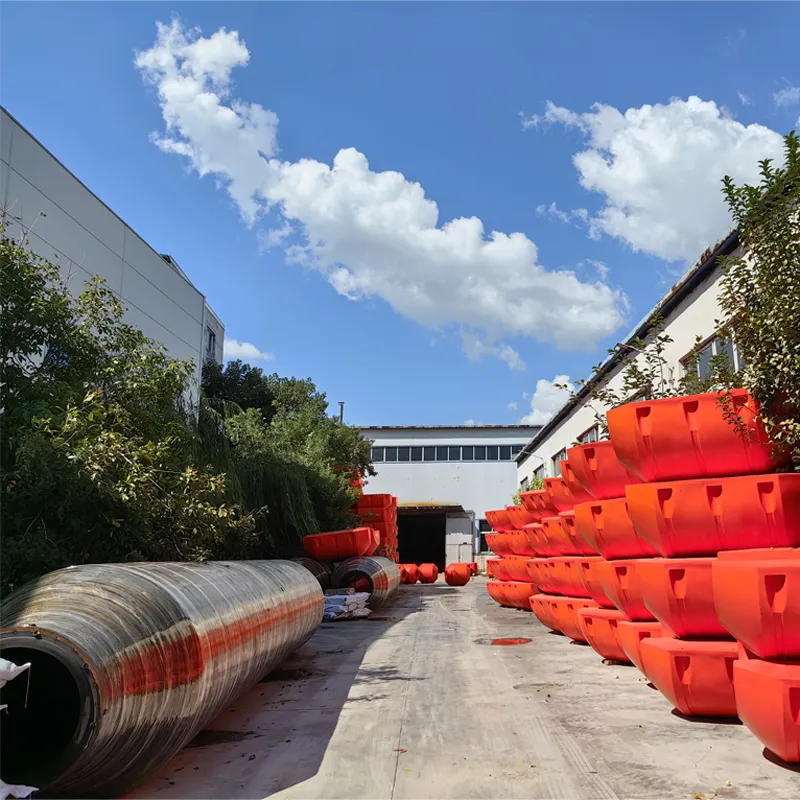
As the name suggests, a floating rubber hose is a rubber hose that floats on the water surface (or at a specific depth in water) relying on its own buoyancy. It is widely used in fields such as water transportation, marine engineering, fire protection, sewage discharge, and agricultural irrigation. Its core function of ‘floating’ is mainly achieved by its key structure—the buoyancy layer.
The following is a comprehensive analysis of the buoyancy layer:
I. Core Functions of the Floatation Layer
1. Provide Buoyancy: This is the most basic function. By using materials with a density much lower than water, the floatation layer provides sufficient net positive buoyancy for the entire pipeline system, enabling it to support the weight of the pipeline itself, the internal fluid, and a certain amount of external loads (such as waves, wind, snow, etc.).
2. Maintain Pipeline Attitude: Ensure the pipeline maintains a predetermined attitude on the water surface, preventing rolling or submergence due to uneven weight distribution.
3. Protect Internal Structure: As an outer layer or interlayer of the pipe wall, it provides a certain degree of cushioning, protecting internal pressure-bearing layers, skeleton layers, etc., from external physical impacts and wear.
4. Auxiliary Identification: The floatation layer is typically made in conspicuous colors (such as orange or yellow) to serve as a warning and identification, facilitating recognition and avoidance by waterborne vessels.
II. Materials for the Floatation Layer
The performance of the floatation layer directly depends on its material. Commonly used materials are mainly as follows:
1. Closed-Cell Foam Materials (Most Commonly Used)
These materials contain countless independent closed air bubbles internally, through which water cannot penetrate, thus providing stable and long-lasting buoyancy.
• Polyethylene Foam (PE Foam):
◦ Advantages: Good mechanical strength, excellent weather resistance and chemical corrosion resistance, relatively low cost, easy to process and bond.
◦ Disadvantages: Relatively high density, lower buoyancy per unit volume compared to polyurethane.
◦ Applications: Widely used in floating pipelines and fenders with medium to low requirements.
• Polyurethane Foam (PU Foam):
◦ Advantages: Extremely low density, excellent buoyancy performance, good flexibility.
◦ Disadvantages: Long-term hydrolysis resistance and UV resistance are inferior to polyethylene, and performance degradation may occur under long-term immersion and sunlight exposure.
◦ Applications: In scenarios with extremely high buoyancy requirements, often used as a filler.
• Polyvinyl Chloride Foam (PVC Foam):
◦ Advantages: High strength, good oil and chemical resistance.
◦ Disadvantages: Poor environmental friendliness, relatively large density.
◦ Applications: Used in some scenarios with special chemical resistance requirements.
• EVA Foam (Ethylene-Vinyl Acetate Copolymer):
◦ Advantages: Excellent flexibility, elasticity, and low-temperature resistance.
◦ Disadvantages: Relatively poor mechanical strength and heat resistance.
◦ Applications: Commonly used in lightweight floating pipes with extremely high flexibility requirements.
2. Solid Float Module
This method does not form a continuous floatation layer but instead fixes成型的 solid floats (usually also made of the above foam materials) at specific intervals on the outside of the pipeline.
• Advantages: Buoyancy can be accurately calculated and configured, maintenance is convenient (damaged floats can be replaced individually), and the production process requirements for the pipeline body are low.
• Disadvantages: Higher fluid resistance, discontinuous appearance, and potential risk of being hooked.
• Applications: Large, heavy, or pipeline systems requiring modular maintenance, such as offshore floating oil transfer hoses.
III. Structural Forms of the Floating Layer
In floating rubber hoses, the main integration methods of the floating layer are as follows:
1. Integral Foaming Type (Sandwich Type)
This is the most common and efficient structure. During manufacturing, unfoamed plastic granules are placed between the outer rubber layer and the reinforcing skeleton layer of the rubber hose. They are heated to foam on-site in the mold, forming a seamless continuous floating layer that is tightly integrated with the pipe.
• Advantages: Strong overall structure, low fluid resistance, smooth appearance, uniform buoyancy, and good protective performance.
• Disadvantages: Complex production process, and difficult to repair once damaged.
2. Jacketing Type First, an inner pressure-bearing rubber hose is produced, and then a pre-formed foam plastic tube is fitted around it like \”putting on clothes\”.
• Advantages: Relatively simple production process, can be manufactured and replaced separately.
• Disadvantages: Lower bonding strength compared to integral foaming type, risk of interlayer slippage may exist, and the joint area is a weak link.
3. Module-Fixed Type
As mentioned above, independent float modules are fixed to the outer wall of the pipe using clamps, straps, bolts, or other methods.
• Advantages: High modularity, flexible design and application.
• Disadvantages: Non-continuous structure.
IV. Key Points in Design and Calculation of the Floating Layer
1. Buoyancy Calculation:
◦ Basic Formula: Buoyancy = Weight of water displaced by the pipe – Total weight of the pipe assembly (including rubber layers, reinforcing layers, floating layer, and internal medium).
◦ Objective: Ensure sufficient reserve buoyancy (usually 15%-30% of total buoyancy) to cope with adverse conditions such as the pipe being fully filled with medium (water/oil), attached organisms, snow accumulation, and wave impact.
2. Material Selection:
◦ Select appropriate foam materials based on the usage environment (seawater/freshwater, temperature range, ultraviolet intensity, presence of oil and chemical substances).
◦ Balance the contradiction between buoyancy performance (requiring low density) and mechanical strength/durability (requiring certain density).
3. Structure and Process:
◦ The bonding strength between the floating layer and other layers of the rubber hose (such as inner and outer rubber layers, cord/steel wire reinforcement layers) is crucial, directly relating to the overall integrity and service life of the hose.
◦ Long-term water absorption rate of the floating layer needs to be considered; high-quality closed-cell foam should have extremely low water absorption rate (<3%) to ensure long-term stability of buoyancy.
4. Anti-Aging and Protection:
◦ The floating layer material itself needs to have good UV resistance, or a rubber or plastic protective layer with better weather resistance should be applied to its outer surface to prevent direct exposure to sunlight and external environments, thereby extending service life.
V. Common Problems and Countermeasures
• Problem: Insufficient buoyancy or sinking
◦ Causes: Inadequate design buoyancy reserve; floating layer material absorbs water, increasing density; external load exceeds design range (e.g., excessively high density of internal medium, excessive fouling).
• Problem: Floating layer damage
◦ Causes: Impact by sharp objects; material aging and brittleness; manufacturing process defects (e.g., bubbles, delamination).
◦ Countermeasures: For modular floats, replacement is possible. For integral foam types, professional on-site repair or factory返厂处理 is typically required.
• Problem: Uneven buoyancy, pipeline rolling
◦ Causes: Inconsistent thickness or density of the floating layer; asymmetrical internal structure; excessive fouling on one side.
Summary
The floating layer of a floating rubber pipe is its \”soul\” for achieving core functionality. It is typically composed of closed-cell foam plastics (such as PE, PU) and is integrated with the main pipe body through structures like integral foaming or outer sleeves. An excellent floating layer design requires a delicate balance between materials science, structural mechanics, and fluid mechanics to ensure sufficient, stable, and long-lasting buoyancy in complex aquatic environments, while also possessing good environmental resistance and damage resistance.
When selecting or evaluating floating rubber pipes, gaining an in-depth understanding of the floating layer’s material type, structural form, buoyancy reserve, and protection level is crucial to ensuring project success and safety.