Analysis of the Advantages and Disadvantages of Tapered Floating Hoses
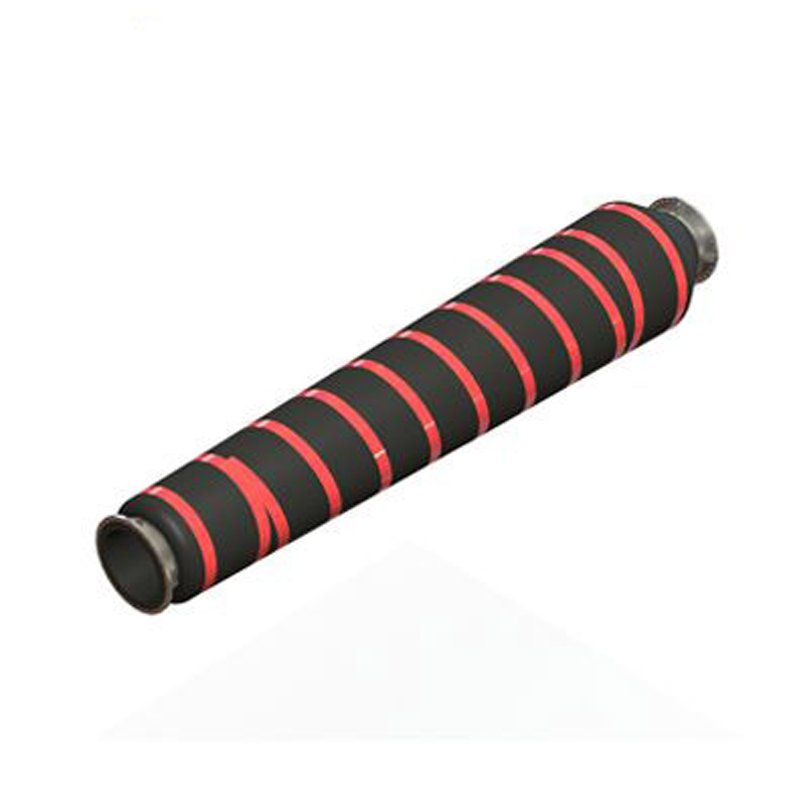
Potential Advantages of Conical Floating Hoses
Tapered design is typically used to address specific engineering problems, and it may offer the following benefits:
Improving fluid dynamics: Conical structures can optimize the shape of hoses in water flow, reduce drag resistance, making them more stable in waves and ocean currents, thereby reducing wear and fatigue stress
Optimizing roll storage is a very significant advantage of the conical design. When the hose needs to be wound around a drum for transportation or storage, the conical structure allows each layer to fit tightly together, avoiding the problem of excessive accumulation at both ends that occurs with traditional cylindrical hoses during winding. This makes the winding flatter, more compact, and reduces compression damage to the hose.
Convenient for connection and deployment:A conical interface similar to a ‘socket-weld’ type can simplify the end-to-end connection process, enabling quick connect and sealing. It is particularly useful in scenarios requiring rapid deployment or retrieval, such as marine oil spill emergency response.
Reducing weight and saving materials: Through structural optimization, a conical design may reduce material usage locally while meeting strength requirements, thereby reducing overall weight to a certain extent.
Potential Disadvantages of Tapered Floating Hoses
Similarly, the unique shape may also introduce some challenges:
The manufacturing process is complex and costly. The non-standardized geometric shape makes its manufacturing process more complicated than that of equal-diameter hoses, which may lead to a significant increase in production costs.
Internal flow characteristics may change. Conical pipes can alter the fluid’s velocity and pressure distribution. In some cases, this may lead to local turbulence or pressure loss, which needs to be considered specifically during hydraulic analysis.
Maintenance and repair are more difficult. Non-standard sizes and shapes make it harder to replace parts or repair damaged areas, which may require customized solutions, increasing maintenance time and costs.
Buoyancy distribution may be uneven. If the conical design causes changes in the volume and weight distribution of different parts of the hose, special design of buoyancy material distribution may be required to ensure that it can maintain a horizontal floating posture in water.
💎 How to Obtain Accurate Information
Since conical floating hoses are typically used in professional fields, there are few publicly available summaries of their advantages and disadvantages. If you are evaluating products for a specific project, it is recommended to follow these steps:
1. Consult manufacturers directly: Contact professional marine engineering or fluid conveying equipment manufacturers, who can provide detailed technical specifications, performance data, and case studies for specific models.
2. Obtain technical whitepapers: Request technical whitepapers or design validation reports from suppliers, which usually detail the design principles and tested performance.
3. Refer to similar product patents: Read relevant patent documents (such as the design described in Patent US20100055363A1 ) to gain an in-depth understanding of the core problems the designers aimed to solve and the claimed advantages.
I hope this analysis based on engineering principles helps you better understand conical floating hoses. If you can share the specific scenario in which you are considering using this hose (e.g., for dredging, offshore oil transportation, or other purposes), I may be able to provide more specific directions for information retrieval.