Analysis of Polyethylene Float Hull
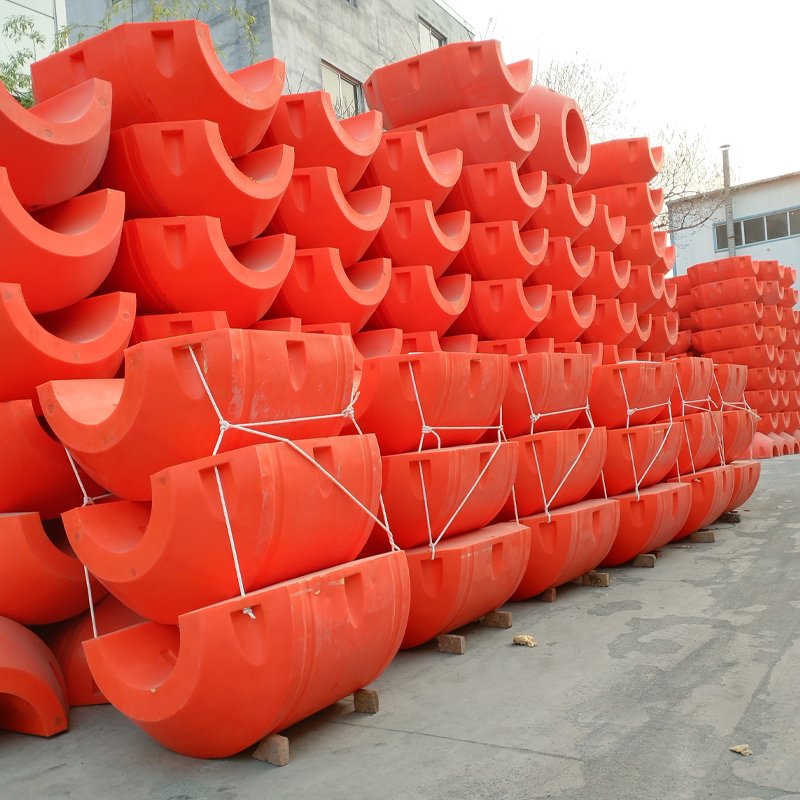
Polyethylene Floats, commonly also known as ‘plastic float balls’, ‘floaters’, ‘floating cylinders’, etc., have their outer shell as the core part of the entire product, determining its performance and service life. The following will analyze this from several aspects: materials, processes, performance, applications, and selection.
一、 Core Material: Polyethylene
The most commonly used material for the outer shell of float bodies is high-density polyethylene (HDPE) and linear low-density polyethylene (LLDPE), which are usually obtained with optimal performance through blending modification.
1. High-Density Polyethylene
◦ Advantages: High hardness, good mechanical strength, relatively good heat resistance (softening point about 120-130℃).
◦ Disadvantages: Impact resistance and toughness, especially at low temperatures, are relatively poor.
2. Linear Low-Density Polyethylene
◦ Advantages: Excellent toughness, good impact resistance, excellent resistance to environmental stress cracking.
◦ Disadvantages: Slightly lower rigidity and hardness.
Industry Common Practice: HDPE and LLDPE are blended in a certain proportion to complement each other’s strengths and weaknesses, producing specialized float materials with good rigidity, toughness, and weather resistance.
Important Modification Directions:
• UV Resistance: A sufficient amount of UV absorbers and antioxidants must be added; otherwise, polyethylene will quickly age, become brittle, and powder under outdoor sunlight. This is a key indicator for measuring the quality of floats.
• Masterbatch: Various colored masterbatches are added, with common colors including orange, blue, black, yellow, etc. Colors are not only used for identification, and dark colors (such as black) usually have stronger UV resistance.
二、 Manufacturing Process: Rotational Molding
Almost all outer shells of polyethylene floats are manufactured using rotational molding.
Process Flow:
1. Charging: A measured amount of polyethylene powder (or liquid slurry) is loaded into a metal mold.
2. Heating and Rotation: The mold is closed and sent into a heating oven while undergoing dual-axis rotation (revolution and spin).
3. Melting and Adhesion: During rotation, the powder is heated and melted, and adheres uniformly to the inner wall of the mold by gravity.
4. Cooling and Shaping: The mold is moved to a cooling chamber, where the plastic is solidified and shaped through air cooling or water cooling.
5. Demolding and Removal: The mold is opened, and the formed hollow float outer shell is removed.
Advantages of Rotational Molding:
• Seamless Formation: Can produce large, complex, seamless hollow products, which is crucial for floats requiring watertightness.
• Uniform Wall Thickness: By precisely controlling the powder quantity and rotation speed, relatively uniform wall thickness can be achieved.
• Low Production Cost: Mold costs are relatively low, making it suitable for small to medium batch production.
• Flexible Design: Easy to form structural features such as reinforcing ribs, installation holes, and threaded interfaces on the product.
III. Performance Characteristics Analysis
1. Advantages:
• Strong Corrosion Resistance: Exhibits excellent corrosion resistance to seawater, freshwater, acids, alkalis, salts, and most chemical substances, far surpassing metal floating bodies.
• Light Weight and High Buoyancy: With a density much lower than water, it provides substantial buoyancy, facilitating transportation and installation.
• Good Impact Resistance: Modified polyethylene has good toughness, enabling it to withstand collisions with floating debris on the water surface and compression from ice.
• Maintenance-Free: Unlike steel floating bodies that require anti-corrosion coating, it has a long service life and extremely low maintenance costs.
• Environmentally Friendly and Non-Toxic: Food-grade polyethylene can be used in aquaculture and other fields, making it environmentally friendly.
• Excellent Insulation: It is a good insulator for both electricity and heat.
2. Disadvantages:
• Limited Weather Resistance: Although modified for UV resistance, prolonged exposure to sunlight will cause slow aging. Service life typically ranges from 5 to 15 years, depending on raw material quality and environmental conditions.
• Moderate Temperature Resistance: Strength decreases at high temperatures (above 60°C), and toughness reduces at low temperatures (below -30°C).
• Limited Rigidity: Compared to steel, it has poorer rigidity and may deform under heavy concentrated loads.
• Low Surface Hardness: Easily scratched by sharp objects.
IV. Main Application Fields
The application of polyethylene floating body shells is extremely extensive, mainly including:
• Water-based Entertainment and Platforms: Water park platforms, yacht piers, floating swimming pools, fishing platforms.
• Aquaculture: Floating frames for net cage farming, work walkways, floating platforms for feeders.
• Marine Engineering and Environmental Protection: Isolation fences for offshore oil and gas exploration, navigational buoys, water quality monitoring buoys, trash barriers.
• Water Conservancy and Municipal Engineering: Floating boats for water intake in reservoirs and lakes, pipe supports, floating bodies for aerators.
• Others: Floating bodies for solar photovoltaic panels, floating pontoons for temporary bridges, etc.
V. Key Points for Selection and Quality Identification
When selecting polyethylene floating bodies, the following points should be :
1. Raw Materials: Inquire whether they are \”rotational molding grade specialty materials\” or \”floating body specialty materials\”, and whether sufficient UV inhibitors have been added. New materials are superior to recycled materials.
2. Wall Thickness: Check if the wall thickness is uniform. Uneven wall thickness (especially excessively thin at corners) is a typical feature of inferior products, which will seriously affect structural strength and service life.
3. Appearance:
• Color: Whether the color is uniform and full. Grayish or uneven color may indicate recycled materials or poor quality masterbatch.
• Surface: Whether the inner and outer walls are smooth and flat, with no obvious bubbles, holes, or impurities.
• Workmanship: Whether the workmanship at flanges, interfaces, etc., is precise, with no burrs or deformation.
4. Structural Design:
• Reinforcing Ribs: Large floating bodies should have a reasonable reinforcing rib design inside to enhance overall rigidity and load-bearing capacity.
• Anti-Slip Surface: Floating bodies used for walkways should have anti-slip patterns on their surfaces.
5. Certifications and Testing: For important applications, suppliers can be requested to provide relevant material test reports, such as UV resistance tests, environmental stress cracking resistance tests, etc.
Summary
Polyethylene floating body shells, with their excellent corrosion resistance, huge buoyancy, good toughness, and economical production costs, have become the preferred choice for modern water-based engineering and facilities. The core of their performance lies in high-quality modified polyethylene raw materials and mature rotational molding technology.
When selecting, users should look beyond appearance to deeply examine material composition, process level, and structural design to choose safe, durable, and cost-effective products.