Analysis of Factors Affecting the Abrasion Resistance of Dredging Rubber Hoses
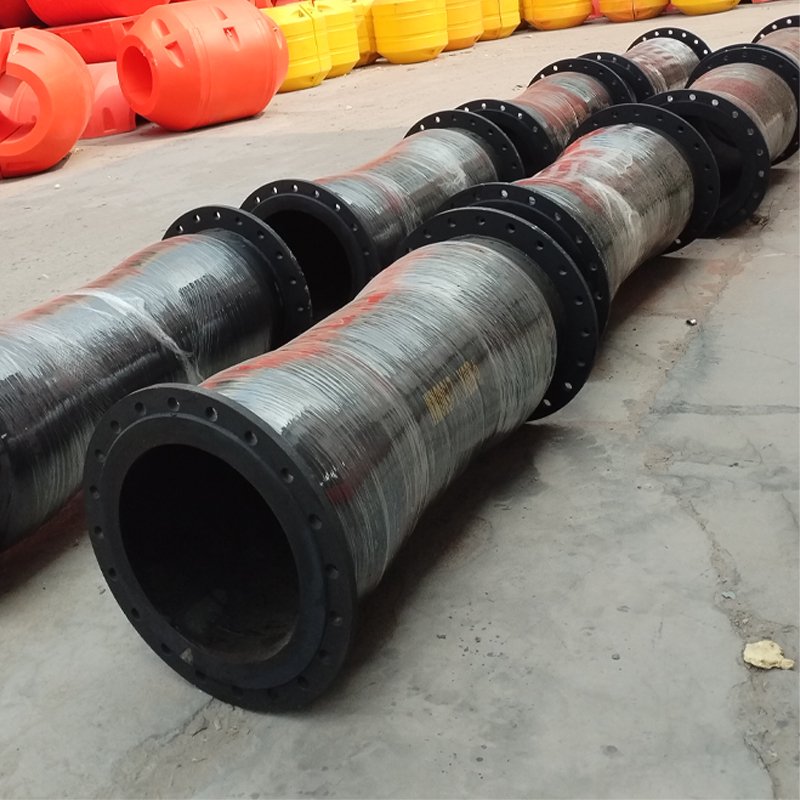
The wear resistance of dredging rubber hoses is determined by multiple factors at various levels, including material formulation, pipe structure, conveying operating conditions, as well as usage and maintenance. The influence of different factors on wear resistance can be summarized in the following table:
Major Influencing Factors/Specific factors/The mechanism of influence on wear resistance
Materials and Formula
Lining Material:The wear resistance of different materials varies greatly. For example, the wear resistance of polyurethane (PU) can reach 3-5 times that of natural rubber.
Rubber formula:The particle size and dispersibility of carbon black, the type of vulcanization system (such as accelerator CZ), and the use of antiozonants will all significantly affect the wear resistance of the finished product.
Use and Maintenance
Installation and Laying:Improper bending, twisting, or stretching can create additional stress concentration points, accelerating local fatigue wear.
Regular inspection and maintenance:Regularly flipping the pipe (such as moving the most worn bottom side to the side or top) can even out wear and significantly extend the overall lifespan.
Deeply Understand Core Factors
1. Matching of Formulation and Material
There is no ‘universal’ wear-resistant material; the key lies in matching the working conditions. Specific examples are as follows:
– High-hardness particles (such as quartz sand, iron ore powder): Polyurethane (PU) lining is suitable, which has high hardness (above 90A) and excellent wear resistance.
– Oil-containing or high-temperature slurries (such as steel plant hot slag): Modified nitrile rubber (HNBR/NBR) is a better choice, as it combines oil resistance and high temperature resistance (up to +120°C).
– Moderate wear and pursuit of cost-effectiveness: Natural rubber (NR) can be selected, which has good elasticity and low cost.
2. Association Between Structural Design and Wear
Dredging rubber hoses are precision multi-layer composites, and their wear life depends on the overall structure. Even if the lining material is excellent, if the bonding between layers is not strong, delamination will cause rapid failure. Research shows that wear is most concentrated at the bottom of dredging pipelines. Therefore, modern high-performance hoses address this issue by optimizing structural design (such as increasing wear-resistant layer thickness, adopting steel-rubber composite structures) and flow guidance design.
3. Direct Impact of Dynamic Working Conditions
In addition to the factors mentioned in the table, the temperature and acidity/alkalinity of the conveyed medium also affect the physical and chemical properties of rubber materials, thereby changing their wear performance.
How to Select and Maintain Wear-Resistant Rubber Hoses
When selecting and using, you can focus on the following points:
1. Accurate Selection: First, conduct a detailed analysis of the conveying working conditions, including material composition, hardness, concentration, flow velocity, temperature, and pressure, then select the matching lining material and pressure rating based on this.
2. Pay Attention to Process Details: Ask the supplier about the vulcanization process of the hose (overall high-temperature vulcanization is better than cold bonding), interlayer bonding strength (which can refer to the national standard GB/T 14905 ≥6 kN/m), and whether there are special designs such as anti-static.
3. Implement Proactive Maintenance:
– Regular Inspection: Focus on checking for abnormal wear, bulges, or delamination at bends, connection points, and the bottom of the pipeline.
– Scientific Replacement Strategy: For straight pipe sections, referring to research recommendations, adopting a regular flipping strategy to distribute wear evenly is one of the most economical and effective methods to extend the overall service life of the pipeline.
– Standardized Operation: Ensure standardized installation to avoid improper stress.
In conclusion, improving the wear resistance of dredging rubber hoses is a systematic project that requires comprehensive advancement from four dimensions: selecting the right material, optimizing the structure, adapting to working conditions, and meticulous maintenance.
If specific types of conveyed media (such as sand, gravel, pulp, etc.) and working conditions (such as approximate flow velocity, pressure) can be shared, more targeted analysis can be provided.