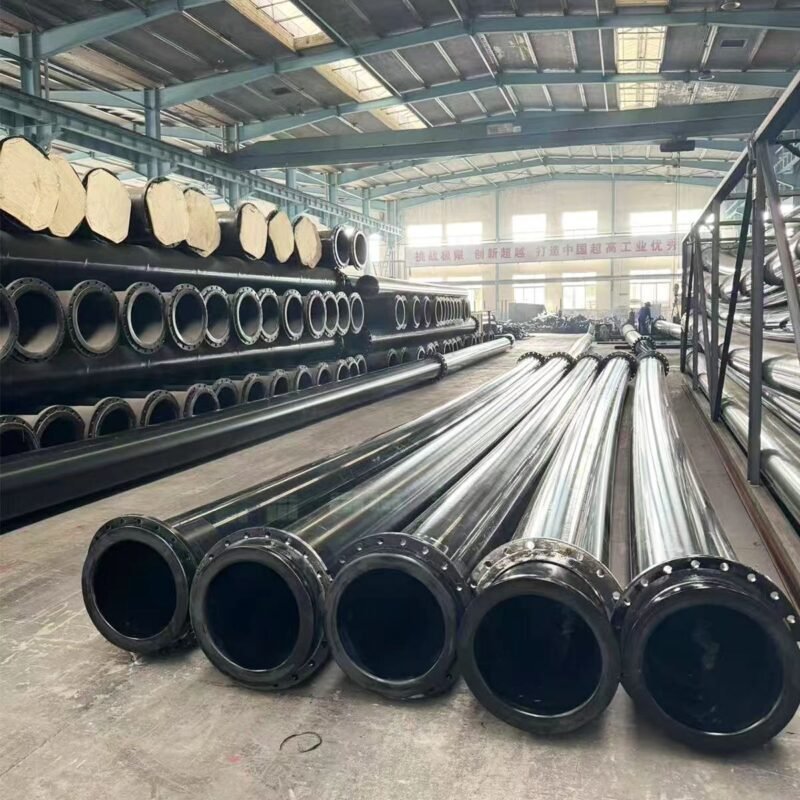
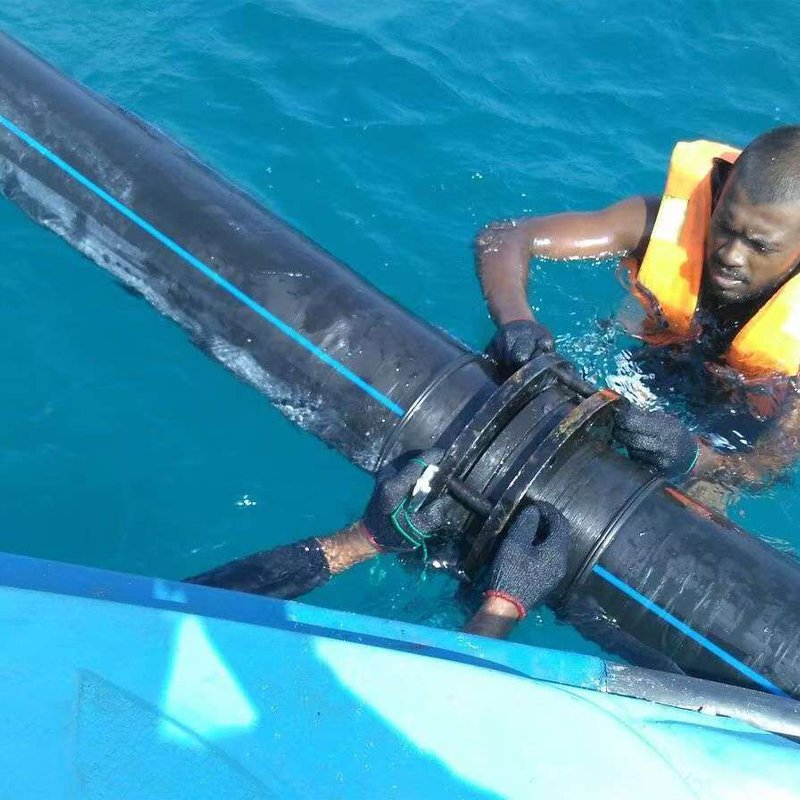
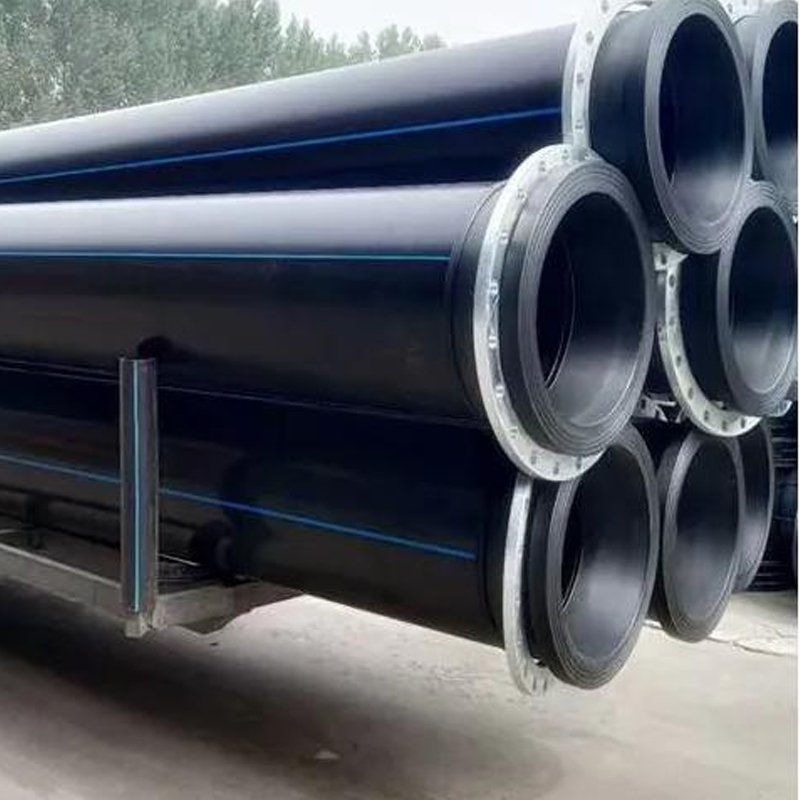
Analysis of Characteristics and Applications of Semi-Float Rubber Tubes
Basic Definition:
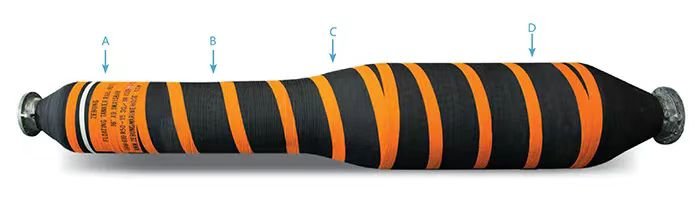
A rubber hose specifically designed for water-based operations. It can float partially or entirely on the water surface due to built-in buoyancy materials or special structures, facilitating the conveyance of liquids or mixtures.
Main Types Oil Pipeline:
Used for transporting crude oil, petroleum products, etc., between offshore vessels and mooring systems .
Slurry Pipeline: Used in dredging projects for conveying seawater, freshwater, sludge, and sediment mixtures, etc.
Typical Structure
• Inner Rubber Layer: Usually made of oil-resistant rubber (such as NBR), ensuring smooth flow of the conveyed medium and corrosion resistance.
• Reinforcement Layer: Multiple layers of high-strength synthetic cord with embedded spiral steel wires to withstand internal pressure and external loads.
• Buoyancy Layer: An independent foam buoyancy layer providing the required buoyancy.
• Outer Rubber Layer: High-wear-resistant and UV-protective rubber, suitable for harsh marine environments .
Performance Features
• Buoyancy: The portion floating above water can be designed to be no less than 25%-5 of the total area.
• Environmental Resistance: Corrosion-resistant to seawater and UV-resistant .
• Mechanical Properties: High tensile strength (single tube can reach over 150 tons ), high wear resistance, and impact resistance.
• Flexibility: Can be bent within a certain angle (e.g., working condition 0~50 degrees ).
Application Fields
• Offshore Petroleum Industry: Cargo oil transportation between single-point mooring systems, floating production storage and offloading units, and oil tankers .
• Dredging Engineering: Used as floating pipelines for slurry transportation in operations such as dredging and reclamation .
🔧 Standards and Purchase Reference
Understanding relevant standards and purchase can help you better apply this product:
• Refer to current standards: In China, the production and inspection of self-floating rubber hoses have clear national standards and industry standards for reference. For example, GB/T 37221-2018 ‘Self-floating Slurry Rubber Hoses and Hose Assemblies’ and the transportation industry standard JT/T 1217-2018 ‘Self-floating Rubber Slurry Pipes’ , which stipulate the product’s structure, dimensions, technical requirements, test methods, etc.
• Purchase Notes:
◦ Clarify the conveying medium: Choose products with corresponding structures and materials based on whether it is conveying oil or a mud-water mixture.
◦ Confirm operating conditions: Consider environmental temperature, medium density, wind and wave conditions, etc., to ensure that the hose performance matches. For example, some slurry pipes are explicitly suitable for environments with a medium density of 1.0-2.3 g/cm³.
◦ Pay attention to key parameters: Such as buoyancy requirements, tensile strength, working pressure, bending radius, wear resistance, etc. For example, Shandong Zhongkong’s products mention that the maximum tensile strength of a single hose can reach more than 150 tons.
◦ Select compliant suppliers: Prioritize manufacturers that produce products in line with relevant standards and can provide detailed technical data and test reports.
I hope the above information helps you fully understand semi-self-floating rubber hoses. If you can share specific application scenarios (such as for offshore oil transportation or port dredging), perhaps I can provide more targeted analysis. 8 web pages